Rose quartz meaning is a story told in two languages. One is mineralogy: a pale pink quartz that owes its color to fibers far thinner than a hair. The other is crystal lore, where this soft stone has become the classic symbol of love, kindness and friendship. You get more from a piece when you know both.
This guide covers what rose quartz is, why it is pink, what people believe it means, how they use it, how to care for it and how to tell it from glass.
What rose quartz actually is
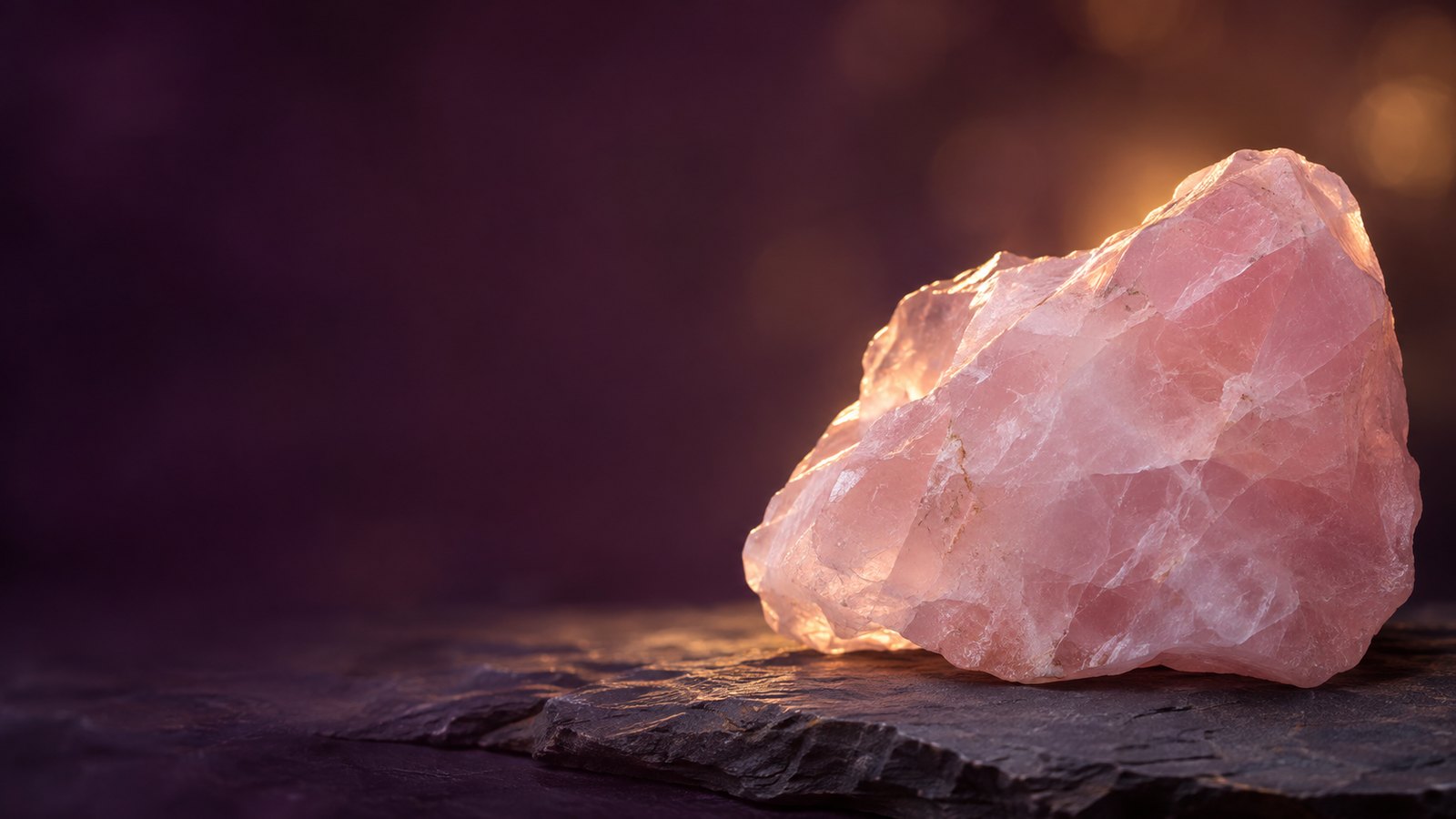
Rose quartz is a variety of quartz, which is silicon dioxide. According to the GIA gem encyclopedia, it rates 7 on the Mohs hardness scale and ranges from very light pink, almost white, to medium-dark pink. GIA also notes that the deepest colors tend to show up in larger pieces, and that small specimens with good color are scarce.
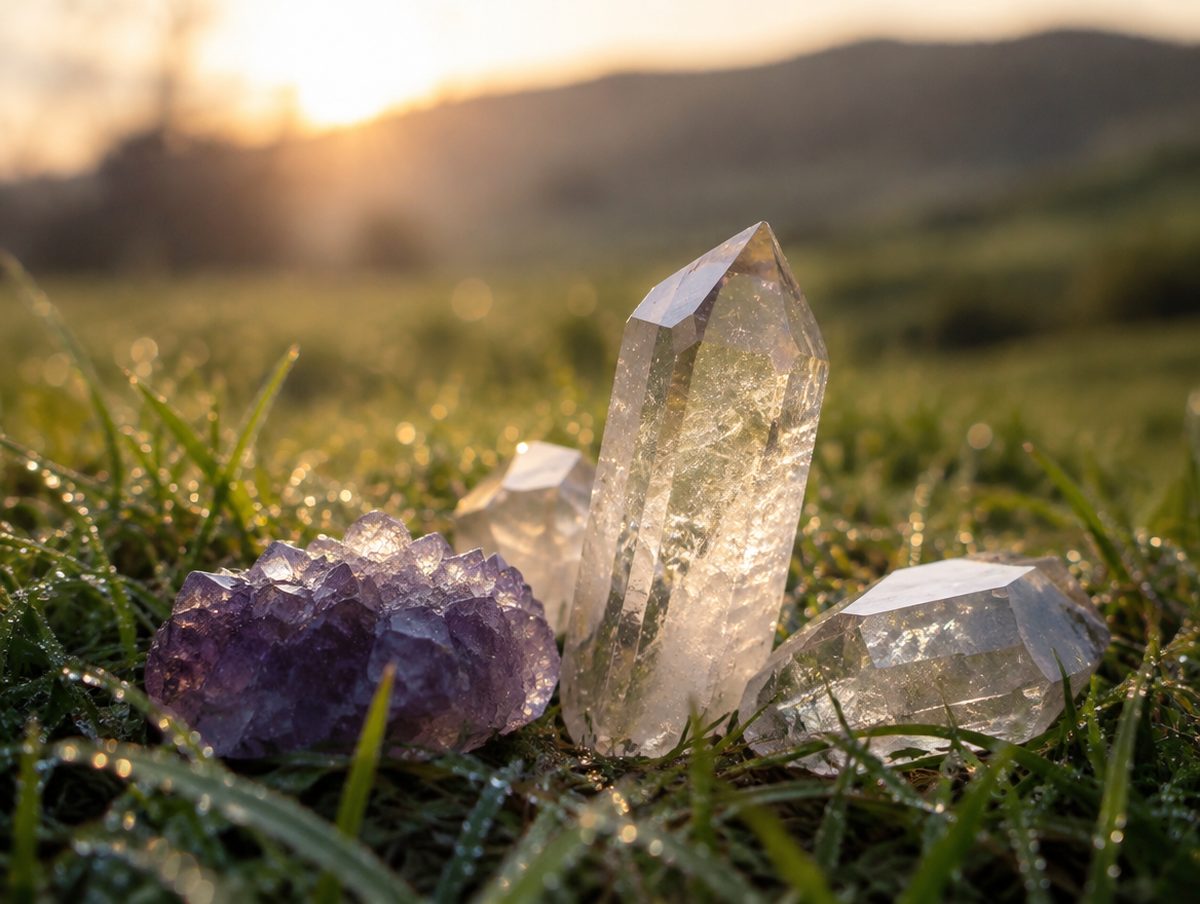
Unlike clear quartz or amethyst, rose quartz rarely grows as neat pointed crystals. GIA describes it as usually found in massive form, which is why most of what you see is tumbled, carved or cut from big chunks, and why well-shaped rose quartz crystals are prized by collectors. That cloudy, milky look is normal. GIA explains that microscopic mineral inclusions give the stone its soft translucence.
Why it is pink
For decades, people guessed that titanium or manganese colored rose quartz. The answer turned out to be stranger. According to GIA, the pink comes from microscopic inclusions of aligned silicate fibers that are similar, but not identical, to the mineral dumortierite. They likely crystallized as the quartz cooled.
The work behind this was done at Caltech. In his oral history interview in the Caltech archives, mineralogist George Rossman describes how his team showed that rose quartz from massive veins around the world contains pink nanofibers less than one-hundredth the width of a human hair, and that the quartz itself has no rose color at all. The Quartz Page, a long-running reference on quartz varieties, summarizes the 2001 study: the fibers make up only about 0.05 to 0.15 percent of the stone's weight, and they bleach when heated above 500 °C.
The rare six-rayed star
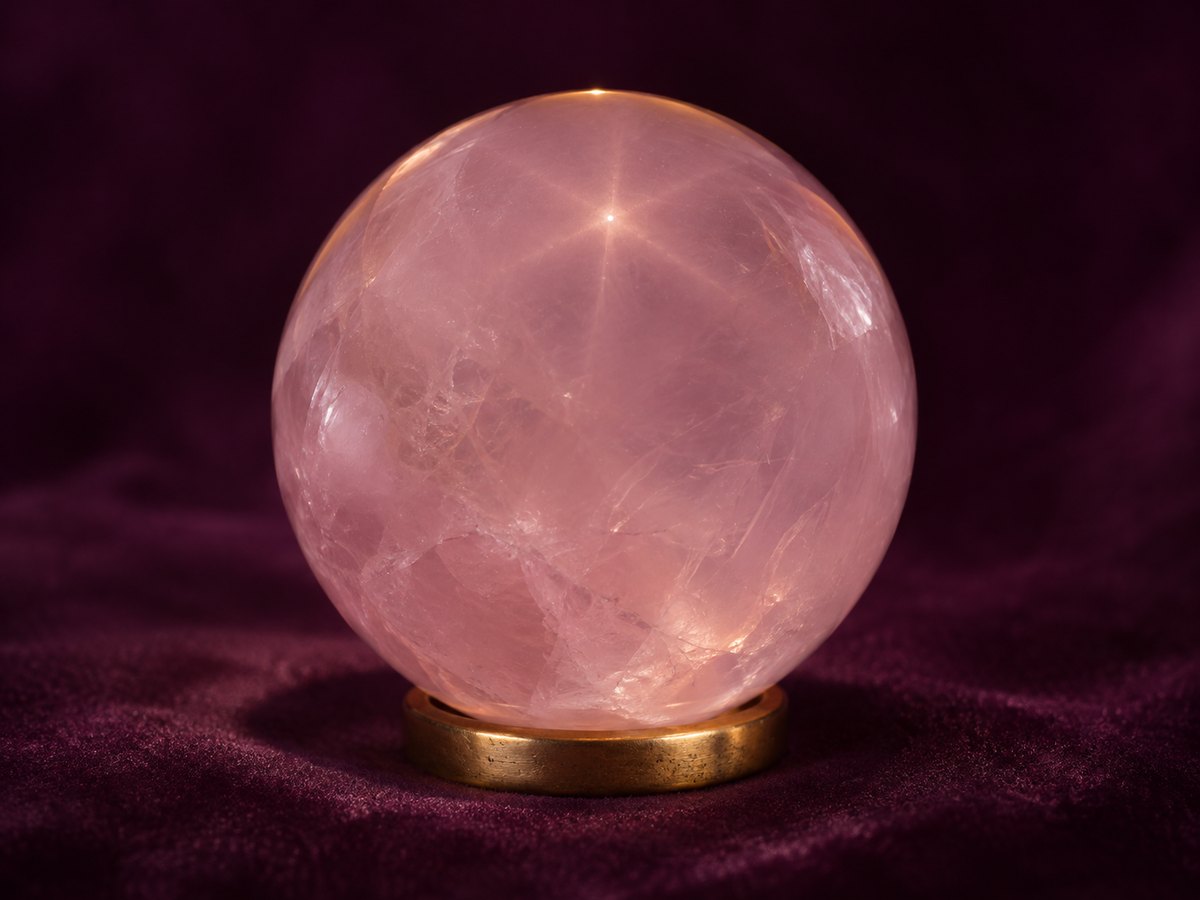
Those same fibers can produce a hidden effect. GIA notes that when the inclusions are well oriented, rose quartz can show asterism, a six-pointed star of light. According to The Quartz Page, the star is easiest to see on a polished sphere under a single point of light, disappears under soft diffuse light, and star rose quartz comes from only a few places, including South Dakota and Madagascar. Shine a small flashlight on a rose quartz sphere and turn it slowly. If a star appears, you have something special.
Rose quartz meaning in crystal lore
In modern crystal tradition, rose quartz is the love stone. Many people associate it with love in the broadest sense: romance, yes, but also friendship, family, compassion and kindness toward yourself. The GIA history page records that it has long been known as the "love stone." These are meanings people have given the stone over time, not properties of the mineral, and they are part of what makes it such a popular gift.
The human story is old. According to GIA, rose quartz beads dating back to 7000 BC have been found in the area once known as Mesopotamia, and the Assyrians crafted rose quartz jewelry around 800 to 600 BC. GIA adds that the Romans used rose quartz as a seal to signify ownership. Today GIA lists rose quartz as the gem for the fifth wedding anniversary, which keeps the love-stone tradition alive in a very practical way.
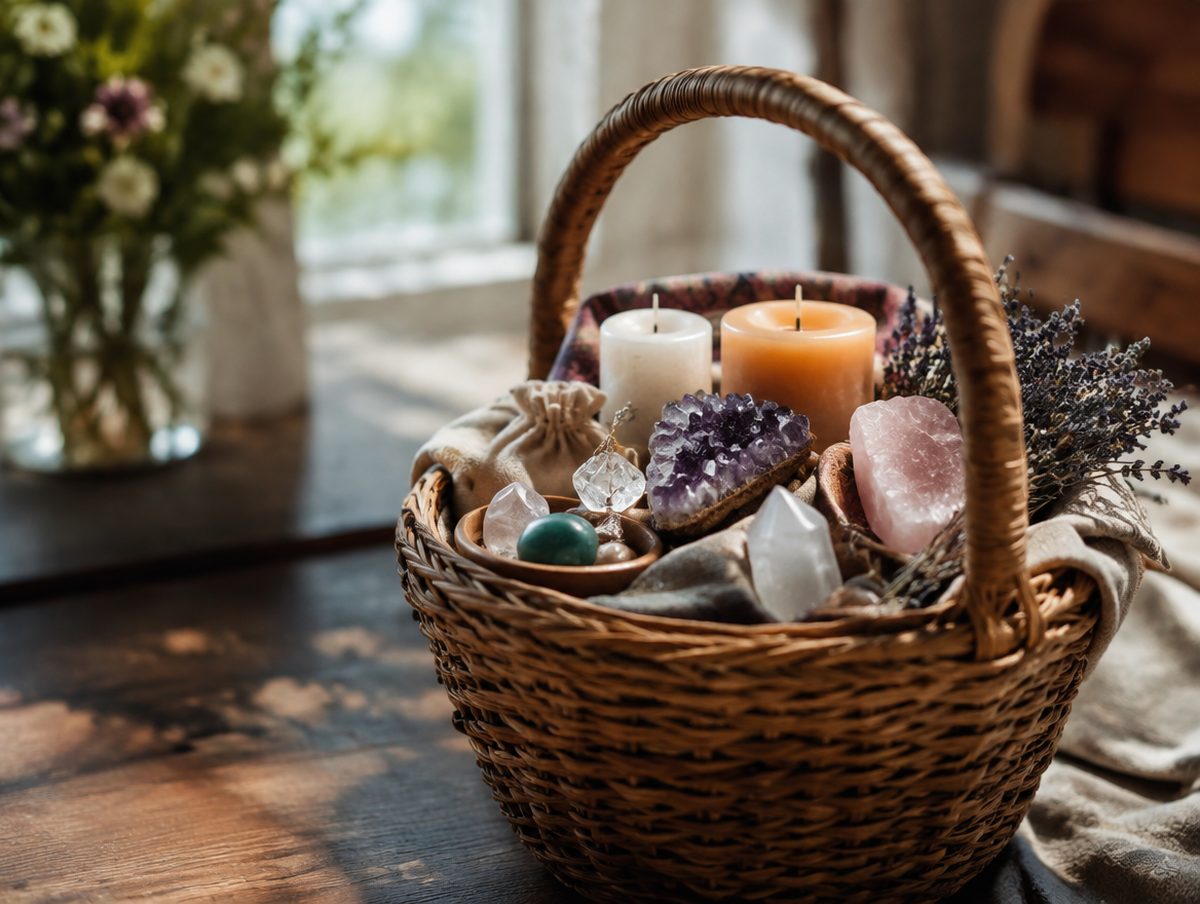
Practitioners often describe rose quartz as a gentle stone, one to keep close rather than to display for drama. Its pale color and soft glow are a big part of that reputation.
How people use rose quartz
There is no single right way. These are the most common traditions we see:
- A pocket stone. Many people carry a small tumbled piece as a reminder of an intention, such as being patient with a partner or kinder to themselves.
- A gift. A carved heart or a small sphere is a classic gift for a new relationship, an anniversary, a new baby or a friend going through a hard season.
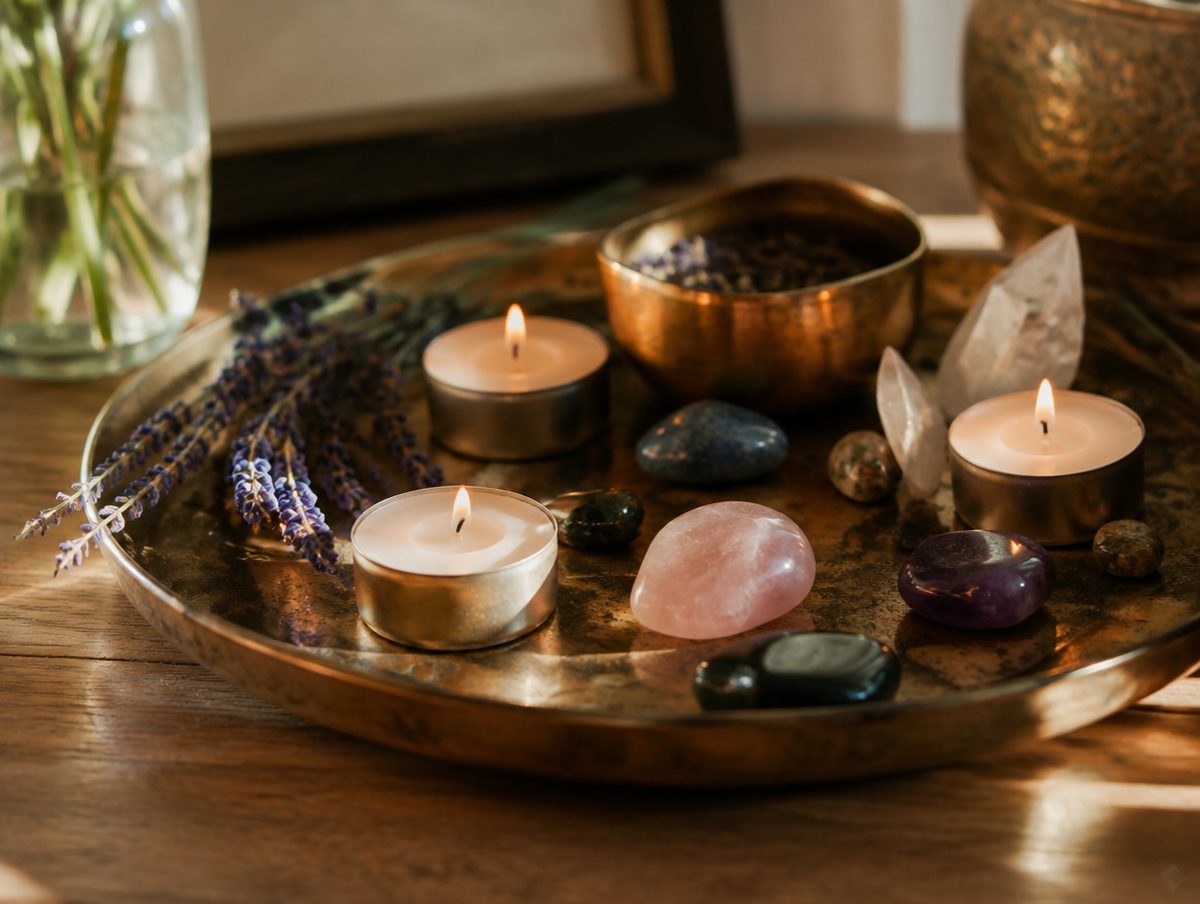
- On an altar or bedside table. Some people place rose quartz where they start or end the day, as a quiet visual cue. Our guide to building a meditation altar has more ideas.
- In a ritual. Holding the stone while writing down what you are grateful for, or what you hope for in a relationship, is a simple practice many people enjoy.
- Worn as jewelry. Beads and cabochons are common, and quartz is hard enough for everyday wear.
If you want to go further, some people pair a stone with a larger meditation space. iPyramids makes heart-centered crystal pendants as well as pyramid frames you can sit inside, and the products under this introduction show a few that fit a rose quartz reader.
Where rose quartz comes from
Rose quartz forms in pegmatites, coarse-grained rocks that also host minerals like tourmaline and beryl. According to The Quartz Page, it is commercially mined in Madagascar, South Africa, Namibia, the United States (South Dakota) and Brazil (Bahia and Minas Gerais). Color varies by locality, from bright pink to slightly lilac or peachy shades. None of these is better in tradition; pick the color you like.
How to cleanse and care for rose quartz
Physical cleaning is easy. GIA's rose quartz care page says warm, soapy water is always a safe method, and that ultrasonic and steam cleaners should be avoided. Rinse well and dry with a soft cloth.
Light is the one thing to think about. GIA calls rose quartz generally stable to light and heat, but its description page also notes that material from some deposits fades when exposed to natural light. The Quartz Page reports the same for some Brazilian rose quartz. So a small precaution makes sense: enjoy it on a shelf, but don't leave a favorite piece on a sunny windowsill for months. GIA also notes that rose quartz is occasionally treated with radiation to intensify its color.
At hardness 7, rose quartz can scratch softer stones, so store it in its own pouch or wrapped in cloth. For more on care, see our guide to how to cleanse and care for crystals.
Energetic cleansing is a separate tradition. Many people "reset" their stones under moonlight, with the sound of a singing bowl, or with a few breaths of intention. These are rituals of meaning, and they are gentle on the stone.
How to spot fake rose quartz
Most rose quartz sold by reputable shops is real, because the stone is common. The fakes you will meet are usually glass, plastic or dyed quartz. A few checks help:
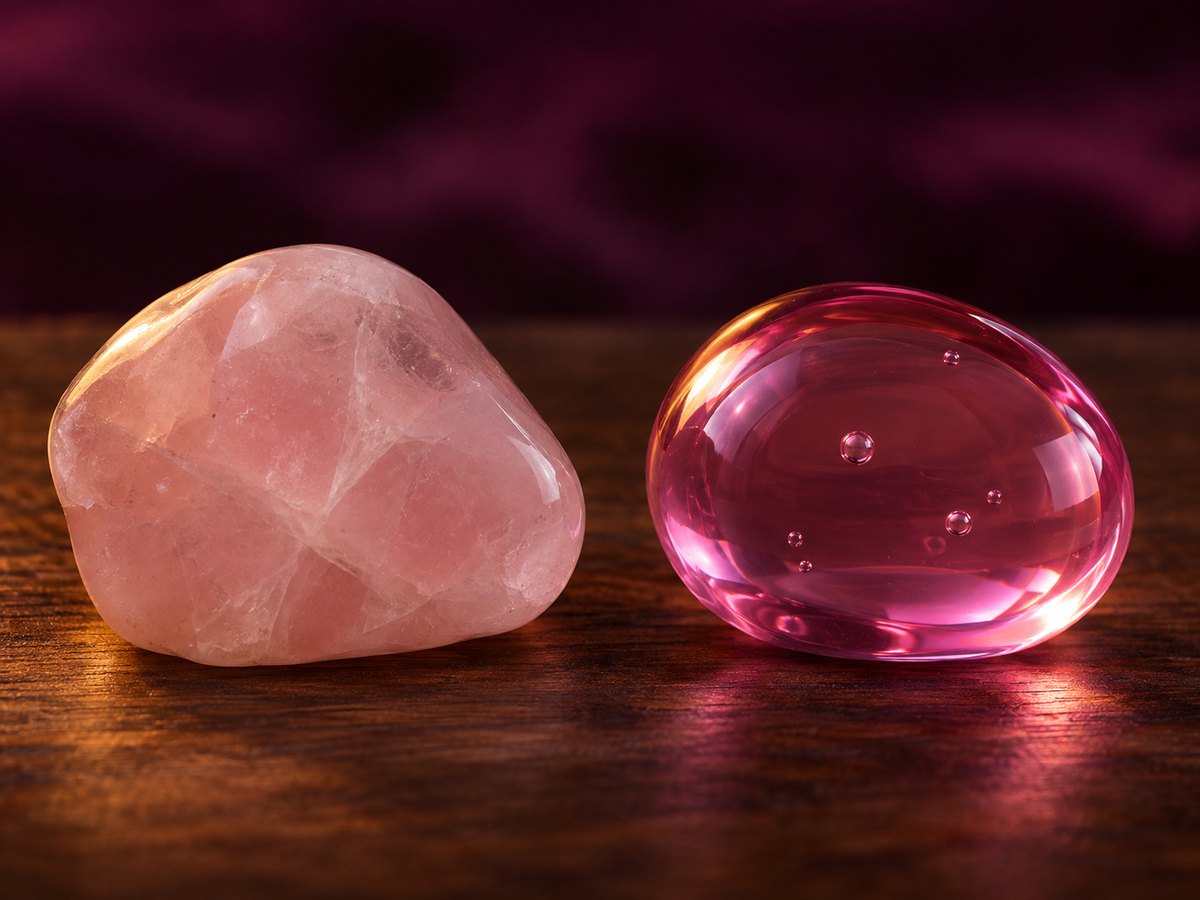
- Look for the cloud. Real rose quartz is milky and translucent. A perfectly clear, glassy, candy-bright pink deserves a second look.
- Look for bubbles. According to the jeweler Akra's guide, glass shows round bubbles when held up to a lamp, while dyed quartz shows color sitting in the cracks instead of through the whole stone.
- Feel it. The same guide notes that quartz feels cold and stays cool for a while, while plastic and resin warm up almost at once and feel light for their size.
- Try a scratch test, carefully. Quartz is 7 and window glass is about 5.5, so rose quartz will mark glass. Akra suggests using a spare bottle or jar, not a window.
- Skip the lighter. Akra warns against flame and hot-needle tests: quartz can crack when heated quickly, and metal settings can be damaged.
One more twist: GIA reports that synthetic pink quartz exists, grown with aluminum and phosphorus impurities and then irradiated. It tends to be transparent, unlike the cloudy massive material, so a very clear faceted pink stone at a bargain price is worth asking about.
Who should be careful
Small tumbled stones and beads are a choking hazard for young children and pets, so keep them out of reach. If you plan to put any stone in drinking water, check our guide to water-safe crystals first and use the indirect method. And rose quartz is a symbol, not a substitute for a doctor, a counselor or a friend when life is hard.
Quick answers
What does rose quartz mean?
In crystal lore, rose quartz is the love stone. Many people associate it with love in the broad sense: romance, friendship, family, compassion and self-kindness. These are traditional meanings, not mineral properties, and they are why it is such a popular gift.
Why is rose quartz pink?
According to GIA and research from Caltech, the pink comes from microscopic fibers of a mineral similar to dumortierite trapped inside the quartz. The quartz itself is colorless. The fibers also make the stone cloudy and can create a six-rayed star on polished spheres.
Can rose quartz go in the sun?
Short periods are fine. GIA calls rose quartz generally stable, but notes that material from some deposits fades in natural light, so it is wise not to leave a favorite piece on a sunny windowsill for months.
How can I tell if my rose quartz is real?
Real rose quartz is cloudy and translucent, feels cool, and will scratch glass because it is harder. Round air bubbles, a perfectly clear candy-pink color, color sitting only in cracks, or a stone that warms quickly in your hand are signs of glass, dye or plastic.