A home hyperbaric chamber is one of the largest wellness purchases a household can make, and one of the most misunderstood. This guide explains what a chamber is, what the pressure numbers mean, how the main styles differ, and what to check before one comes through your door. It will not tell you what a chamber does for your body. That is a conversation for you and your doctor.
What a hyperbaric chamber actually is
"Hyperbaric" means higher than normal pressure. A hyperbaric chamber is a sealed enclosure a person sits or lies in while the air pressure inside is raised above the room around it. In a hospital, this is paired with breathing concentrated oxygen, and the process is called hyperbaric oxygen therapy, or HBOT.
According to the FDA's 2025 safety letter on hyperbaric oxygen therapy devices, HBOT involves breathing 100% oxygen in a chamber where the air pressure is raised above normal, and the agency regulates these chambers as Class II devices cleared through its 510(k) process. Clearance is given to specific chambers for specific uses. It is not a blanket stamp on the whole category, and the letter notes that cleared chambers can be looked up in the FDA's 510(k) database under product code CBF.
What ATA means: 1.3 vs 1.5 vs 2.0 and up
Every listing quotes a number followed by "ATA," short for atmospheres absolute: the total pressure inside the chamber.
- 1.0 ATA is ordinary air pressure at sea level.
- 2.0 ATA is double that. Hyperbaric physician Dr. Caroline Fife explains on her blog that diving to 33 feet of seawater puts you at 2 ATA: one atmosphere of air plus one of water.
- 1.3 and 1.5 ATA sit in between, roughly 30% and 50% above sea level. These are the numbers you will see most on chambers sold for the home.
Here is the honest part. Mayo Clinic describes the pressure in a clinical chamber as 2 to 3 times normal, and a position statement from the Italian hyperbaric society SIMSI, published by the Undersea and Hyperbaric Medical Society (UHMS), says the recognized clinical uses of HBOT call for 2.0 to 2.8 ATA. The same statement notes that several professional bodies, including the UHMS in 2017, have formally opposed using low-pressure chambers for hyperbaric oxygen therapy. Dr. Fife also does the math for a soft chamber at 1.3 ATA filled with ordinary air: about the same oxygen as breathing a 27% mix at sea level. A lower-pressure home chamber is not a smaller copy of a hospital session. It is a different experience, and worth knowing before you compare prices.
Mild hyperbaric chambers (soft shell) vs hard shells
Soft-shell (inflatable)
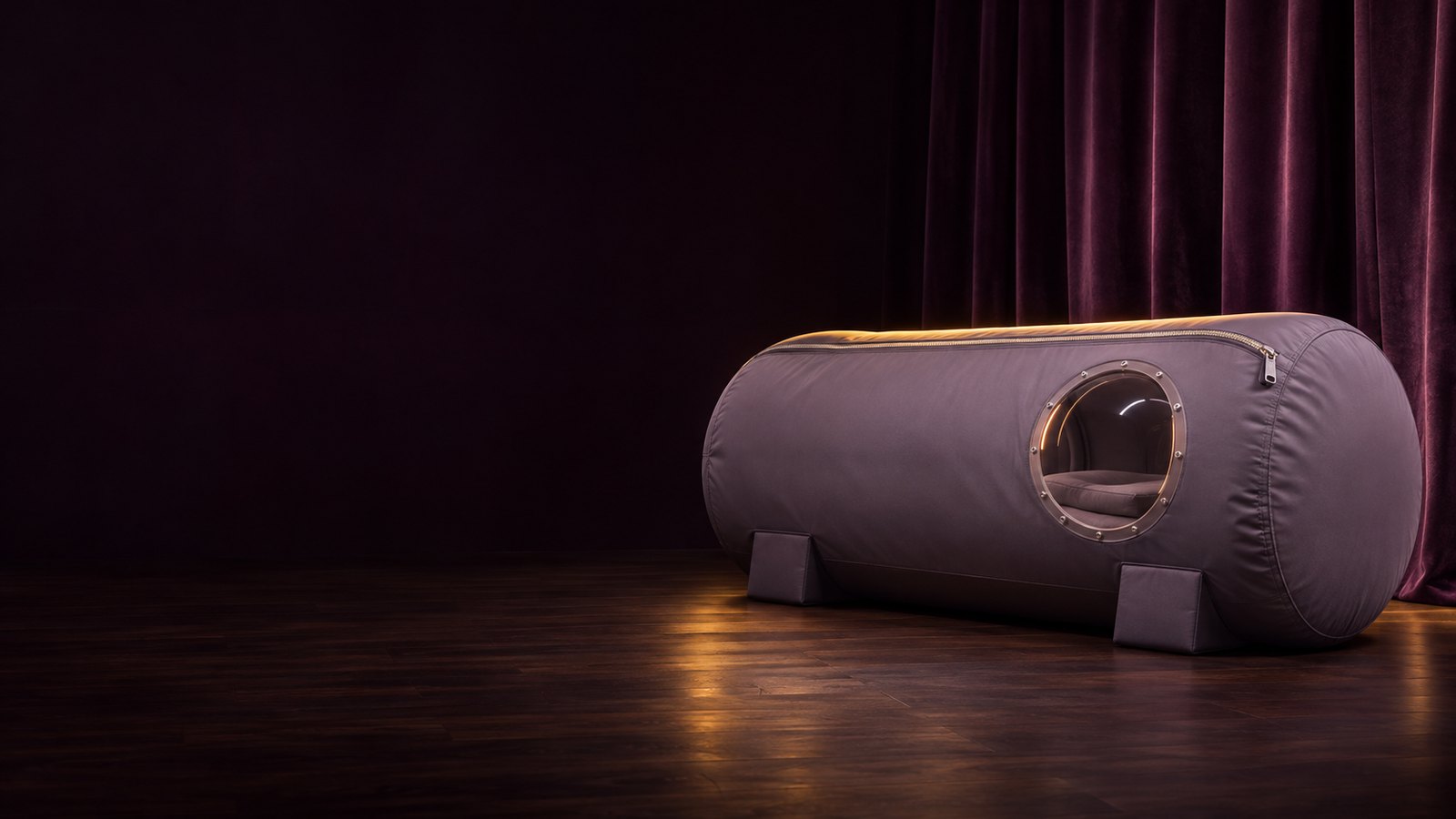
A soft-shell chamber is a fabric-and-polymer tube that inflates as a compressor pushes air in. It closes with a heavy zipper track and has clear windows. Flexible walls keep it at the low end of the scale, usually 1.3 ATA, with some models listed near 1.5. It deflates, so it is lighter and easier to fit into a spare room.
The SIMSI statement raises specific concerns about many low-pressure units: concentrators that never reach 100% oxygen, unmonitored masks, and no internal alarm to detect oxygen building up inside the enclosure as excess oxygen vents into the chamber air. Ask any seller directly how oxygen inside the chamber is monitored.
Hard-shell (rigid)
A hard-shell chamber is a rigid steel or acrylic pressure vessel with a hatch. Rigid walls allow higher pressures, often up to 2.0 ATA on home-oriented models. It is heavy and permanent, with bigger demands for floor strength, power, oxygen supply and training. The FDA's letter points to the ASME PVHO-1 safety standard for pressure vessels for human occupancy and to NFPA 99, the fire protection code for health care facilities. A seller should tell you, in writing, which standards the vessel was built and inspected to.
Sit-up recliner or lay-down?
Johns Hopkins Medicine and Cleveland Clinic both note that people sit or lie in a chamber depending on its design, and home models follow the same split.
- Lay-down chambers are long, low tubes, about the footprint of a single bed. Getting in and out takes some flexibility.
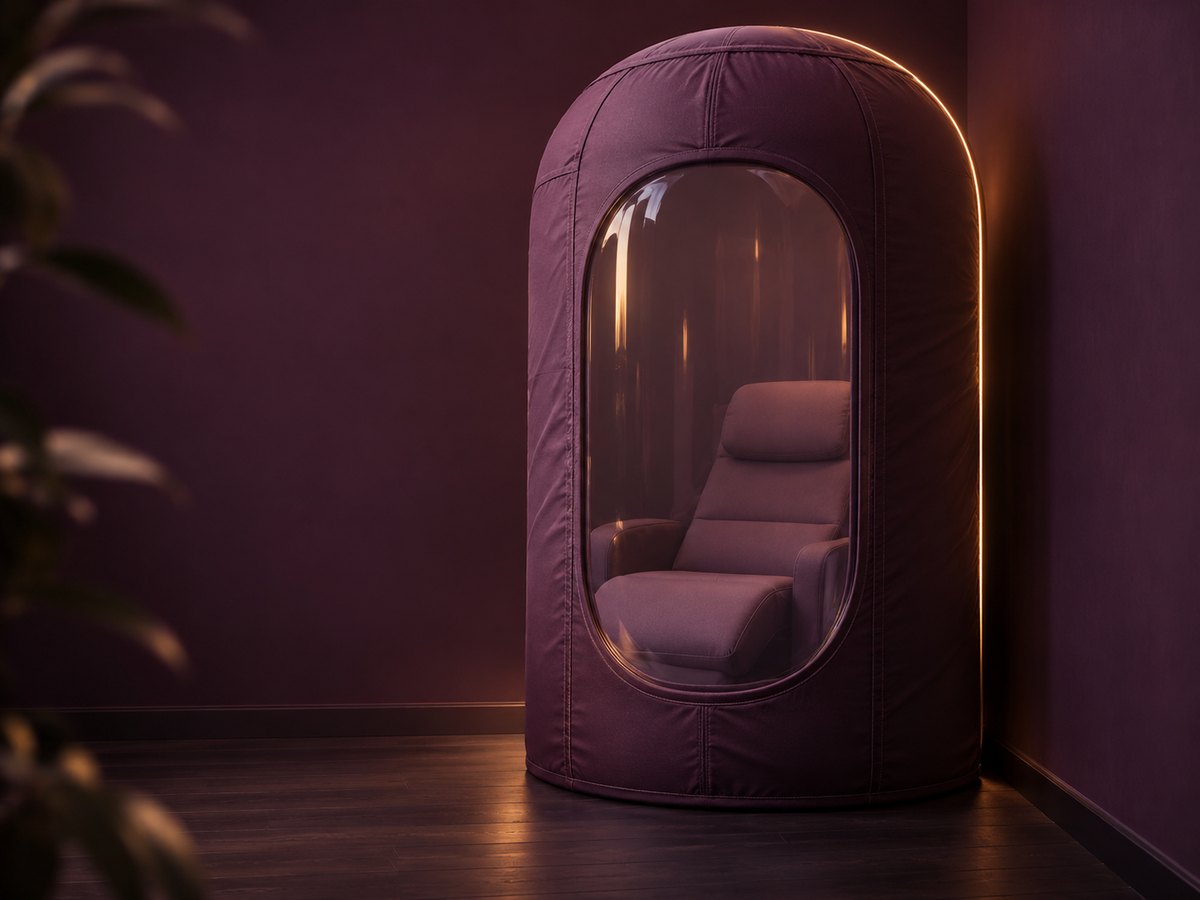
- Sit-up recliners are taller and built around a chair. Many people find them easier to enter and less enclosed-feeling, but they need more ceiling height and a wider door path.
Before buying, sit in the closest thing to the real interior for the length of a planned session. If small enclosed spaces bother you, learn that in a showroom, not your living room. Some makers offer both shapes; the chamber in the iPyramids chamber collection comes in recliner and lay-down versions.
What to check before you buy
Clearance and certifications
- Ask for the chamber's 510(k) number, then look it up yourself under product code CBF and read what the clearance actually covers.
- Ask which pressure-vessel standard the chamber meets, and who inspected it.
- Be wary of sellers who list conditions a chamber is "for." In its consumer bulletin "Hyperbaric Oxygen Therapy: Get the Facts," the FDA warned that some centers promote chambers for uses the agency has not cleared or approved.
Fire and oxygen safety
Read this part twice. The FDA's 2025 letter says the agency is aware of recent fires with HBOT devices that resulted in serious injuries and deaths, and stresses the heightened fire risk of high-concentration oxygen. It calls for following the manufacturer's instructions exactly, proper grounding, keeping electrical and static-producing items out, and wearing chamber-compatible clothing such as cotton, since wool and synthetics build more static.
One 2025 report in the FDA's public MAUDE adverse-event database describes a fatal flash fire in a sealed chamber during unsupervised self-use; investigators suspected lithium-ion batteries from a phone, tablet and power banks taken inside. Mayo Clinic likewise bars battery-powered devices and lighters from clinical chambers and asks patients to skip lotion, lip balm, makeup and hair spray.
Where oxygen equipment is in the home, the U.S. Fire Administration advises keeping tanks at least 5 feet from heat sources, open flames and electrical devices, and never using a candle, match or lighter near medical oxygen. Keep candles and incense well away from the chamber room, and keep a working extinguisher and smoke alarm close by.
Ear pressure
Cleveland Clinic describes clogged or popping ears, like flying or driving through mountains, and suggests yawning or swallowing a sip of water to equalize. Johns Hopkins Medicine adds that ear trouble is the most common complication of HBOT and that the therapy is not for everyone, which is one more reason to involve your doctor first.
Space, power and supervision
- Space: measure the footprint plus room to open the zipper or hatch, plus the compressor and oxygen equipment. Check doorways and stairs for delivery.
- Power: ask exactly which outlets and circuits the equipment needs, and about its noise and heat.
- Never alone: the FDA's letter calls for monitoring and supervision for the whole session. Plan for a trained second person every time.
- Service: ask what training comes with the chamber, its maintenance schedule, and who services it locally.
Talk to your doctor first
Hyperbaric oxygen therapy is regulated in the United States, and every source in this guide lands in the same place. Johns Hopkins Medicine says only a healthcare provider should prescribe HBOT, after a careful discussion of risks. The FDA advises checking with your healthcare provider before using HBOT and, if it is recommended, getting it at a facility accredited by the Undersea and Hyperbaric Medical Society.
So talk to your doctor first. Bring the exact model, its pressure rating and its 510(k) number. Ask whether a home chamber is appropriate for you at all, and under what supervision. Then use it only under medical direction, never alone, and never with anything that sparks, heats or charges inside it.
Quick answers
What does 1.5 ATA mean on a hyperbaric chamber?
ATA stands for atmospheres absolute, the total pressure inside the chamber. 1.0 ATA is normal sea-level air pressure, so 1.5 ATA is about 50% above it. For comparison, hyperbaric physician Dr. Caroline Fife explains that 2.0 ATA equals the pressure 33 feet under seawater.
Is a soft-shell chamber the same as hospital hyperbaric oxygen therapy?
No. Soft chambers usually run around 1.3 ATA, while Mayo Clinic describes clinical chambers as running at 2 to 3 times normal pressure. A position statement published by the Undersea and Hyperbaric Medical Society notes that several professional bodies have opposed using low-pressure chambers for hyperbaric oxygen therapy.
Can I take my phone into a hyperbaric chamber?
Follow the manufacturer's instructions, and expect the answer to be no. The FDA's 2025 safety letter warns about fires with HBOT devices and says to keep electrical and static-producing items out, and Mayo Clinic bars battery-powered devices and lighters from clinical chambers.
Do I need a doctor to use a home hyperbaric chamber?
Talk to your doctor before buying or using one. Johns Hopkins Medicine says only a healthcare provider should prescribe hyperbaric oxygen therapy, and the FDA advises checking with your provider first. Use any chamber only under medical direction and never alone.