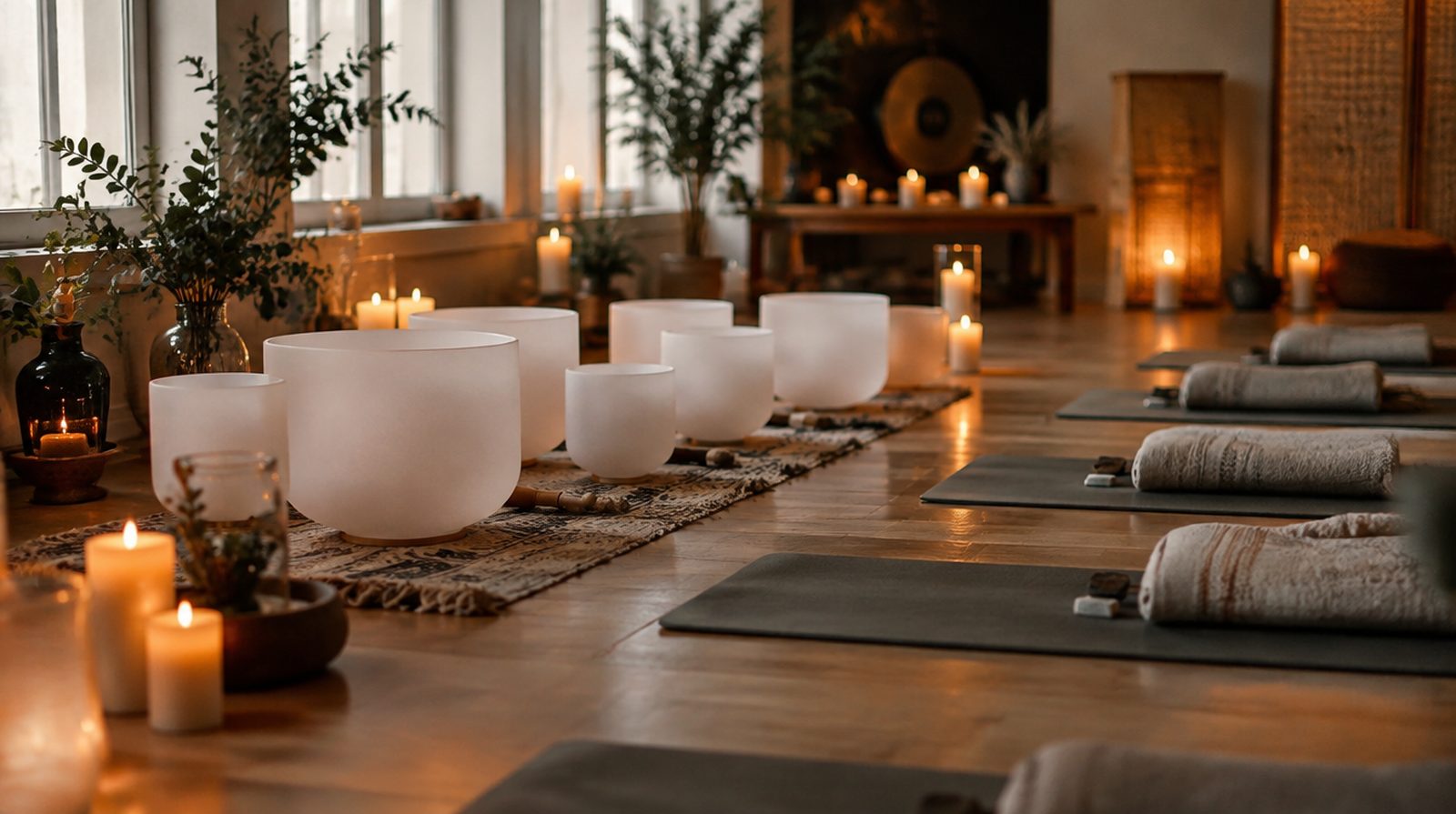

Despite the name, there is no water involved. A sound bath is simply a session where you rest while a practitioner plays instruments, and you are invited to listen. The idea is to be "bathed" in sound rather than to do anything in particular.
Sound baths have become popular in yoga studios, wellness spaces and community centres. If you have been curious but unsure what actually happens, this guide covers the essentials.
What happens during a sound bath
Every practitioner runs things a little differently, but most sessions follow a similar shape.
- Arrival and settling in. You find a spot, set up a mat, and get comfortable, usually lying on your back.
- A short introduction. The practitioner may explain how the session will run, mention any safety notes, and invite you to relax and breathe.
- The sound itself. For somewhere between thirty minutes and an hour or so, they play instruments. You simply listen, rest and notice.
- A gentle close. The sounds fade, and you are given time to come back slowly before sitting up.
Instruments you might hear
- Metal and quartz crystal singing bowls
- Gongs, which can be deep and very resonant
- Chimes, bells and tuning forks
- Rain sticks, ocean drums and other soft textures
- Sometimes voice, humming or gentle chanting
Some sounds are soft and delicate; others, especially gongs, can become quite loud and full. A good practitioner builds up gradually.
What you might experience
People describe sound baths in very different ways. Many find them calming or restful. Some drift into a doze, some notice their thoughts wandering, and some find the experience interesting but not especially relaxing. Occasionally, people find certain sounds uncomfortable or unexpectedly emotional. All of these responses are normal, and there is no "correct" experience to aim for.
It is worth being clear: a sound bath is a relaxation and listening practice. In some traditions sound is linked with ideas about energy or balance, and you are welcome to explore those beliefs, but a sound bath should not be treated as a medical treatment or a substitute for professional care.
Who should check first
Sound baths are gentle for most people, but the volume and vibration are not right for everyone. If any of the following apply to you, speak to your doctor before booking, and let the practitioner know before the session starts:
- Sensitivity to sound, or conditions such as tinnitus or hyperacusis
- Epilepsy or a history of seizures
- Pregnancy
- A pacemaker or other implanted medical device
- Any other health condition you are unsure about
A thoughtful practitioner will welcome that conversation. They may suggest a spot further from the loudest instruments, avoid placing bowls on or near your body, or recommend a different kind of session altogether.
Tip: It is always fine to bring earplugs, move further back, or quietly step out. Your comfort comes first.
What to bring
Most studios provide some equipment, but check in advance. A comfortable setup makes a real difference.
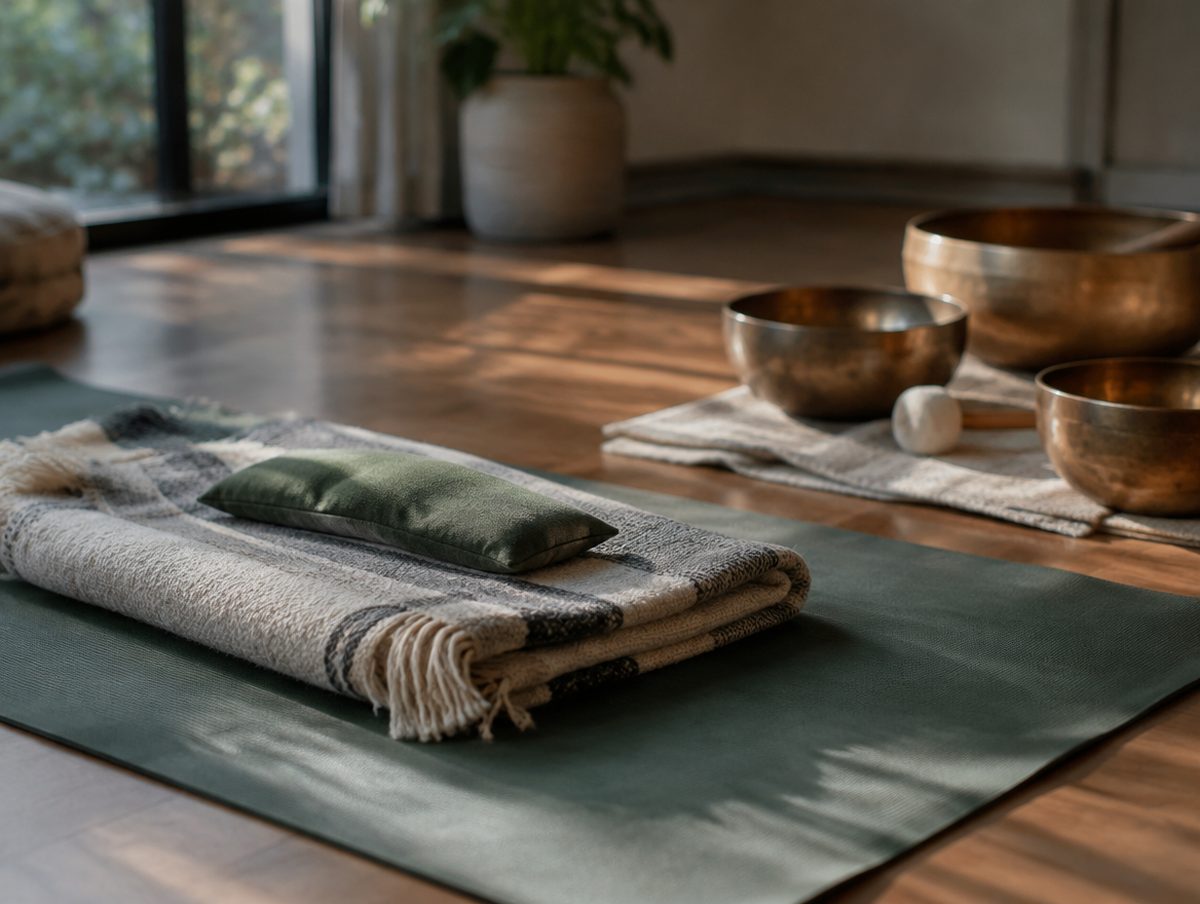
- A yoga mat or thick blanket to lie on
- A pillow or cushion for your head, and perhaps one for under your knees
- A blanket, as lying still can make you feel cool
- An eye mask, if you find it easier to rest in the dark
- Warm socks and layers you can adjust
- Water for afterwards
- Earplugs, just in case the volume feels too much

Before you go
A little preparation helps you settle in more easily.
- Eat lightly. A heavy meal just before lying still for an hour can feel uncomfortable, but arriving very hungry can be distracting too.
- Use the bathroom beforehand so you are not tempted to get up mid-session.
- Tell the practitioner about anything relevant, such as back discomfort that makes lying flat difficult. Sitting up against a wall or in a chair is usually perfectly fine.
- Arrive with no expectations. Simply noticing what you hear is enough.
What to wear
Loose, comfortable clothing is ideal, the kind you would happily lie on the floor in for an hour. Avoid tight waistbands, noisy fabrics, and jewellery that clinks when you move.
Sound bath etiquette
A sound bath works best when everyone can rest undisturbed. A few simple courtesies help.
- Arrive early. Walking in late, once people have settled, can be disruptive. Aim to be set up a few minutes before the start.
- Silence your phone. Switch it fully off or to silent without vibration, and keep it out of sight.
- Keep conversation outside. Once you enter the space, keep voices low.
- Give people room. Leave a little space between mats where possible.
- Do not touch the instruments unless you are invited to.
- Leave quietly if you need to. If you need to go early, move slowly and softly. Letting the practitioner know beforehand is kind.
- Go easy on scent. Strong perfume can be distracting in a shared, enclosed space.
Coming back afterwards
When the sound ends, take your time. Some people feel a little lightheaded after lying still, so roll to one side and sit up slowly. Have some water, and give yourself a few quiet minutes before driving or heading back into a busy environment.
Finding a good session
Look for a practitioner who explains clearly how their sessions run, asks about health considerations, and describes what they offer honestly. Be cautious of anyone who promises to cure or fix physical or mental health conditions. A good sound bath is offered as an experience, not a treatment.
You can also explore sound at home with a single bowl, a comfortable spot and a few quiet minutes. It will not be the same as a full group session, but it is an easy way to discover what you enjoy.
Quick answers
How long does a sound bath last?
Most sessions run somewhere between thirty minutes and an hour or so, including time to settle in at the start and come back slowly at the end. Check with the practitioner or venue, as formats vary.
Who should check with a doctor before a sound bath?
If you have sound sensitivity, tinnitus, epilepsy, a pacemaker or other implanted device, are pregnant, or have any condition you are unsure about, speak to your doctor first and tell the practitioner before the session begins.
Is it okay if I fall asleep during a sound bath?
Yes. Many people drift off, and that is generally fine. If you tend to snore, it can be considerate to lie on your side or mention it to the practitioner, who may suggest a spot near the edge of the room.