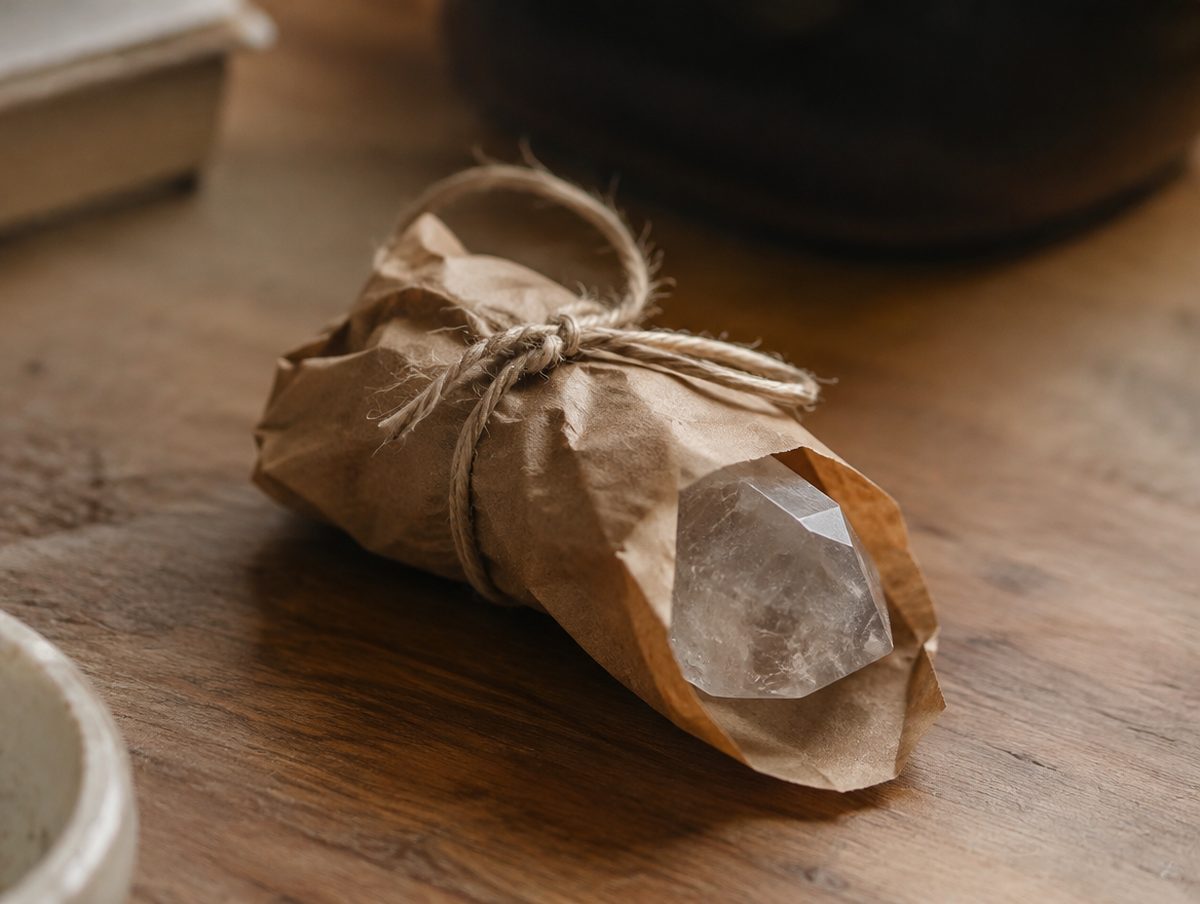
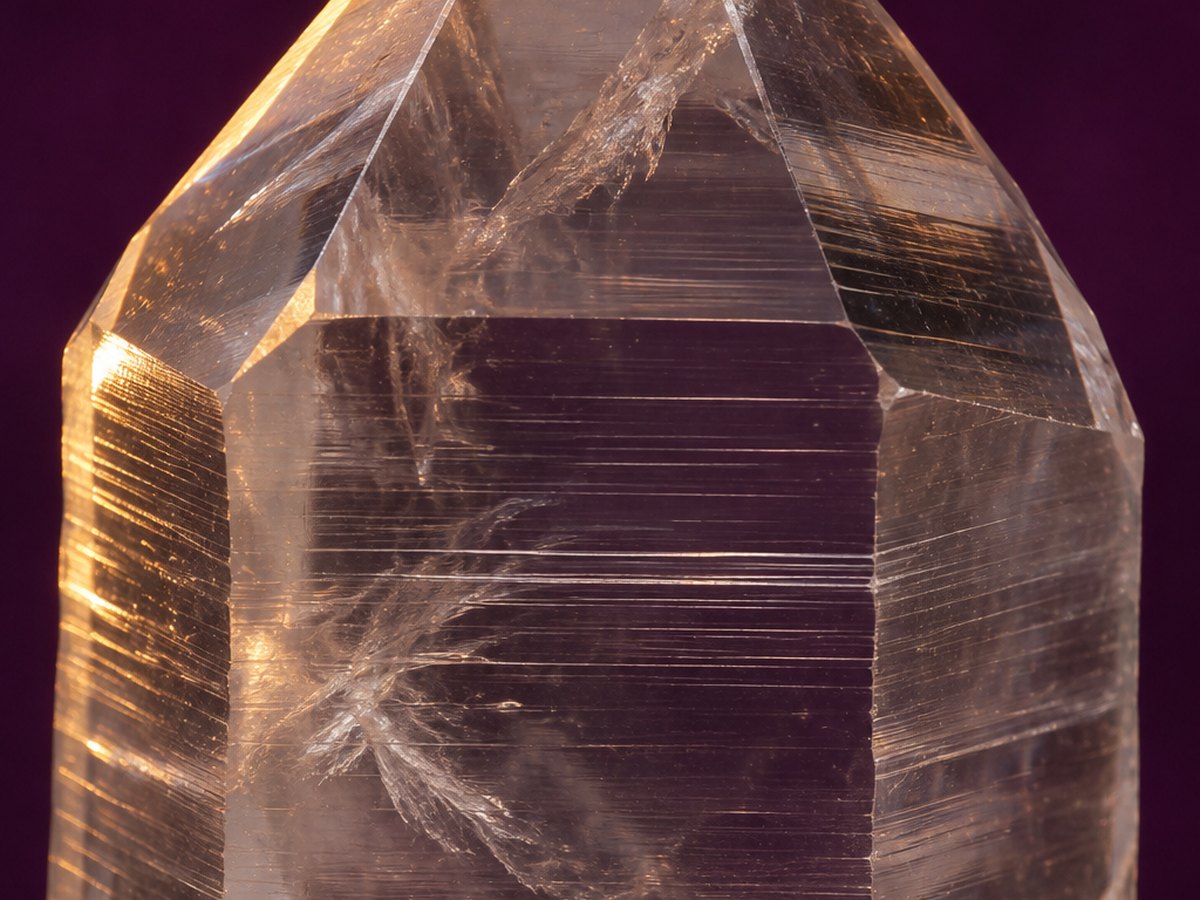
Clear quartz is the stone most people picture when they hear the word "crystal": a clean, six-sided point that looks like frozen water. It is also one of the most common minerals on Earth, which is why it turns up in every crystal shop at every price. That combination of beauty and plenty has given it a big job in crystal tradition. Many practitioners call it the "master" stone and use it more than any other.
This guide covers both sides of the stone: what clear quartz actually is, where it comes from and how to tell it from glass, and then what people believe it means and how they use it.
What clear quartz is
Clear quartz is colorless, transparent quartz, often sold under its older name, rock crystal. According to the University of Minnesota's Common Minerals guide, quartz is silicon dioxide, ranks 7 on the Mohs hardness scale (harder than glass and most metals), has no cleavage and breaks with a curved, shell-like fracture. Most crystals grow as six-sided prisms topped by a pyramid-like point.
That regular shape has its own place in the history of science. According to the Wikipedia entry on quartz, the 17th-century scientist Nicolas Steno found that no matter how large or oddly shaped a quartz crystal is, its long prism faces always meet at the same 60° angle. His work helped lay the foundation of modern crystallography.
Look closely at a natural point and you will often see fine horizontal lines across the long sides, wispy veils, tiny fluid pockets or the faint outline of an earlier crystal inside, called a phantom. Collectors treasure these details. They are part of what makes each piece one of a kind.
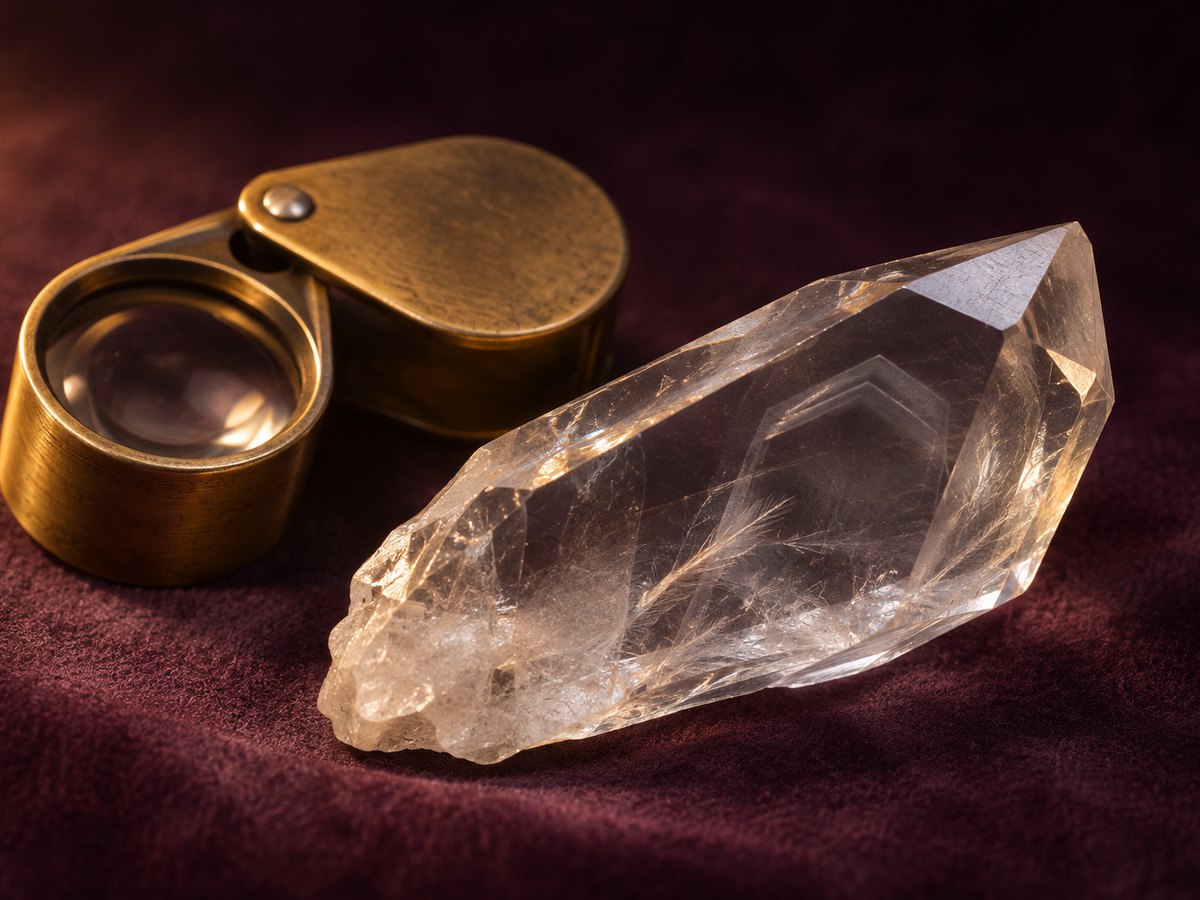
Clear quartz meaning in crystal lore
The oldest meaning of clear quartz is in its name. The University of Minnesota guide notes that the ancient Greeks called quartz krystallos, meaning ice, because its clear crystals looked like it. The Roman writer Pliny the Elder went further: according to the Wikipedia entry on quartz, he believed quartz really was ice, frozen so long it could never melt, and pointed out that it was found near Alpine glaciers. That idea lasted until at least the 17th century.
In modern crystal practice, the meanings people give clear quartz fall into a few themes:
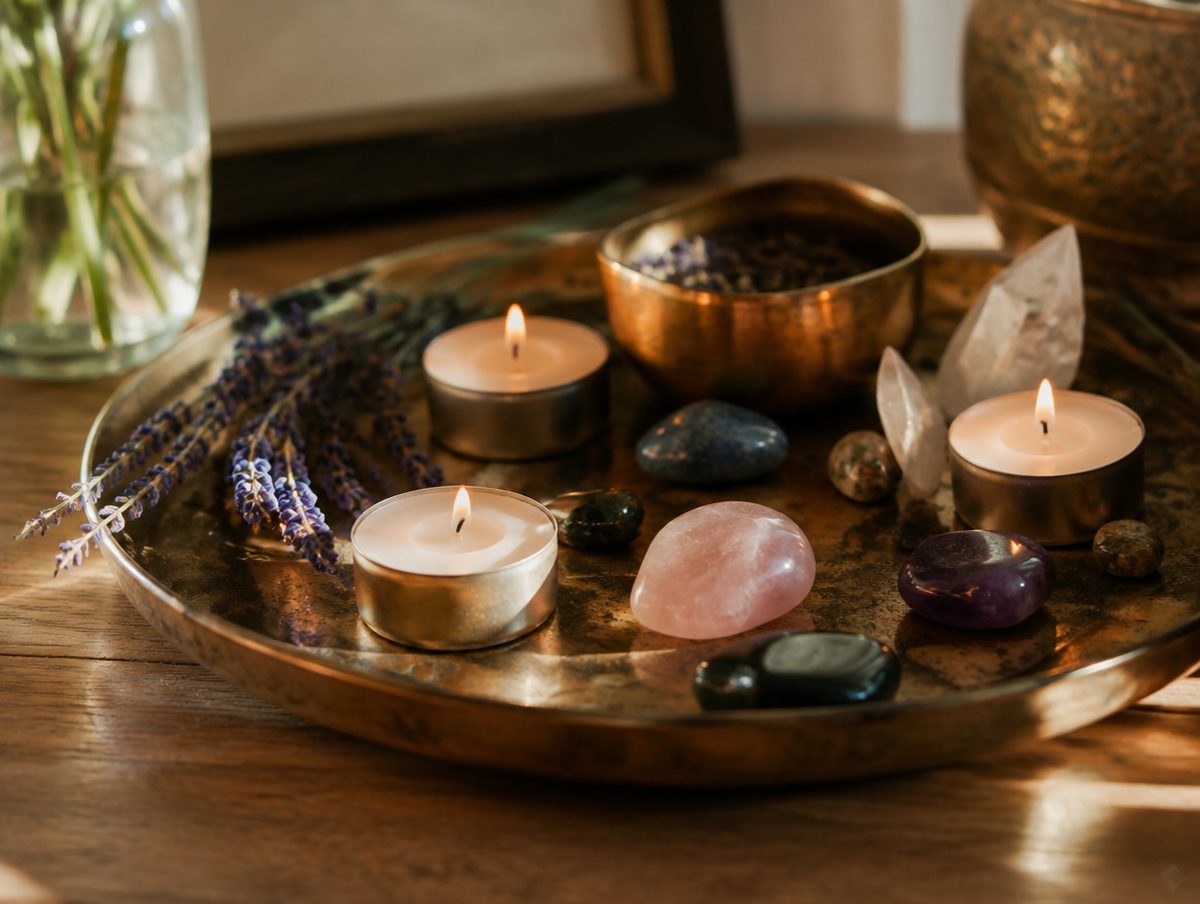
- The amplifier. Practitioners believe clear quartz magnifies intention and the energy of other stones. That is why it sits at the center of so many crystal grids and altars.
- The master stone. Because it is colorless, many people see it as an all-purpose stone that can stand in for any other, and link it with every chakra, especially the crown.
- Clarity. Its transparency makes it a natural symbol of clear thinking, honesty and focus. Many people keep a point on a desk or hold one during meditation.
- The "programmable" crystal. A popular practice is to hold a clear quartz point, state a single intention, and keep the stone as a reminder of it.
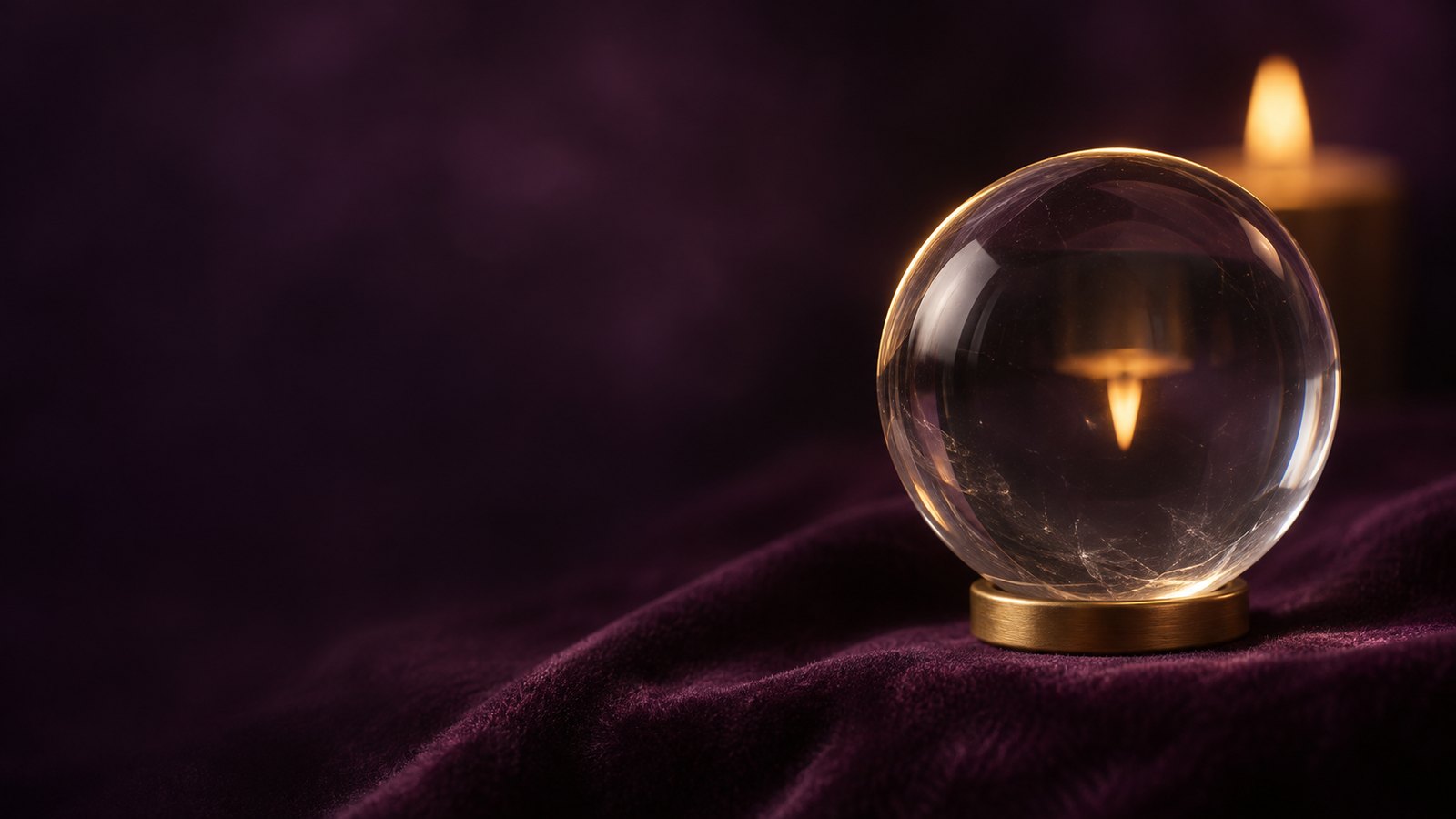
Clear quartz spheres also have a long link with crystal gazing, or scrying, where a person looks into a clear ball as a focus for reflection. Today most people simply enjoy spheres as beautiful objects that catch and bend the light.
Where clear quartz comes from
Quartz is found around the world, but one American source has a special place. According to the Arkansas Geological Survey, the Ouachita Mountains of Arkansas are known worldwide for quartz crystals, and the state made quartz crystal its official State Mineral. The Survey explains that the crystals grew in veins deposited from hot water during the closing stages of mountain building, some 280 to 245 million years ago, and that the veins reach up to 60 feet wide in Arkansas.
The Encyclopedia of Arkansas adds a story that shows how quartz moves between worlds. During the Second World War, demand for quartz oscillator crystals for communications equipment set off a rush of prospecting in the Ouachitas. After the war, synthetic crystals took over that industrial work, and the market shifted back to tourists and collectors. In the 1980s, interest in crystals' metaphysical side brought a new wave of demand.
The quartz in your watch
Clear quartz has a practical side that has nothing to do with lore. According to the University of Minnesota guide, some pure quartz crystals are piezoelectric: squeeze them and they produce a small electric voltage. That property lets quartz control the frequency of electric pulses, which led to its use in radios and timepieces. The Wikipedia entry on quartz notes that by the 1950s quartz crystals were being grown industrially, and today virtually all quartz used in electronics is synthetic.
Crystal lovers sometimes point to this as a reason quartz feels special. It is a lovely fact, but keep it in its lane: a watch circuit is engineering, and the meanings above are tradition and belief.
How to tell clear quartz from glass
Glass is the classic clear quartz imitation, and molded glass points can look almost identical. EarthWonders' guide to quartz and glass suggests a few simple checks:
- The cold test. Quartz carries heat away from your skin faster than glass, so it feels colder and stays cold longer. Leave your stone beside a known glass object for an hour, then touch each to your lip or inner wrist.
- Look at the bubbles. Perfectly round bubbles or swirly flow lines point to glass. Angular pockets, veils or mineral needles point to quartz. Real quartz can hold a tiny fluid pocket with a moving bubble, but its edges are usually sharp and angular.
- Don't trust perfection. Modern glass can be bubble-free, so a flawless, water-clear "crystal" at a low price deserves a closer look.
- Know the trade names. According to EarthWonders, "smelting quartz," "smelted quartz" and "cherry quartz" are all names for glass.
If a piece matters to you, ask the seller where it was mined and whether it is natural, and look for shops that label glass honestly.
How to care for clear quartz (and one real fire risk)
Clear quartz is one of the easiest stones to live with. A rinse in lukewarm water with a drop of mild soap and a soft cloth is all most pieces need. Gem care charts such as the one published by jeweler Oval + Pear list transparent quartz as having good toughness but advise avoiding thermal shock, so never move a crystal straight from hot water to cold, or from a sunny sill into a cold room and then into water.
The safety point every owner should know is about spheres. A clear sphere can focus sunlight like a magnifying glass. In one case reported by the BBC, Essex Fire and Rescue Service said sunlight reflected off a crystal ball ornament set fire to a pile of towels, and the service warned people to keep mirrors, glass and crystal objects on windowsills out of direct sunlight, especially when the sun is low. Points and clusters are less of a worry, but a sphere should never sit in a sunny window.
- Keep spheres out of direct sun, including during "sun charging" rituals.
- Protect the points. Quartz is hard but brittle, and tips chip if they knock together.
- Store softer stones apart. At hardness 7, quartz can scratch many other crystals in a shared bowl.
How people use clear quartz
Because tradition sees it as an all-rounder, clear quartz shows up everywhere: as the center stone of a crystal grid, on a meditation altar, in a window as a rainbow-maker (points only, never spheres), on a desk as a focus object, and set into jewelry and larger pieces. Crystal lovers who want a larger centerpiece for a meditation space sometimes look at pyramid frames too, and our iPyramids pyramids section shows the meditation frames and capstone crystal line-ups in that collection.
If you are just starting, a single natural point that you like the look of is plenty. Learn its little phantoms and veils, keep it clean and out of harm's way, and let it be whatever reminder you choose.
Quick answers
What does clear quartz mean spiritually?
In crystal tradition, clear quartz is the "master" stone. Practitioners believe it amplifies intention and the energy of other stones, link it with clarity and focus, and often place it at the center of grids and altars. These are beliefs rather than proven effects.
How can I tell if my clear quartz is real or glass?
Real quartz feels colder than glass and stays cold longer. Perfectly round bubbles or swirly flow lines suggest glass, while angular pockets, veils and needles suggest quartz. Names like "smelting quartz" and "cherry quartz" are used for glass.
Can clear quartz go in the sun?
Points and clusters are generally fine for short periods, but never leave a clear sphere in direct sunlight. A sphere can focus sunlight like a magnifying glass, and fire services have reported crystal balls setting fabric alight.
Is clear quartz the same as rock crystal?
Yes. Rock crystal is the traditional name for colorless, transparent quartz. Both describe silicon dioxide with a hardness of 7.