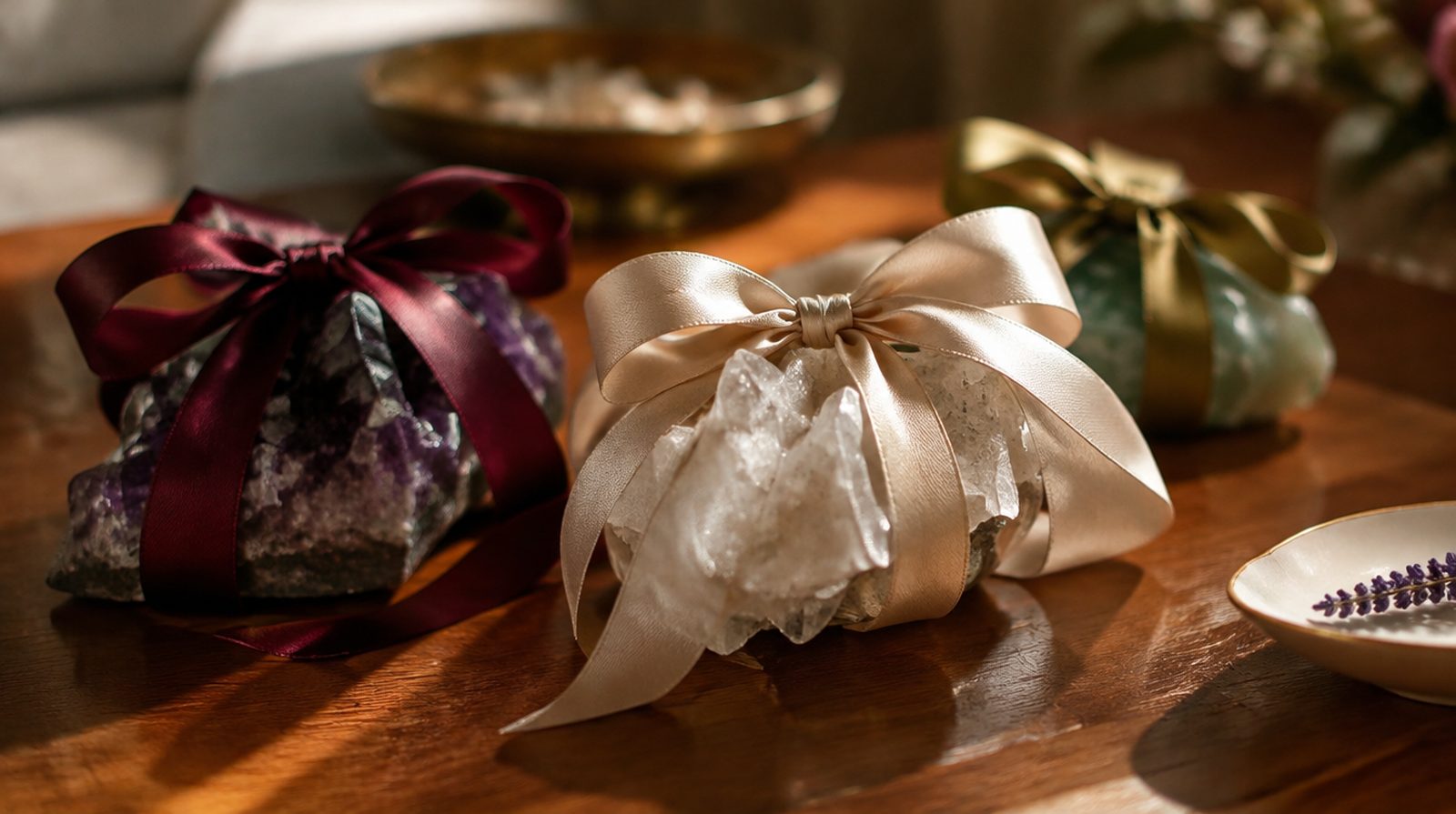
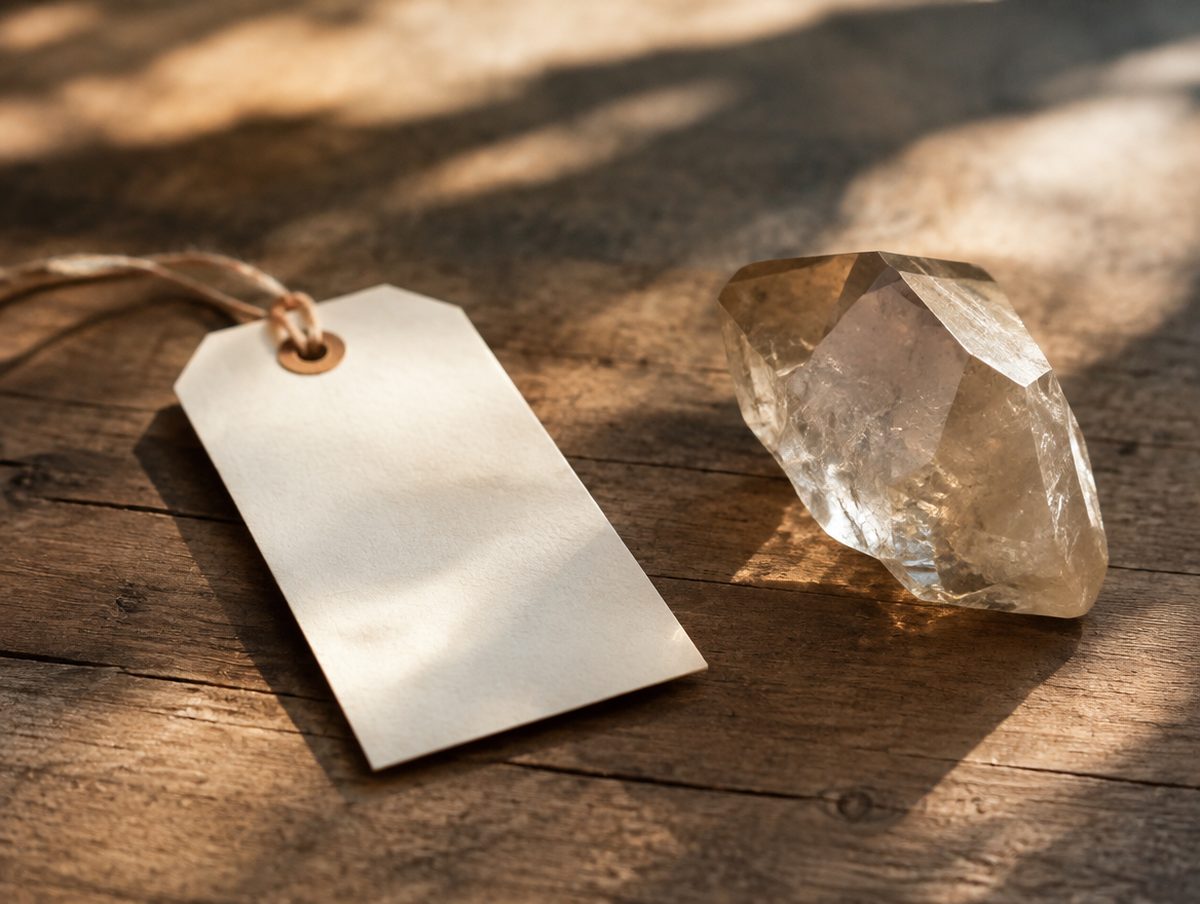
A crystal makes a surprisingly personal gift. It is small, beautiful, and it comes with a story: where it formed, what people have believed about it, and why you chose it for this person. You don't need to spend much. The thought, and the way you share it, is what makes it special.
This guide suggests meaningful stones for different occasions and personalities, shows you how to present a stone with its story, and offers plenty of budget-friendly ideas.
Start with the person, not the stone
Before you pick a crystal, think about who you are giving it to. What colors do they love? Are they drawn to spiritual practices, or do they simply enjoy beautiful natural objects? Will they wear it, keep it on a desk, or place it on a shelf?
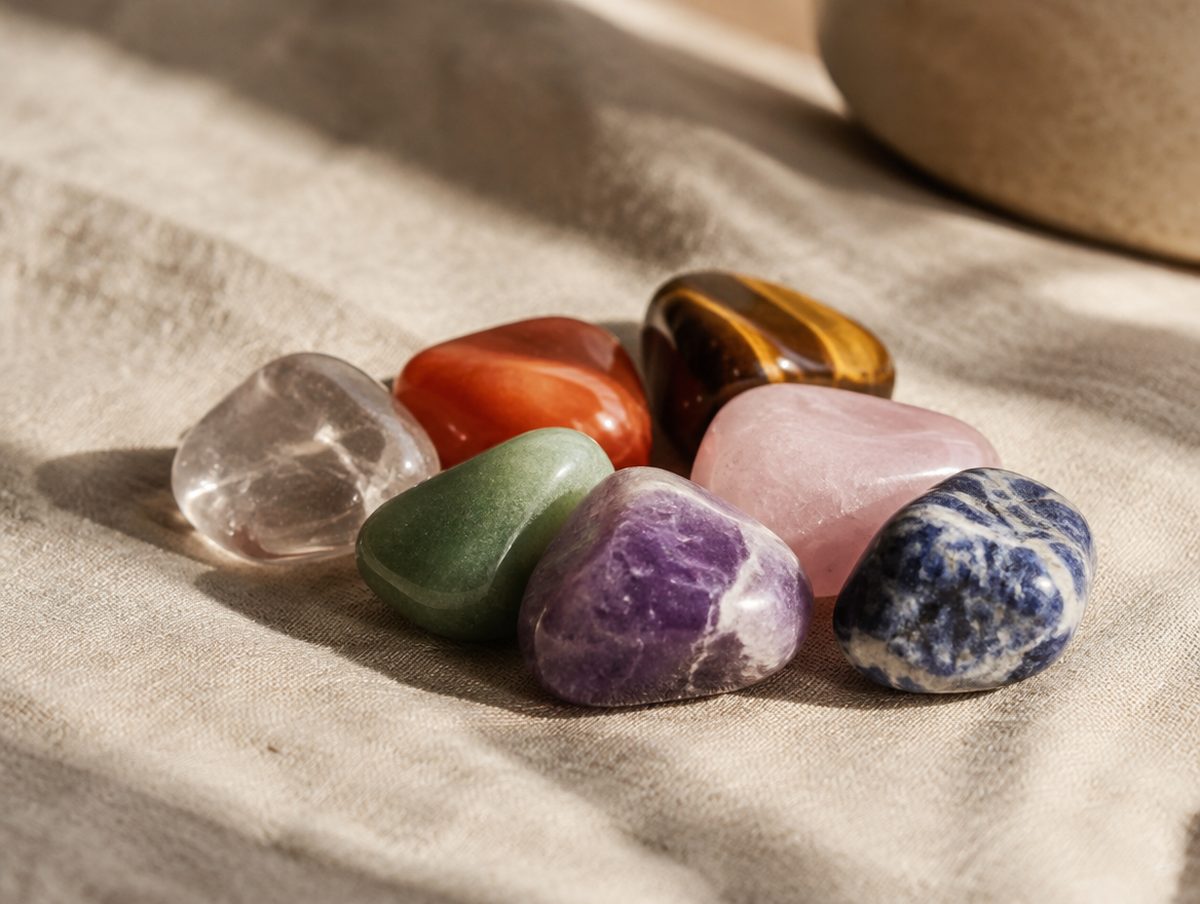
A good crystal gift fits the person's life. A pretty tumbled stone for a pocket, a small cluster for a windowsill or a simple pendant can all be perfect. The right choice is the one that feels like them.
Meaningful stones by occasion
The associations below come from modern crystal lore and older folk traditions. They are symbols and beliefs rather than promises, which is exactly how to share them.
Birthdays
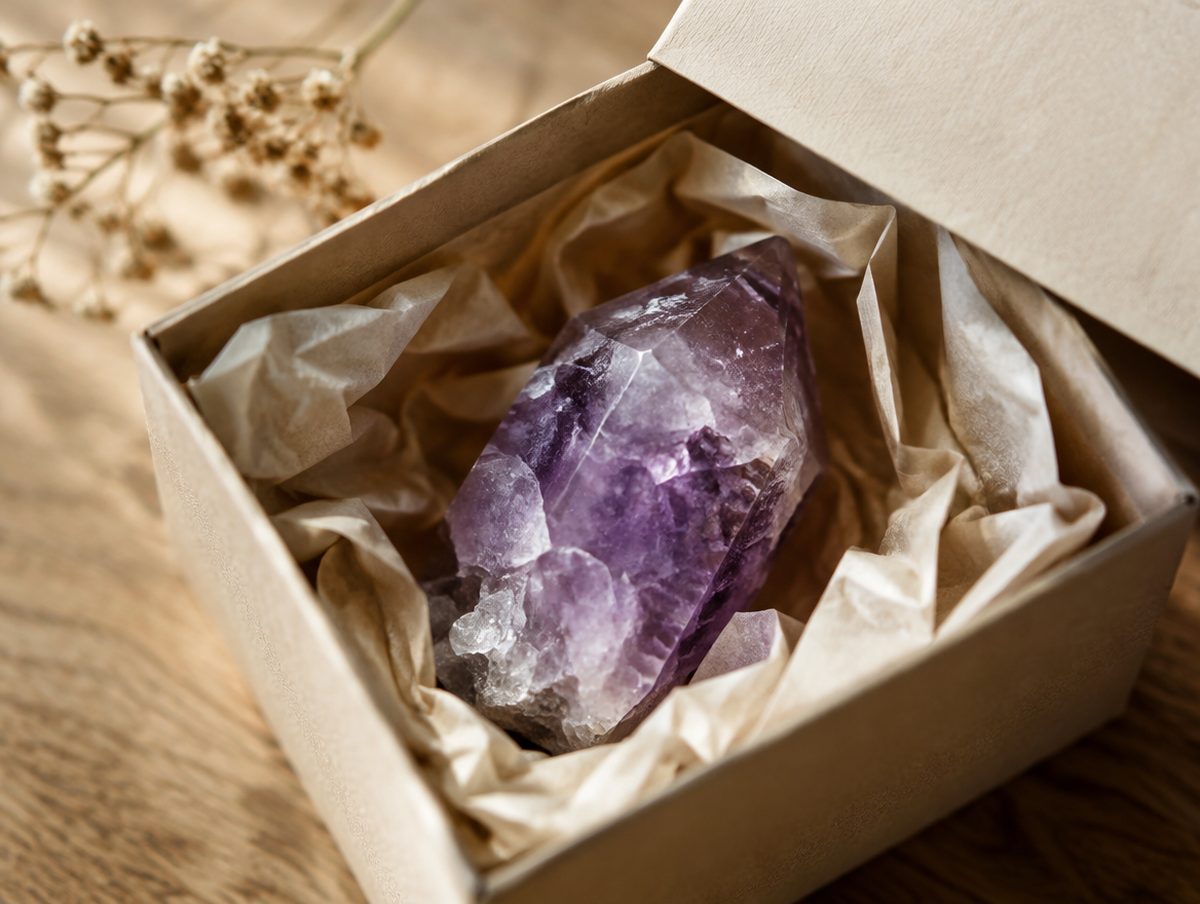
A birthstone is the classic choice because it is tied to the person's own month: garnet for January, amethyst for February, peridot for August, and so on. A raw or tumbled version of a birthstone is often far more affordable than a cut gem and just as meaningful.
A new home
Clear quartz is widely associated with clarity and fresh starts, and a small cluster looks lovely on a windowsill. Some people follow the folk tradition of placing black tourmaline near the front door as a symbol of protection. Pair either with a card welcoming them to their new chapter.
Graduations and new jobs
Citrine is associated in crystal lore with optimism and abundance, and its sunny color suits a celebration. Carnelian, a warm orange stone, is traditionally linked with courage, a thoughtful nod to someone starting something new.
Weddings and anniversaries
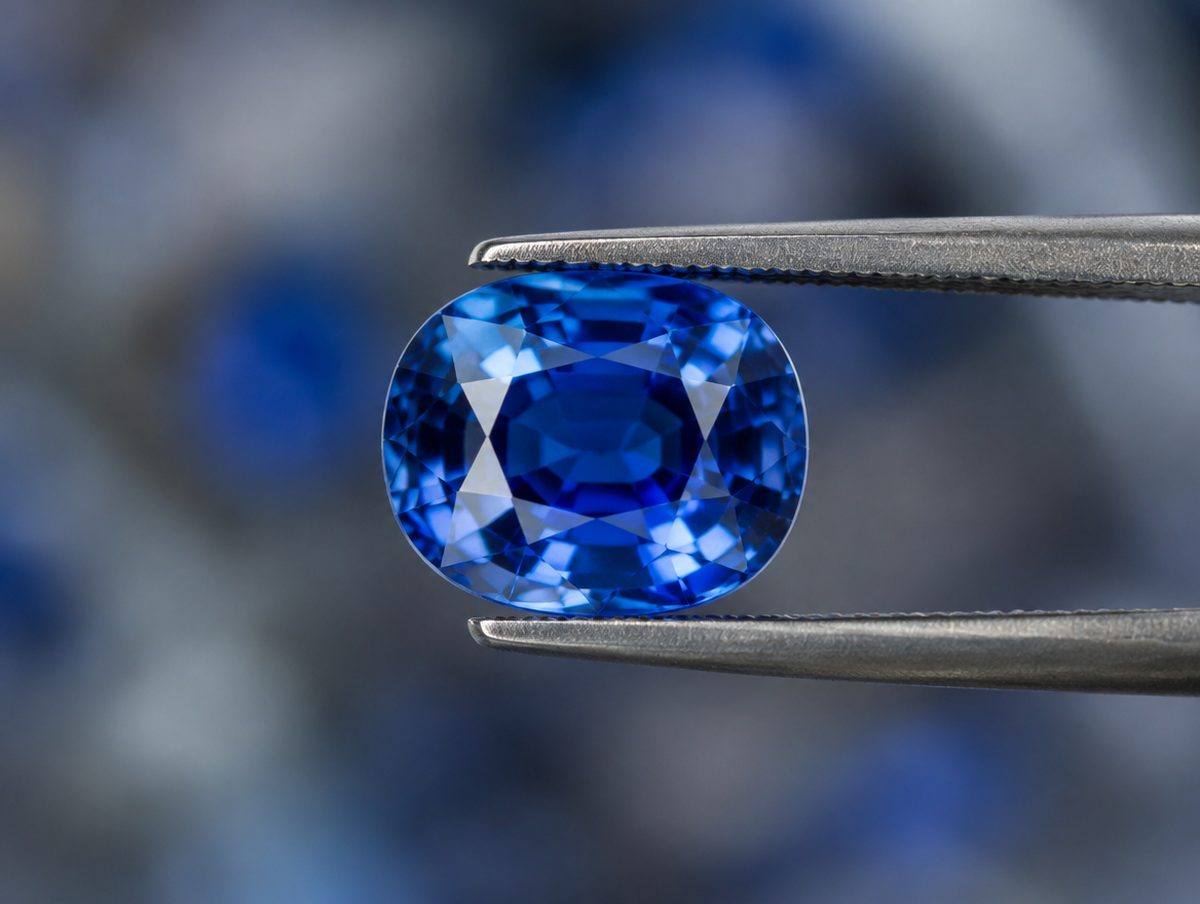
Rose quartz is perhaps the best-known stone of love and tenderness in modern crystal traditions. For anniversaries, some commonly cited lists link certain years with gems, such as ruby for a 40th and sapphire for a 45th, and those make a meaningful match if you're celebrating a milestone.
A new baby
Moonstone is often associated with new beginnings, and rose quartz with gentle love. Give these to the parents rather than the baby. Small stones are a choking hazard, so they belong on a high shelf, not in the nursery within reach.
Difficult times
When someone is grieving or going through a hard stretch, a smooth palm stone can be a quiet way of saying "I'm thinking of you." Amethyst and smoky quartz are traditionally associated with calm and steadiness. Keep your message simple and kind, and frame the stone as a keepsake, not a fix. A crystal is a gesture of care, never a substitute for support or professional help.
Thank-you gifts
Green aventurine has long been called a "stone of luck" in crystal lore, which makes it a cheerful thank-you for a teacher, a colleague or a neighbor who helped you out.
Stones by personality
- For the meditator: an amethyst palm stone or a small point for their altar.
- For the dreamer: labradorite, whose flashes of blue and gold are traditionally linked with intuition and imagination.
- For the grounded, practical friend: smoky quartz or hematite, stones associated with steadiness.
- For the curious skeptic: a striking mineral specimen, such as pyrite or a geode, with a card about the geology behind it.
- For the child: a small pouch of larger tumbled stones for an older child to sort and collect, with adult supervision around smaller pieces.
How to present a stone with its story
The story is what turns a pretty rock into a gift someone keeps for years. Here is a simple way to share it:
- Name it. Write the stone's name clearly, so they can look it up later.
- Share a fact. Add a line about what the stone is or where it tends to be found. For example, amethyst is a purple variety of quartz.
- Share the tradition. Mention what the stone symbolizes, using gentle words like "is associated with" or "has long been seen as."
- Make it personal. Add why you chose it for them.
- Add care notes. Let them know if it should be kept out of water or bright sunlight.
A card might read: "This is rose quartz, a pink variety of quartz. In crystal traditions it's associated with love and kindness, which made me think of you. Keep it out of strong sunlight so its color stays soft."
Tip: Describe what a stone symbolizes, not what it will do. "Associated with courage" invites the person to find their own meaning. A promise that a stone will change something puts pressure on a gift that should simply feel good to receive.
Budget-friendly ideas
Meaningful doesn't have to mean expensive. Some of the most loved crystal gifts cost very little:
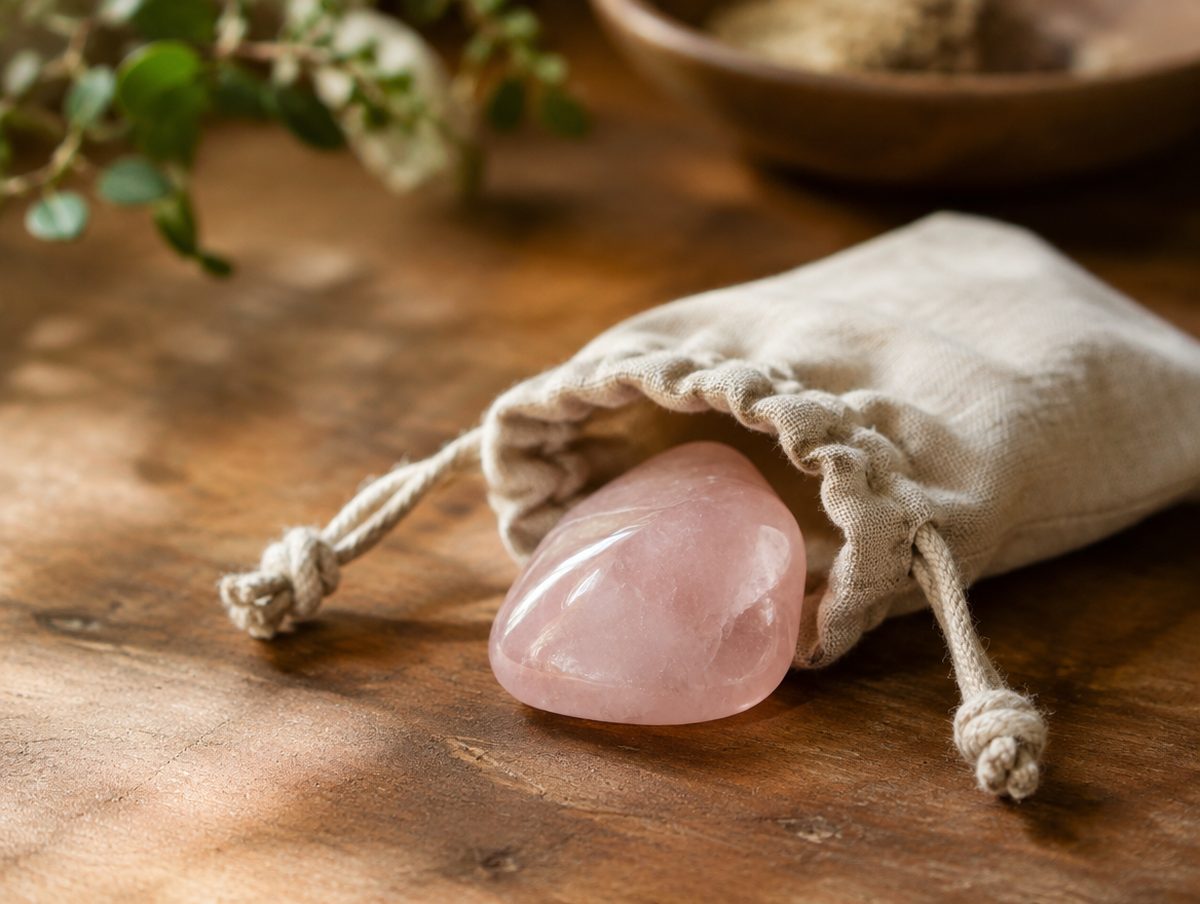
- A single tumbled stone in a small cloth pouch with a handwritten card.
- A "three stones" set, each chosen for a different wish for the person.
- A birthstone in raw form rather than a cut gem.
- A crystal paired with something handmade, such as a bookmark, a small dish you painted or a letter.
- A stone-of-the-month tradition, where you give one small stone every month or every birthday to build a collection over time.
- A crystal with a candle or incense to create a simple ritual kit for a quiet evening.
A few honest cautions
- Safety first. Small stones are a choking hazard for young children and pets. Choose larger pieces for households with little ones, and keep small stones out of reach.
- Know your stone's care needs. Some crystals don't like water, and some fade in sunlight. Include care notes so the gift lasts.
- Ask about sourcing and treatments. Buy from sellers who can tell you whether a stone is natural, dyed, heat-treated or lab-grown, and who are open about where their stones come from.
- Respect the recipient's beliefs. Not everyone connects with crystal meanings. For some people a stone is simply beautiful, and that is a wonderful reason to give it too.
Whatever you choose, the heart of a crystal gift is attention. You noticed who someone is and found a small piece of the earth to match. That is a story worth wrapping up.
Quick answers
What is a good crystal gift for someone new to crystals?
Clear quartz, rose quartz and amethyst are popular first stones: easy to find, beautiful and rich in tradition. A tumbled stone or palm stone with a short card explaining what it is and what it symbolizes makes a gentle, meaningful introduction.
Is it okay to give a crystal to someone who doesn't believe in crystal meanings?
Absolutely. Many people simply enjoy crystals as beautiful natural objects. For a skeptical friend, focus the card on the stone's geology and where it formed, and let the traditional meaning be a light, optional extra.
How should I write a card to go with a crystal gift?
Include the stone's name, one interesting fact, its traditional associations using words like 'associated with', why you chose it for them, and any care notes. Avoid promising that the stone will do something; describe what it symbolizes instead.