The first time you try to make a singing bowl "sing," it can feel a bit awkward. The mallet slips, the bowl rattles, or nothing much happens at all. That is completely normal. With a few pointers and ten minutes of patient practice, most people get a steady, lovely hum.
There are two basic ways to play a bowl: striking it like a bell, and rimming it, which means rubbing the mallet around the edge until the tone builds. Here is how to do both.
Before you start: set up
- Find a quiet spot where you can hear the tone clearly.
- Sit comfortably with a straight but relaxed back.
- Decide on hand or cushion. Small and medium metal bowls can rest on the flat palm of your open hand. Larger bowls and all crystal bowls should sit on a cushion or ring.
If you hold the bowl, keep your hand flat and your fingers out of the way. Wrapping your fingers up the sides dampens the vibration and mutes the sound, a bit like touching a ringing glass.

Technique 1: Striking the bowl
Striking is the simplest way to get a sound and a nice way to begin or end a quiet moment.
- Hold the mallet loosely, the way you might hold a pencil or a wooden spoon.
- Gently tap the outer side of the bowl, a little below the rim.
- Let the sound ring out and fade on its own.
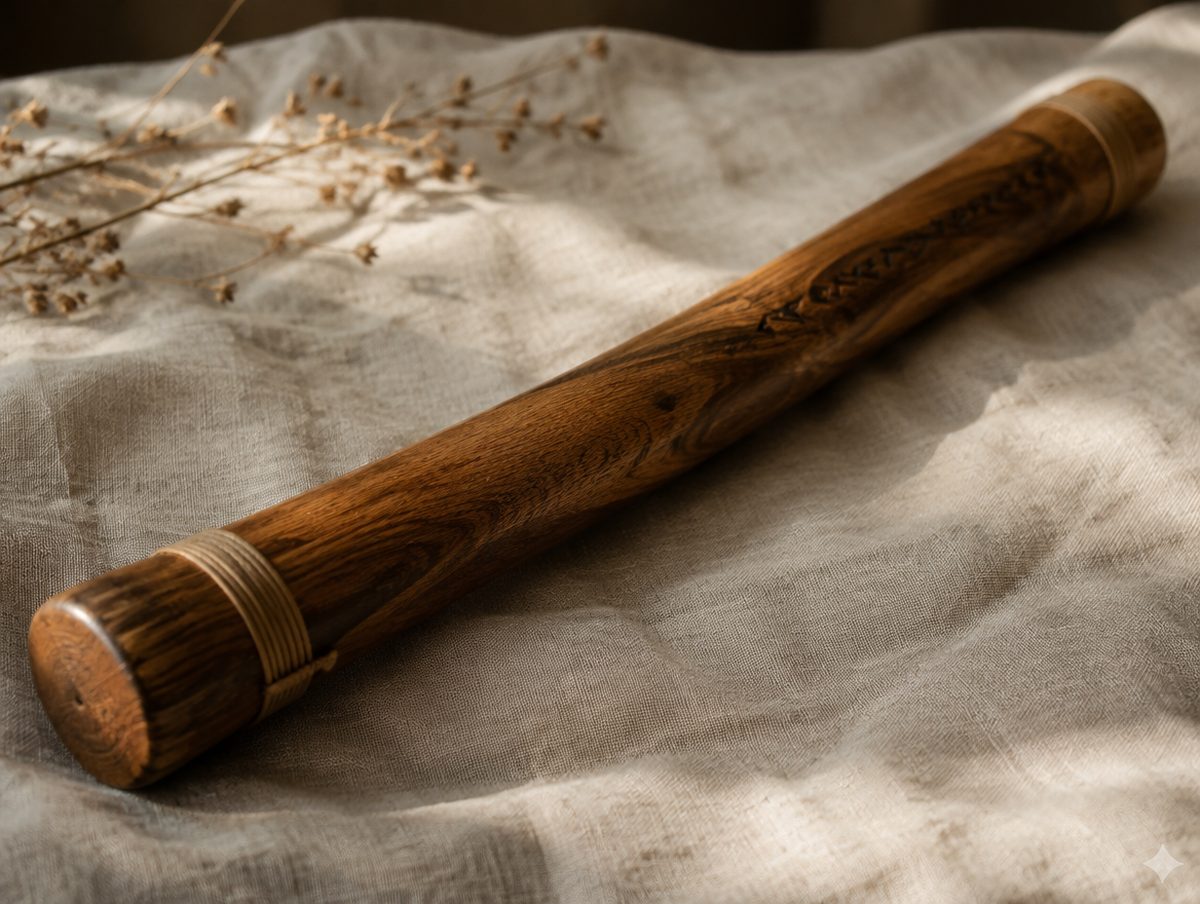
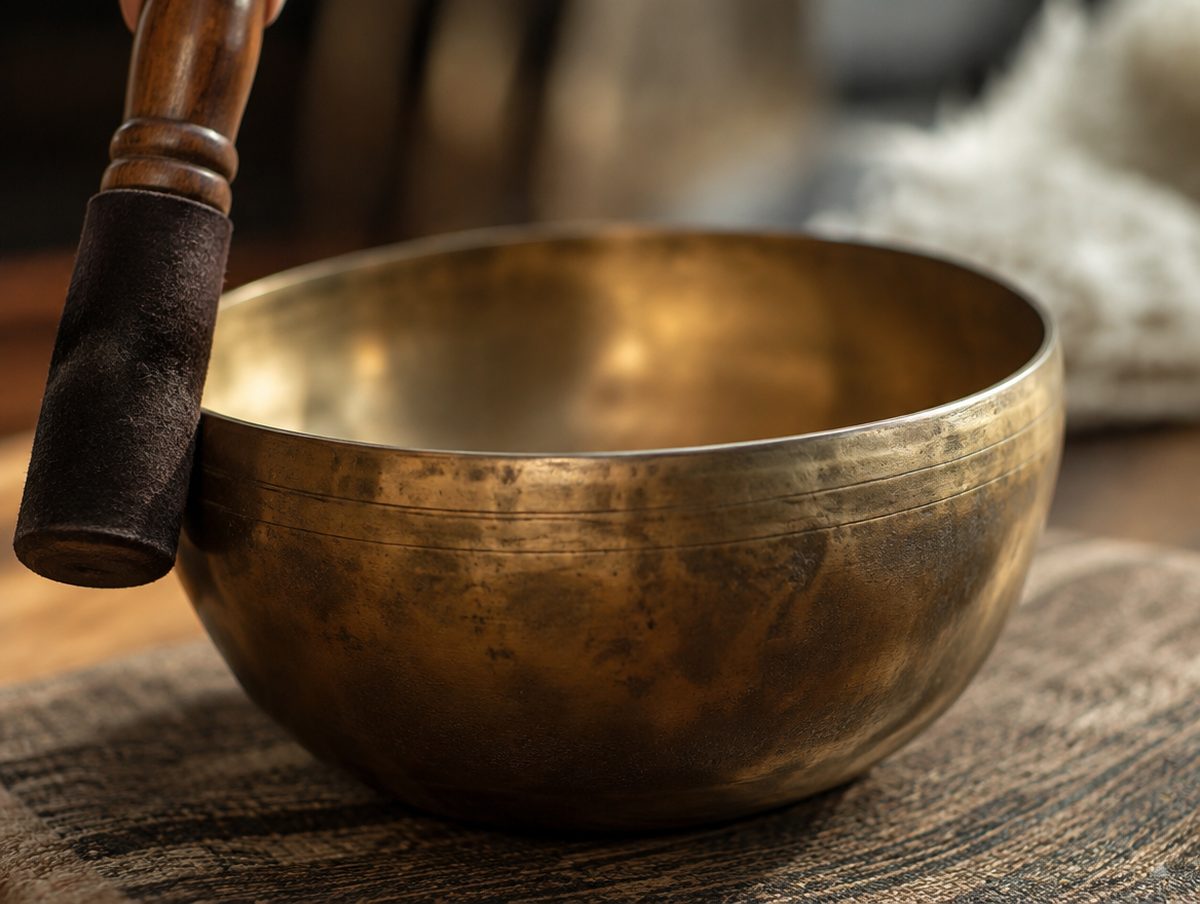
A padded or suede-wrapped striker gives a warmer, rounder tone. A bare wooden mallet gives a brighter, sharper one. Try both to see which you prefer.
Tip: Softer than you think. A light tap usually sounds better than a hard hit, which can produce a harsh clang.
Technique 2: Rimming, or making the bowl "sing"
This is the technique that creates the continuous, humming tone singing bowls are known for.
- Warm it up. Many people start by striking the bowl once gently. This gets it vibrating and makes the next step easier.
- Place the mallet against the outer rim. Hold it upright, like a pen, with the side of the mallet touching the outside edge of the bowl.
- Circle slowly and steadily. Move the mallet around the rim in a smooth, even circle. Think of it as moving your whole arm, not just your wrist.
- Keep even pressure. Press firmly enough to keep contact, but do not grind.
- Listen for the build. After a few rotations you should hear the tone rise and start to sustain on its own.
- To finish, gently lift the mallet away and let the sound fade naturally.
Speed and pressure work together. Slower circles with firmer pressure often give a deeper, fuller sound. It takes a little experimenting to find what your particular bowl likes.

Common mistakes and how to fix them
Chattering or rattling
This is the most common problem. As the bowl gets louder, the mallet starts bouncing against the rim with a buzzing, rattling sound. It usually means the vibration has become stronger than your mallet contact.
To fix it:
- Slow down. Going faster often makes chattering worse, not better.
- Press a little more firmly to keep steady contact with the rim.
- Change the angle of the mallet slightly, or use more of the mallet's length against the bowl.
- Try a wrapped mallet. Suede or felt tends to grip better and chatter less than bare wood on some bowls.
No sound, or a very weak one
- Check your fingers are not touching the sides of the bowl.
- Make sure the bowl is not sitting flat on a hard surface; lift it with a cushion.
- Strike once first, then begin rimming.
- Keep going for a few more rotations. Some bowls take time to "wake up."
Uneven or wobbling tone
Wobbles often come from uneven speed or pressure as you circle. Focus on a smooth, consistent motion. A slight wobble, sometimes called beating, is also a natural feature of some bowls, especially hand-hammered ones, so not every pulse is a mistake.
Gripping too tightly
A tense grip makes the motion jerky. Hold the mallet loosely, relax your shoulders, and let your arm do the work.
The water-in-the-bowl trick
This is a fun one to try with a metal bowl. Pour a small amount of water into the bottom, then strike or rim the bowl as usual.
- The water changes the pitch slightly, which you can hear as you add more or less.
- When you rim the bowl steadily, the surface of the water can ripple and even throw up tiny droplets, making the vibration visible.
A few sensible cautions:
- Use only a little water, and dry the bowl thoroughly afterwards to protect the metal and any finish.
- Keep it away from electronics and anything that should not get splashed.
- Check with the seller before putting water in a bowl with a painted, etched or decorated finish.
- Do not use this trick with crystal bowls unless the maker says it is fine; treat them gently.
Playing crystal bowls
Crystal bowls are played in a similar way, but with a rubber or suede-covered wand, and always resting on their ring rather than in your hand. They respond quickly and can become loud, so start gently. Rim slowly around the outside edge, and lift the wand away cleanly to stop.
Building a simple practice
You do not need a long routine. Many people like to:
- Sit quietly and take a few slow breaths.
- Strike the bowl once and listen until the sound fully fades.
- Rim the bowl for a minute or two, paying attention to the tone.
- Finish with one last gentle strike and a moment of stillness.
Many people find this a calming way to transition between parts of the day. How it feels is personal, and it is not a substitute for professional medical or mental health support if you need it. Be mindful of volume, too: keep sessions gentle if you or anyone nearby is sensitive to sound or has a condition such as tinnitus.
Most of all, be patient. Every bowl has its own personality, and learning its sweet spot is part of the enjoyment.
Quick answers
Why does my singing bowl rattle when I rim it?
That rattling, called chattering, usually happens when the bowl's vibration becomes stronger than your mallet contact. Slow down, press a little more firmly, adjust the mallet angle, or try a suede-wrapped mallet, which often grips better.
Should I hold the bowl or put it on a cushion?
Small and medium metal bowls can rest on a flat, open palm with your fingers kept away from the sides. Large metal bowls and all crystal bowls are best played on a cushion or ring so they can vibrate freely and stay safe.
Is it safe to put water in a singing bowl?
A little water in a plain metal bowl is a popular trick, but dry the bowl thoroughly afterwards and keep it away from electronics. Check with the seller first for decorated or painted bowls, and avoid it with crystal bowls unless the maker says it is fine.