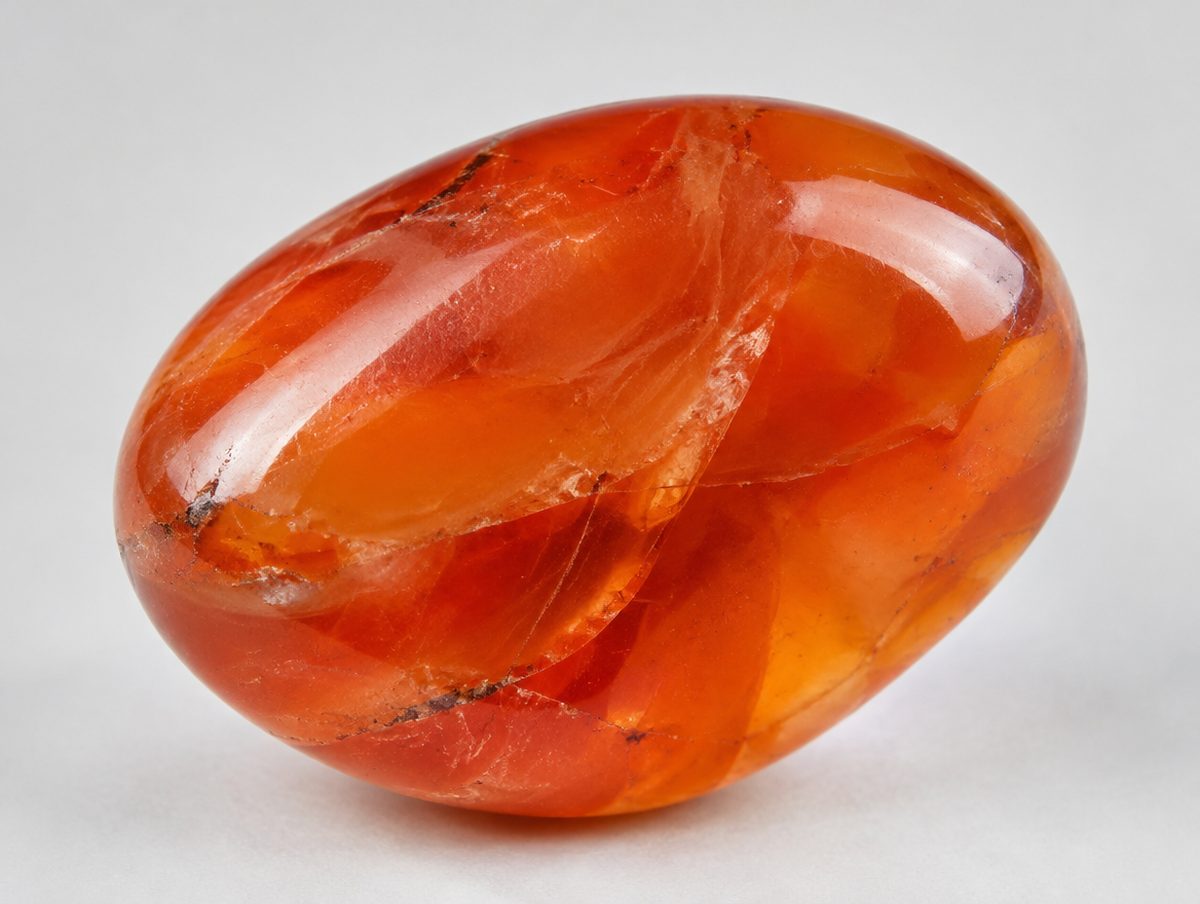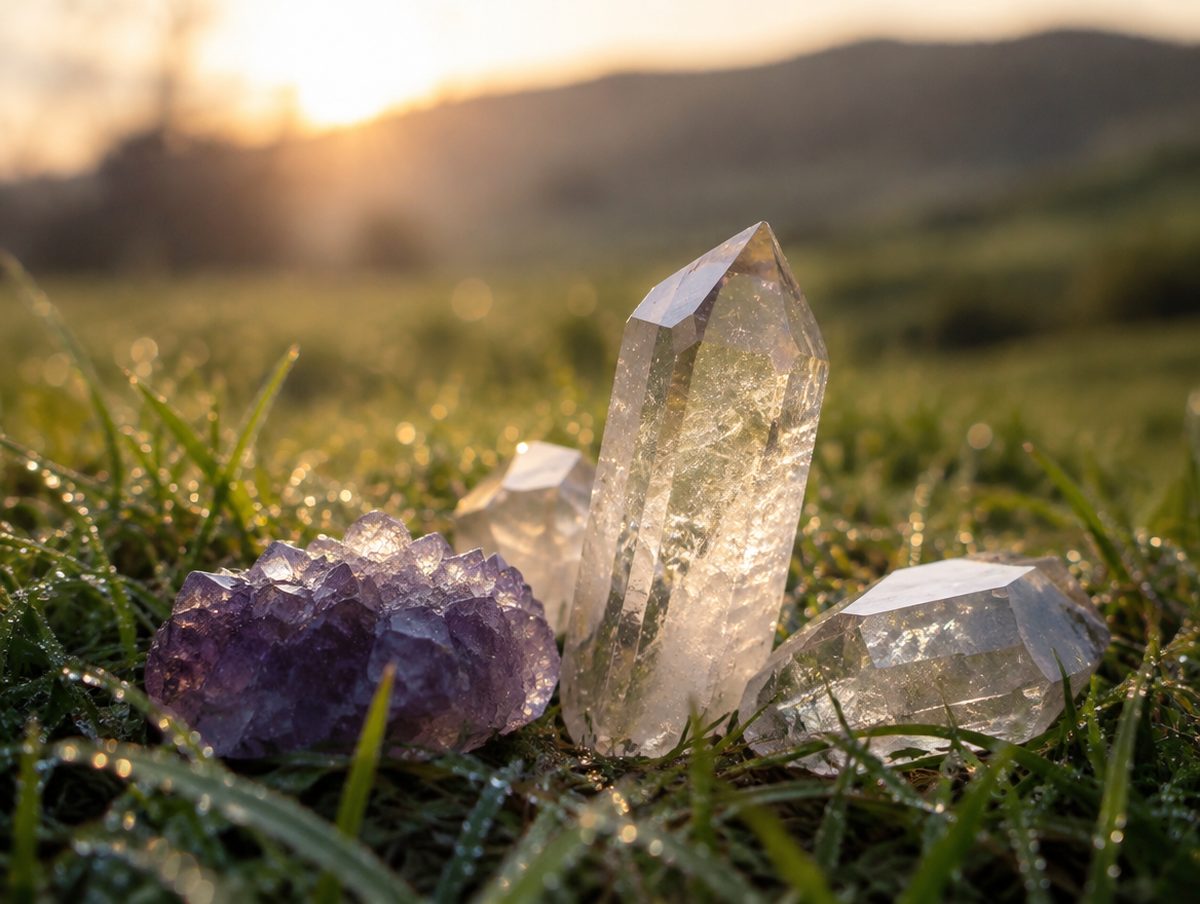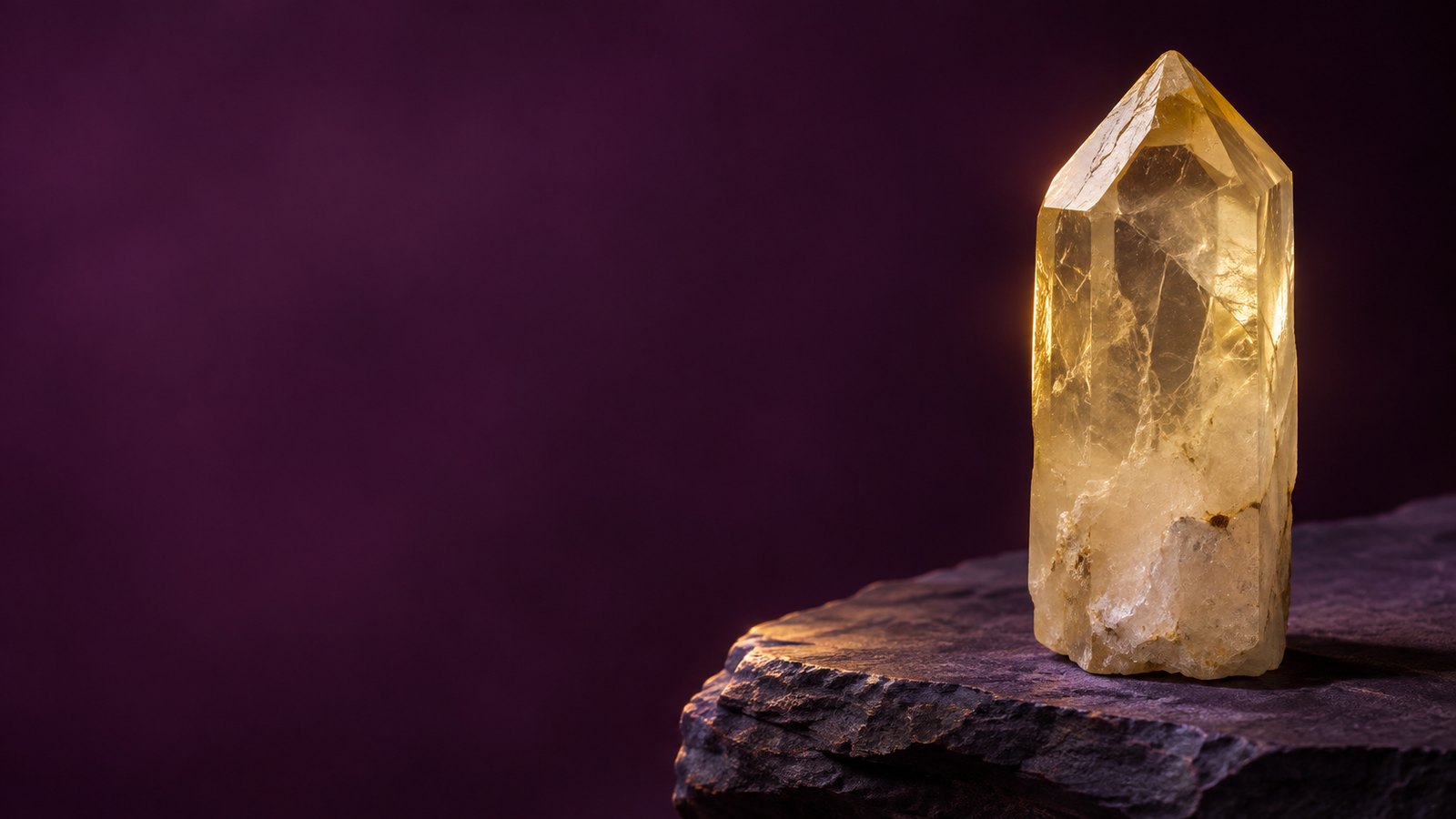
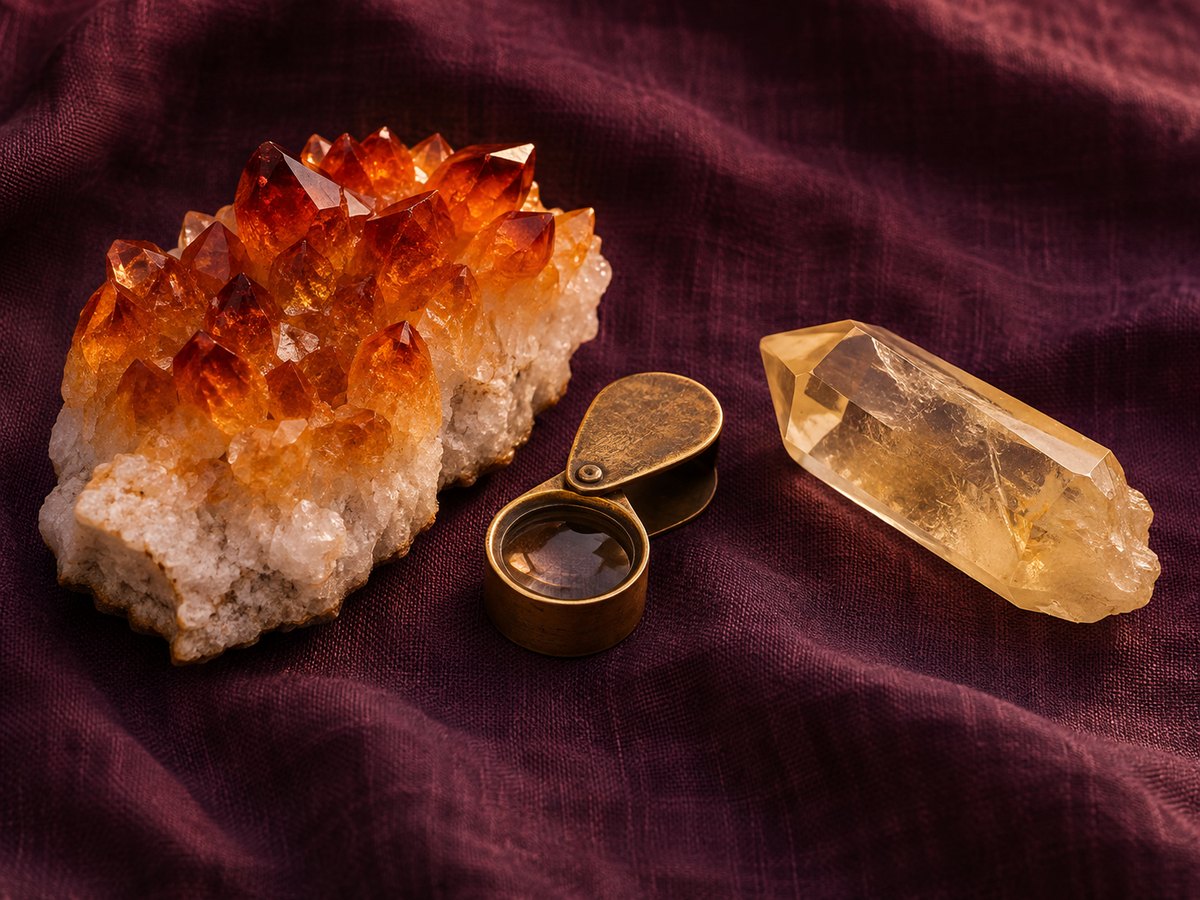
Citrine is the golden one in the crystal shop: honey, lemon, amber and sometimes burnt orange. It also has the biggest gap between label and story. Most of what is sold as citrine began life as purple amethyst and was turned gold in a furnace. That does not make it fake quartz, but every buyer deserves to know.
Here are both sides: the mineral facts and the meanings tradition gives it.
What citrine is, and why most of it started as amethyst
Citrine is the yellow to orange variety of quartz. According to GIA, the Gemological Institute of America, it is silicon dioxide with a Mohs hardness of 7, and a trace of iron in its structure is responsible for its yellow-to-orange color. GIA describes the range as pale yellow to brownish orange and notes that, before modern gemology, its tawny color caused it to be confused with topaz. According to Wikipedia, the name comes from the Latin citrus via the French word for lemon.
Here is the part many shops leave out. GIA states plainly that natural citrine is rare, and that most citrine on the market is the result of heat treatment of amethyst. In its description of the stone, GIA explains that heating changes some amethyst from an undesirable pale violet to an attractive yellow, and that the original hue of the amethyst helps decide how rich the final yellow becomes. Encyclopaedia Britannica says the same thing in fewer words: heating removes the color from amethyst or changes it to the yellow of citrine, and most commercial citrine is made in this manner.
Where does it come from? According to Geology.com, written by geologist and GIA graduate gemologist Hobart M. King, the most important commercial source of naturally colored citrine is the pegmatites of eastern Brazil, and eastern Brazil is also the main source of the amethyst that gets heated into citrine. GIA adds that giant amethyst geodes from Brazil are often heated to become citrine "cathedrals." The Wikipedia entry adds the Democratic Republic of the Congo, Madagascar and Russia, among others.
Nature sometimes does the half-and-half job on its own: according to GIA, amethyst and citrine colors can occur together in one crystal in Bolivia, a two-tone gem called ametrine.
How to tell natural citrine from heat-treated amethyst
You do not need a lab for a good first guess. Crystal dealers who sell natural citrine, including Beyond Bohemian and the UK shop Stonemania, point to the same handful of clues:
- The color itself. Natural citrine usually sits in the pale yellow, champagne and soft honey range, often with a slightly smoky look. A fluorescent orange or a deep, almost reddish "burnt" amber is the classic look of heated amethyst.
- A chalky white base. On a heated cluster, the base is often opaque white while the tips glow orange. Stonemania explains that this happens because there is less iron in the lower part of the crystal, so the color gathers toward the tips.
- Where the color lives. In heated points, the orange tends to sit at the tips with a sharp change to a pale base. Natural citrine usually carries its color more evenly through the crystal.
- The shape. Heated amethyst keeps its original amethyst habit: dense, sharp little points on a geode-style base, or a tall cathedral. A big orange cathedral with a white base is almost certainly heated amethyst.
- The price. Heated amethyst is often sold cheaply by weight; natural citrine is priced for its rarity.
The gemologist's check
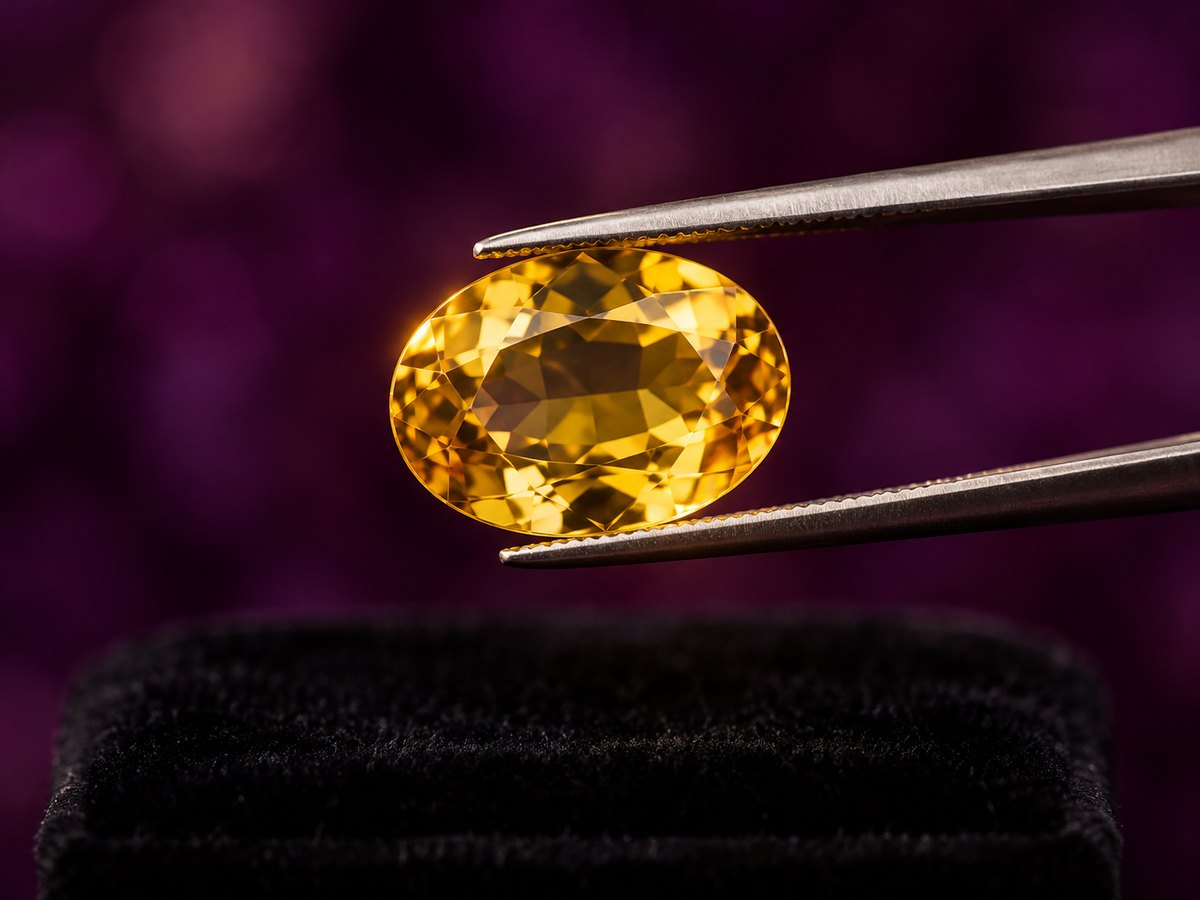
For cut gems there is a more technical clue. According to the Wikipedia entry on amethyst, natural amethyst is dichroic (it shows slightly different violet tones from different directions), and when it is heated into a citrine look it loses that dichroism, unlike genuine citrine. Stonemania makes the same point. Checking it takes a gemologist's dichroscope.
Tumbles are harder: polishing removes the white base and orange tips, so you are relying on color and on the seller's honesty.
Other things sold as citrine
Geology.com notes that synthetic citrine is grown in laboratories by the hydrothermal method. The Wikipedia entry adds that clear quartz can be irradiated to make "lemon quartz," a neon yellow to yellow-green material, and that quartz which only looks yellow because of iron staining or surface coatings is not considered citrine at all.
Citrine meaning in crystal lore
The citrine meaning you see on shop cards is a mix of old naming, color symbolism and modern spiritual practice. It is a belief system, not a mineral property, and it is worth reading that way.
According to Fire Mountain Gems, a bead and jewelry supplier in business since 1973, citrine has long been called the "sun stone," and its golden hue linked it with wealth and prosperity, which earned it the nickname "merchant's stone." The same source says the Romans associated it with Mercury, the messenger god, and carved it into intaglios. Today it is also called the success stone and the money stone.
In modern crystal practice, many people connect citrine with:
- Sunshine and optimism, from its warm color.
- Abundance and generosity, the merchant's stone idea.
- Confidence and motivation. In chakra traditions, practitioners link citrine's yellow with the solar plexus chakra, which they describe as the center of personal power and will.
- Celebration. GIA lists citrine, along with topaz, as a birthstone for November, and as the gem for the thirteenth wedding anniversary.
Does heated citrine "count"? That depends on who you ask. Some practitioners feel natural and heated stones differ; others treat them as the same mineral. Choose the stone you like, and know what you are holding.
How people use citrine
Because the meanings are about intention, most uses are simple and symbolic:
- At the desk or the till. Many people keep a piece where they work or handle money as a reminder of their goals. That is the merchant's stone tradition in its everyday form.
- In a meditation corner. People hold a point or tumble while they sit, or set one on an altar as a focus for gratitude. If you are building a dedicated meditation space, iPyramids makes crystal pendants and pyramid frames you sit inside, which you can browse on our iPyramids collection page.
- As jewelry. GIA calls citrine one of the most popular and frequently purchased yellow gems.
- In a crystal grid or pairing. Citrine is often paired with clear quartz for a bright display, or with amethyst, its own parent stone in most cases, for a gold and violet palette.
Cleansing and caring for citrine
In crystal tradition, "cleansing" means refreshing a stone's energy, and people do it with moonlight, smoke from herbs or incense, sound, or a rest on a selenite plate. Keep any smoke away from pets and open a window.
Physical care is simple, since citrine is quartz:
- Washing. Rinse in lukewarm water with a drop of mild soap, then pat dry. Skip harsh chemicals.
- Storage. Quartz at Mohs 7 will scratch softer stones and can be scratched by harder ones, so give jewelry its own pouch.
- Clusters. Dust the fine tips with a soft brush rather than wiping them.
For more, see our guide to cleansing and caring for crystals.
Buying citrine honestly, and who should be careful
Heat-treated citrine is real quartz and a perfectly lovely stone. Geology.com makes the fair point that most people are happy with heated material, but that a seller should tell buyers what they know about the color, and honestly say "we don't know" when they cannot be sure. That is the standard:
- Look for labels such as "heat-treated citrine," "heated amethyst" or "natural citrine, Congo." Specific origin is a good sign.
- Be wary of a big, cheap, bright orange piece sold as "natural."
- For costly faceted stones, ask for a gem lab report.
A few practical safety notes. Sharp cluster points and small tumbles are not toys, so keep them away from young children and pets who might mouth them. If you want to put stones near drinking water, read our guide to water-safe crystals first and use the indirect method. And remember that a crystal is a symbol and a focus, not a replacement for a doctor, a therapist or a financial adviser.
Pale natural point or gold cluster that was once amethyst, knowing its real story only makes it more interesting to own.
Quick answers
Is heat-treated citrine fake?
No. It is real quartz. According to GIA, most citrine on the market is amethyst that has been heat-treated to a yellow or orange color. It is only a problem when a seller hides the treatment or sells it as natural citrine at a natural-citrine price.
How can I tell if my citrine is real or heated amethyst?
Look at the color, the base and the shape. Natural citrine is usually pale yellow to soft smoky honey with fairly even color. Heated amethyst is often bright or burnt orange, with darker tips, a chalky white base and the dense, sharp points of an amethyst geode.
What does citrine mean spiritually?
In crystal lore, citrine is called the sun stone and the merchant's stone. Many people associate it with optimism, abundance and confidence, and practitioners link it with the solar plexus chakra. These are traditional beliefs, not mineral properties.
Can citrine go in water?
Citrine is quartz with a Mohs hardness of 7, so a quick rinse in lukewarm water with mild soap is fine. Pat it dry, keep it away from harsh chemicals and high heat, and store jewelry in its own pouch so it does not scratch softer stones.