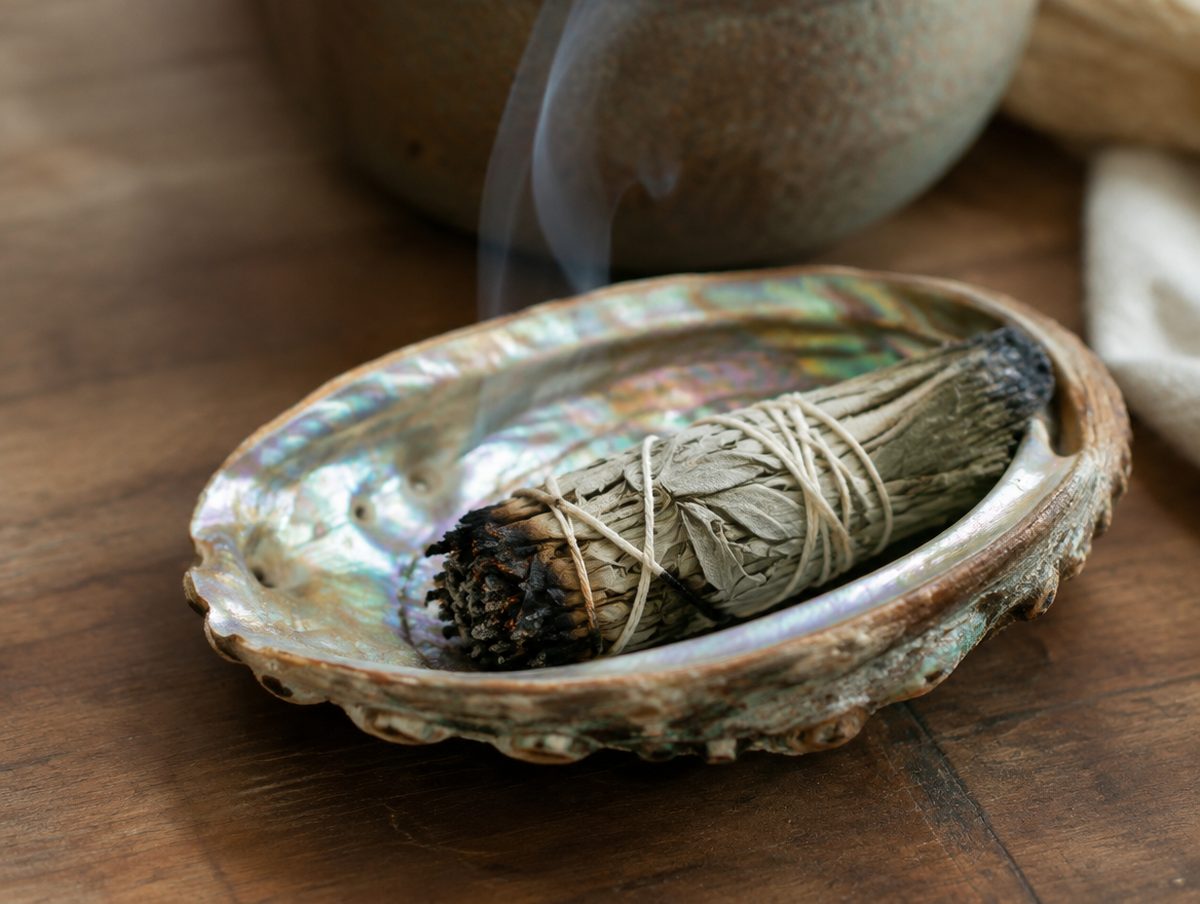
Burning something fragrant is one of the oldest rituals people share. Temples, homes and gatherings all over the world have used scented smoke to mark a moment: the start of a prayer, the end of a long week, a fresh beginning in a new space. This guide walks through incense, sage and palo santo: what they are, how people use them, and how to burn them safely and respectfully.
Why people burn scented smoke
For most people it comes down to three things: scent, tradition and intention. A smell can change how a room feels almost instantly. The act of lighting something gives a clear signal that you are stepping into a different kind of time. And many traditions hold that rising smoke carries prayers, marks a space as sacred, or clears away what came before.
You don't need to adopt any particular belief to enjoy the ritual. Plenty of people simply like the pause: striking a match, watching the smoke curl, letting the room go quiet. Whatever it means to you, it is worth doing thoughtfully.
Incense: the easiest place to start
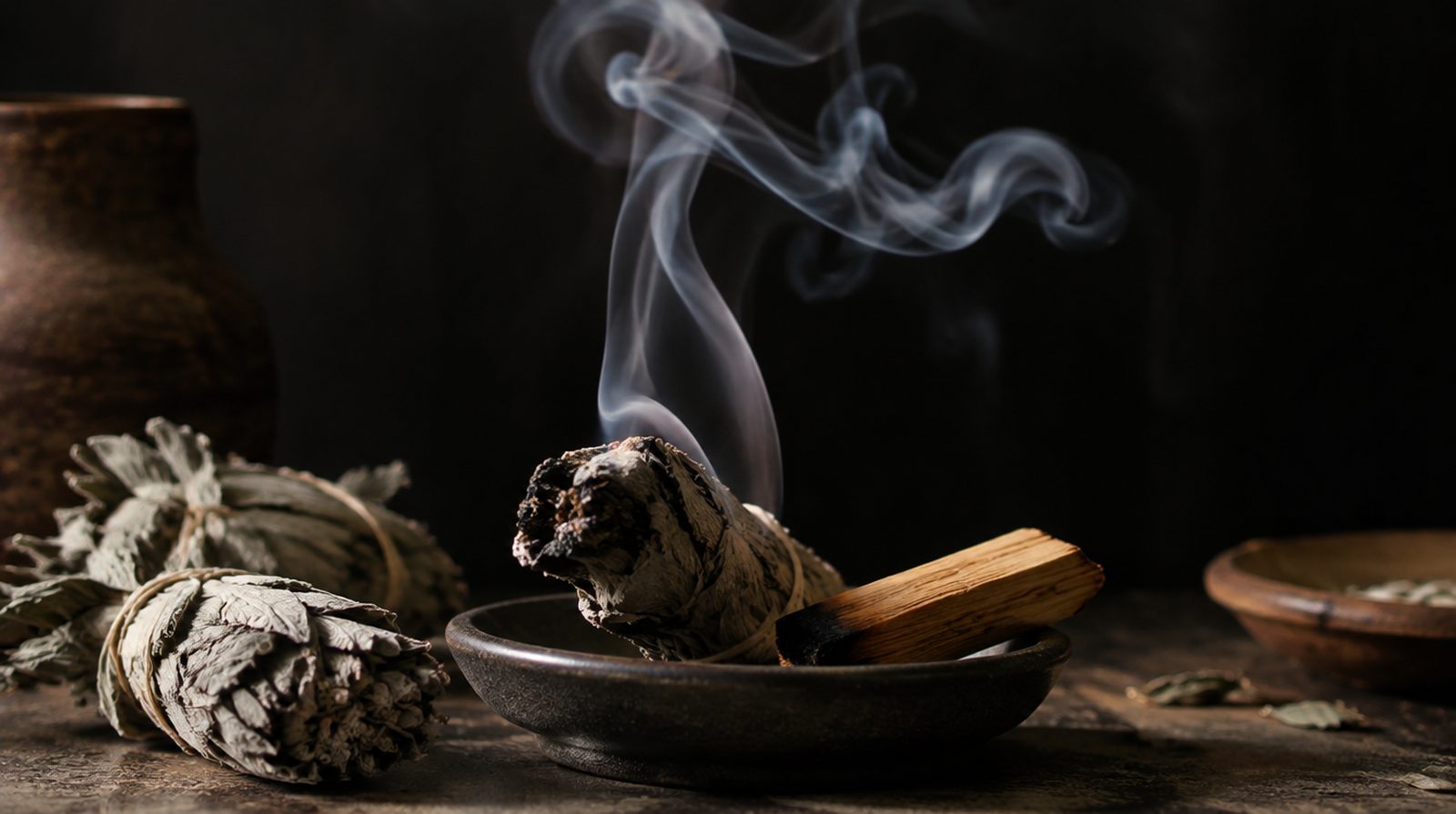
Incense is a blend of aromatic plant materials, such as resins, woods, herbs and spices, shaped so it smolders slowly and releases its scent. You will usually find it in a few forms:
- Sticks are fragrant paste rolled onto a thin bamboo core. They are the most common style and the easiest to find.
- Cones give off a stronger burst of scent over a shorter time, which suits a quick ritual.
- Coreless sticks are made entirely of incense material with no wooden center, a style often associated with Japanese traditions. Many people find the scent softer and less smoky.
- Loose resins such as frankincense and myrrh are burned on a charcoal disc. The charcoal gets very hot, so it needs a bowl filled with sand or ash underneath.
When choosing, read the ingredient list if one is given. Some incense is made with synthetic fragrance oils, while other blends use mostly natural materials. Neither is "right", but if strong perfumes bother you, start with simple, lightly scented blends and buy a small pack before committing to a big box.
Sage: a plant with deep roots
Bundles of dried sage are probably what comes to mind when people talk about "smudging." It helps to know a little of the background before you buy.
White sage (Salvia apiana) grows in parts of Southern California and northern Mexico, and it holds real cultural and spiritual significance for many Indigenous peoples. Smudging ceremonies belong to living traditions, not just to a wellness trend. As white sage has become popular around the world, some wild populations have been over-harvested, and Indigenous voices have raised concerns about both the harvesting and the way their ceremonies are marketed.
None of this means you have to give up burning herbs. It simply means choosing with care:
- If you buy white sage, look for sellers who say it is cultivated or ethically sourced rather than wild-harvested.
- Consider alternatives with their own long histories of use, such as garden sage, lavender or rosemary bundles, or a stick of incense.
- Grow and dry your own. Garden sage, lavender and rosemary are easy to grow in a pot or a sunny patch of ground.
- Use your own words for your ritual. "Clearing the space" or "a fresh start" describes what you are doing without borrowing the name of someone else's ceremony.
Making a simple herb bundle
- Cut a handful of stems about the length of your hand from garden sage, lavender or rosemary, or a mix.
- Gather them together and wrap them tightly from the base to the tip with plain cotton string, then wrap back down and tie off.
- Hang the bundle upside down in a dry, airy spot for a week or two until it is completely dry.
- To use it, light the tip, let it catch for a moment, then gently blow out the flame so it smolders.
Palo santo: "holy wood"
Palo santo (Bursera graveolens) is a tree native to parts of South America and Central America. Its name means "holy wood" in Spanish, and the wood has a sweet, warm, slightly citrusy scent. It has a long history of traditional use in parts of South America, and in recent years it has become popular far beyond the regions where it grows.
Traditionally, the aromatic wood is gathered from branches and trees that have fallen and dried naturally over several years, which is part of what gives it its scent. As demand has grown, so have concerns about poor sourcing. There is also a different tree sometimes sold under the same common name, and that one is protected in some regions, so a seller who names the species is a good sign.
- Ask sellers where their wood comes from and whether it is collected from fallen or dead wood.
- Look for the botanical name on the label.
- Buy small amounts. A single stick can be relit many times.
How to burn safely
Smoke is still smoke, however lovely it smells. A few simple habits keep the ritual calm rather than risky:
- Ventilate. Crack a window or open a door, especially in small rooms. Let the room air out afterwards.
- Use a heat-proof holder. A ceramic dish, a stone bowl or a metal tray with a layer of sand works well. Catch falling ash, and make sure it lands somewhere that cannot burn.
- Never leave it unattended. Put it out fully before you leave the room or go to sleep. Press the tip firmly into sand or a dish until no smoke rises.
- Keep it clear of curtains, paper, bedding, and the reach of children and pets.
- Think about who shares the air. Smoke can bother people with asthma or other breathing sensitivities, and pets, especially birds, can be sensitive too. Ask the people you live with before making it a daily habit.
- Leave smoke alarms alone. If a little incense sets yours off, that is a sign to burn less or ventilate more, not to disable the alarm.
Tip: If smoke isn't an option, perhaps in a rental, a shared office or a home with someone who has asthma, try a smoke-free version of the ritual: ring a bell or a singing bowl, set out a small vase of fresh herbs, or simply open the windows and pause for a few breaths. The intention carries the moment.
A simple space-clearing ritual
- Tidy first. Clear clutter and open a window. Physical order and fresh air are part of the ritual.
- Set an intention. In your own words, say or think what you would like the space to hold: rest, focus, welcome, a fresh chapter.
- Light your incense or bundle over its holder. Either walk slowly through the room carrying the dish beneath it, or place it somewhere safe and sit quietly nearby.
- Take your time. A few minutes is plenty. There is no need to fill the room with smoke.
- Close the ritual. Put the incense out completely, thank the space if that feels right to you, and notice how the room feels.
It is worth being clear about one thing: burning herbs or incense is a ritual of scent, tradition and intention. It does not disinfect a room or replace ordinary cleaning and fresh air. Treat it as a way to mark a moment, and it can become one of the most grounding small habits in your week.
Quick answers
Is it okay to burn white sage if I'm not Indigenous?
White sage is sacred to many Indigenous peoples, and some wild populations have been over-harvested. If you choose to use it, buy cultivated or ethically sourced sage and describe your ritual in your own words. Many people prefer alternatives like garden sage, lavender, rosemary or incense, which carry their own long traditions.
How long should I burn incense for?
There is no set rule. A few minutes is often enough to mark a moment, and you don't need to burn a whole stick. Keep the room ventilated, stay nearby while it burns, and put it out fully in sand or a heat-proof dish when you're done.
Is incense smoke safe around pets?
Smoke can bother animals, and birds in particular can be very sensitive to it. Burn incense in a well-ventilated room your pets can leave, keep it out of their reach, and ask your vet if you have any concerns.