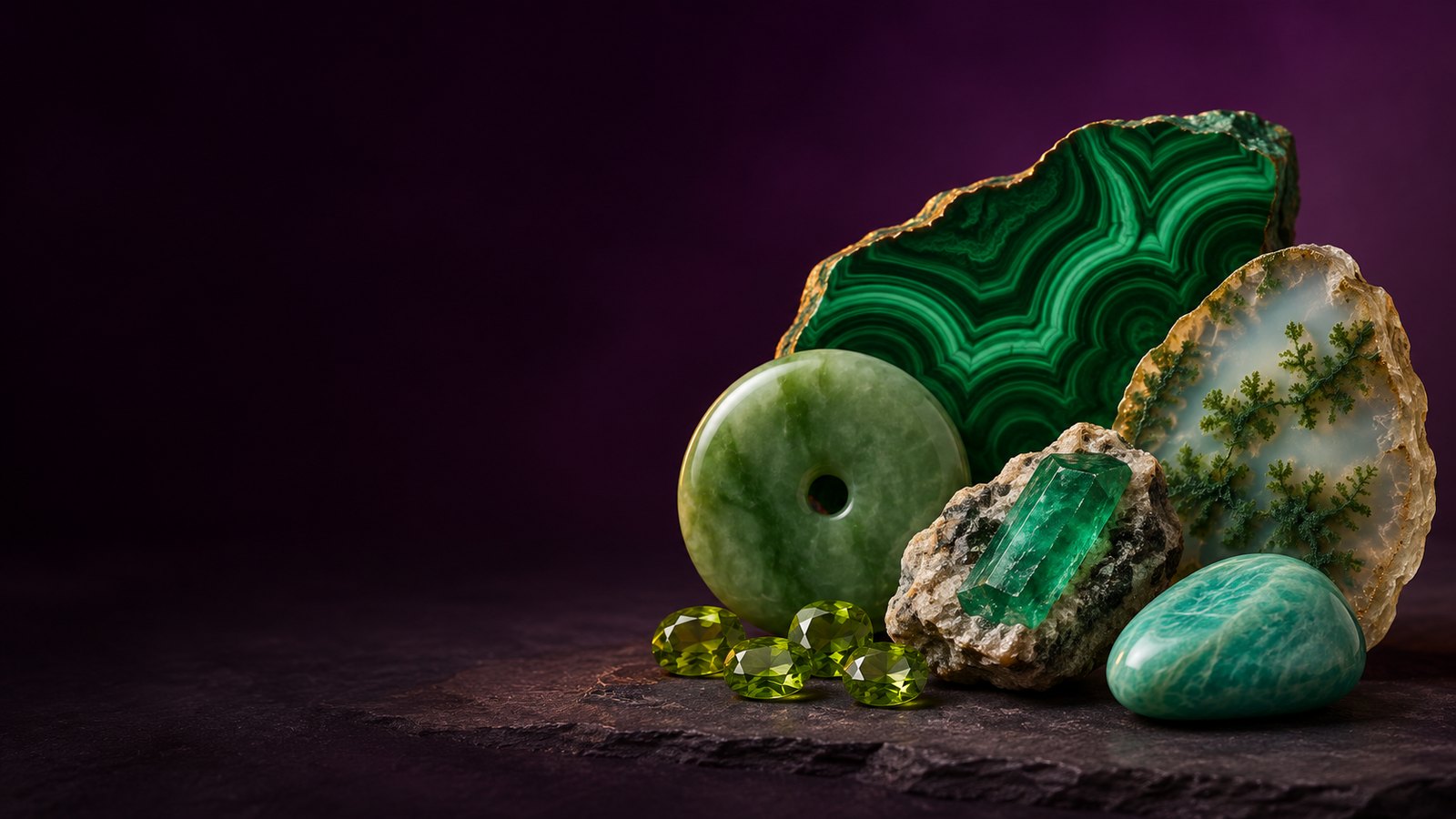
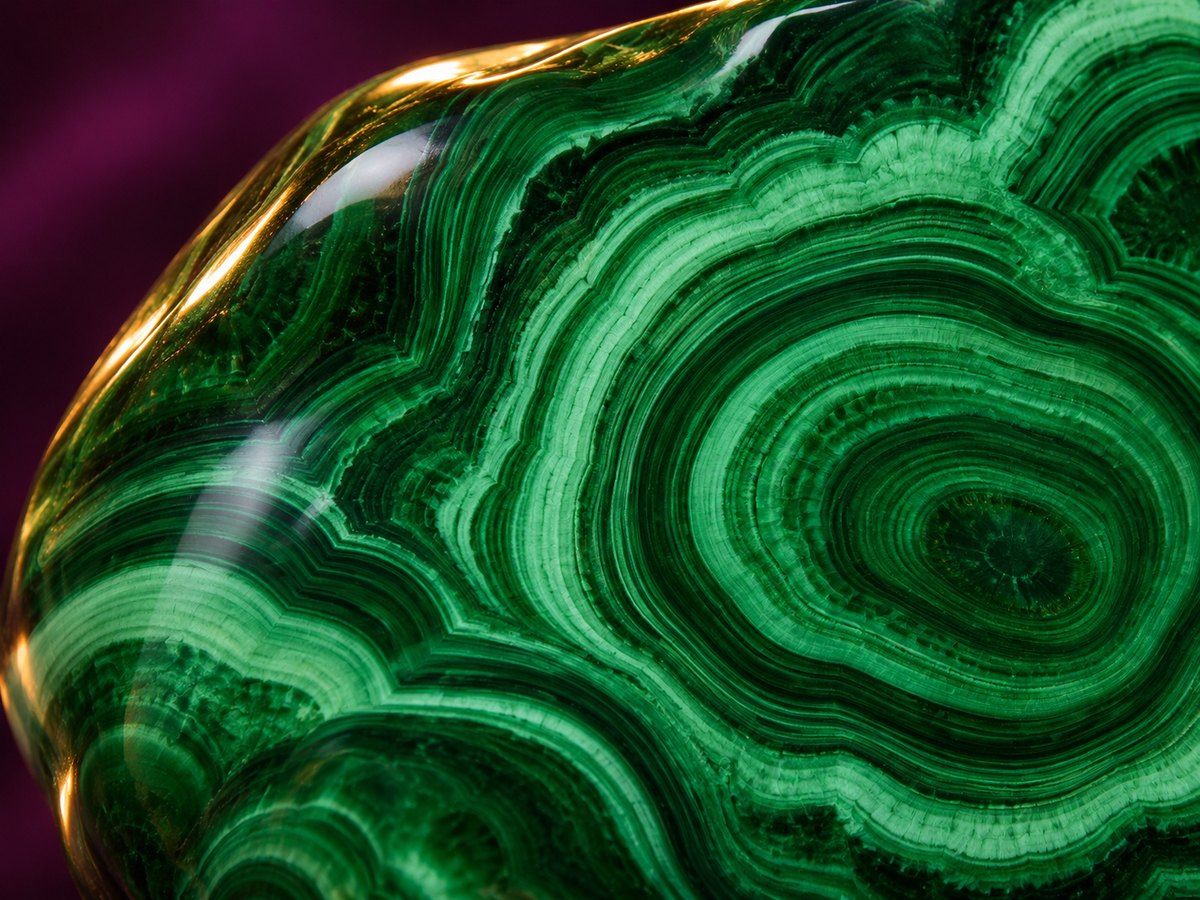
Green crystals are some of the most loved stones in any collection, and some of the most confused. A shop tray of green can hold quartz, glass, a copper mineral, a precious beryl and a stone from the Earth's mantle, all side by side. They look alike at a glance, but they are very different to care for, and one of them should never go anywhere near your drinking water.
Here is a plain guide to nine favorites.
Green crystals and the heart chakra
In chakra traditions, green belongs to the heart chakra (Anahata) at the center of the chest. Fire Mountain Gems, a bead supplier that publishes gemstone lore, links the heart chakra with love, compassion, trust and forgiveness, and lists amazonite, aventurine, jade, malachite and peridot among its heart stones. That is why so many green stones share a theme of love, growth and renewal in crystal lore. These meanings are beliefs and traditions, not properties of the stones.
Hardness below is on the Mohs scale, from 1 (talc) to 10 (diamond). Quartz is 7; anything under about 6 scratches easily.
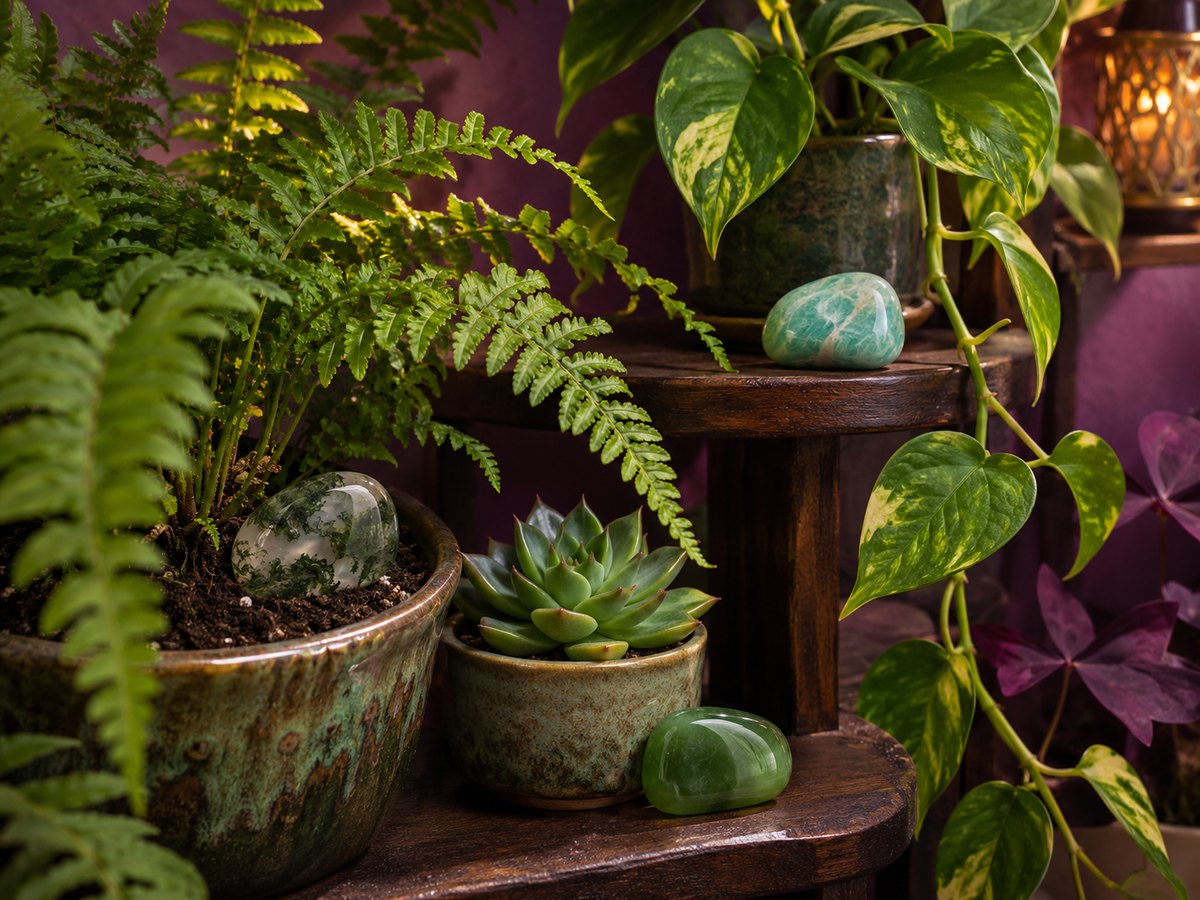
Quartz-family green stones
Green aventurine
What it is: Quartz or quartzite full of tiny flakes of fuchsite, a green chromium mica. According to Geology.com, those flakes reflect light and create the sparkle called aventurescence.
Hardness: 6.5 to 7, per Geology.com. Water: Yes, briefly.
In tradition: Fire Mountain Gems calls green aventurine the "Stone of Opportunity," linked with luck, abundance and fresh starts. Our full green aventurine meaning guide explains the sparkle and how to tell it from goldstone glass.
Moss agate
What it is: Translucent chalcedony, a fine-grained quartz, with green branching patterns inside. GemSelect, a gemstone dealer, points out that the "moss" is mineral, not plant: the patterns come from inorganic inclusions, often iron- and manganese-related, and are not fossilized plants.
Hardness: About 6.5 to 7, the usual range for chalcedony according to GemSelect. Water: Yes, briefly, if it is undyed.
In tradition: Because it looks like a tiny garden, many people link moss agate with nature, patience and growth, and gardeners often keep a piece near their plants.
Precious green gemstones
Emerald
What it is: According to GIA, emerald is the bluish green to green variety of beryl, the same mineral species as aquamarine. It is the birthstone for May.
Hardness: 7.5 to 8, per GIA. Water: Warm, soapy water only, never ultrasonic or steam. GIA's emerald care guide says some estimates put 90 percent or more of emeralds as fracture-filled, and that ultrasonic vibration can weaken stones while hot steam can make oil or resin sweat out of the fractures.
In tradition: Fire Mountain Gems ties emerald to the heart chakra, love and emotional balance, and notes the old custom of keeping one in a business owner's cash box for good fortune.
Peridot
What it is: According to GIA, peridot is the gem variety of olivine, found in rock from the Earth's upper mantle, and some has even been found in meteorites. It is the birthstone for August.
Hardness: 6.5 to 7, per GIA. Water: GIA recommends warm, soapy water and does not recommend ultrasonic or steam cleaners.
In tradition: Peridot is on Fire Mountain Gems' heart chakra list, and many people see it as a stone of warmth and optimism.
Jade
What it is: "Jade" is two different minerals. GIA lists jadeite and nephrite, with jadeite rated 6.5 to 7 and nephrite 6 to 6.5. Both are, in GIA's words, tough but not hard: they resist breaking and chipping very well, which is why jade can be carved so finely.
Water: Yes. GIA says ultrasonic and steam are safe for untreated jade, but because jade can be dyed, bleached, impregnated or coated, warm, soapy water is always the safe choice.
In tradition: Few stones carry more history. GIA notes that Confucius compared jade to virtue, and that the Chinese character for jade is one of the oldest in the written language. Today it is linked with harmony, luck and the heart chakra.
Softer green stones that need care
Malachite
What it is: A copper carbonate, famous for its swirling light and dark green bands. Geology.com lists its formula as Cu2(CO3)(OH)2 and notes that it is a minor ore of copper.
Hardness: 3.5 to 4, per Geology.com, with perfect cleavage, sensitivity to heat and a reaction with weak acids.
Water and safety: keep it dry, and never make dust. Please read this one carefully. The International Gem Society states that the copper content of the dust released from grinding malachite makes it toxic to breathe, and that miners and cutters should wear protective respiratory gear. So never sand, grind, file or polish malachite at home, wet or dry. If it gets scratched, take it to a professional lapidary. Never put malachite in drinking water, a water bottle, an elixir or a pet's bowl; our water-safe crystals guide lists it among the copper minerals to keep out of anything you drink. The IGS also advises against ultrasonic, steam and acidic cleaners. Wipe it with a soft, dry cloth, and wash your hands after handling raw pieces.
In tradition: Fire Mountain Gems links malachite with the heart and solar plexus chakras, harmony and the "heart's desire."
Amazonite
What it is: A blue-green microcline feldspar. Geology.com notes that its color is thought to come from trace amounts of lead.
Hardness: 6 to 6.5, with two directions of perfect cleavage, per Geology.com. Water: A quick wipe or rinse for cleaning is fine, but keep it out of drinking water because of the lead.
In tradition: Another heart chakra stone on Fire Mountain Gems' list; many people also connect its sea-green color with calm, honest speech.
Prehnite
What it is: A calcium aluminum silicate, usually pale apple green and translucent, often in bubbly, grape-like clusters. According to Wikipedia's mineral entry, it was first described in 1788 from South Africa and named for Colonel Hendrik von Prehn, and it often occurs in the cavities of basalt.
Hardness: 6 to 6.5. Water: Yes, briefly; dry raw clusters well, since they can sit on softer matrix.
In tradition: Many practitioners pair prehnite with the heart chakra and use its soft glow as a focus for peaceful meditation.
Green fluorite
What it is: Calcium fluoride. Geology.com explains that fluorite is the mineral that defines 4 on the Mohs scale and that it has four directions of perfect cleavage, so it can split into octahedral pieces.
Hardness: 4. Water: No, keep it dry. Our water-safe guide lists fluorite among the stones that are soft and prone to cleaving.
In tradition: Green fluorite is often linked with the heart chakra and, in modern crystal lore, with focus and a tidy, clear mind.
How to choose and care for green crystals
- For a pocket or a bracelet: green aventurine, moss agate and jade are the toughest everyday choices.
- For jewelry with sparkle: emerald and peridot are true gemstones.
- For a shelf or altar: malachite, fluorite and raw prehnite. Keep them dry.
- Store separately. Quartz at 7 will scratch fluorite and malachite.
- Watch for fakes. Neon, perfectly even greens can mean dye. Goldstone is green or copper-flecked glass. If a "jade" or "emerald" is priced like a gem, ask for a lab report.
If you love green stones, the crystal torus pendants on our iPyramids page come in several crystal line-ups, and green stones sit naturally with the heart-centered ones.
Who should be careful
Small tumbled stones are a choking hazard for babies, young children and pets. Copper and lead minerals such as malachite and amazonite should never be used in drinking water, and anyone cutting or polishing stones should work with proper wet methods, ventilation and a respirator. Green crystals are a lovely symbol of growth, but they are never a substitute for a doctor or other professional care.
Quick answers
What are the most popular green crystals?
Green aventurine, jade, malachite, emerald, peridot, moss agate, amazonite, prehnite and green fluorite are among the most popular. They range from tough quartz and jade to soft, delicate malachite and fluorite, so care differs a lot from stone to stone.
Is malachite safe to touch?
Handling a polished piece is how most people enjoy it, and washing your hands afterward is a good habit with raw pieces. The real hazard is dust: the International Gem Society says malachite dust from grinding is toxic to breathe. Never sand or polish it at home, and never put it in drinking water.
Which green crystals can go in water?
Quartz-family stones such as green aventurine and undyed moss agate, plus jade and prehnite, handle a brief rinse. Emerald and peridot are cleaned with warm, soapy water only. Keep malachite, amazonite and fluorite dry and out of any water you might drink.
What chakra are green crystals linked to?
In chakra traditions, green stones are paired with the heart chakra at the center of the chest, which practitioners associate with love, compassion and forgiveness. These links come from modern crystal lore, not from any property of the stones.