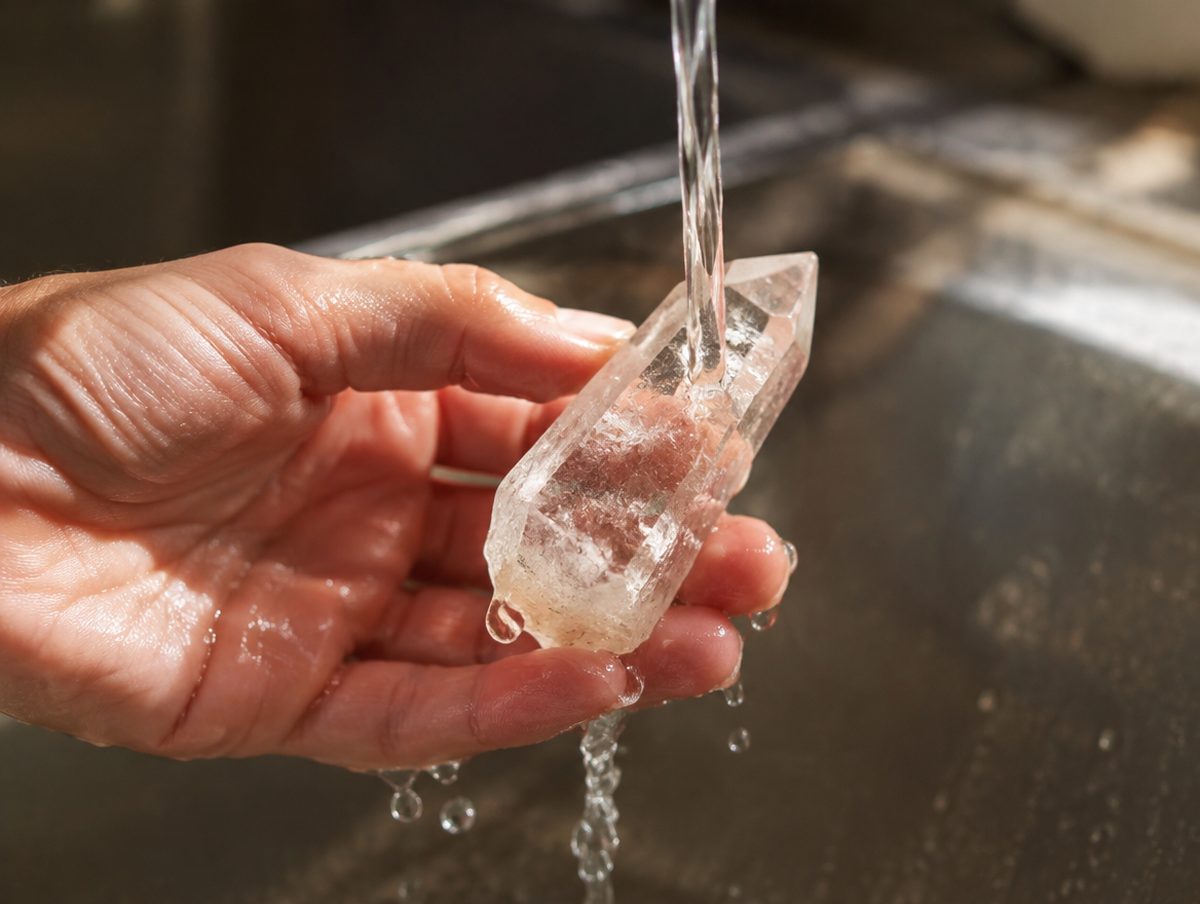
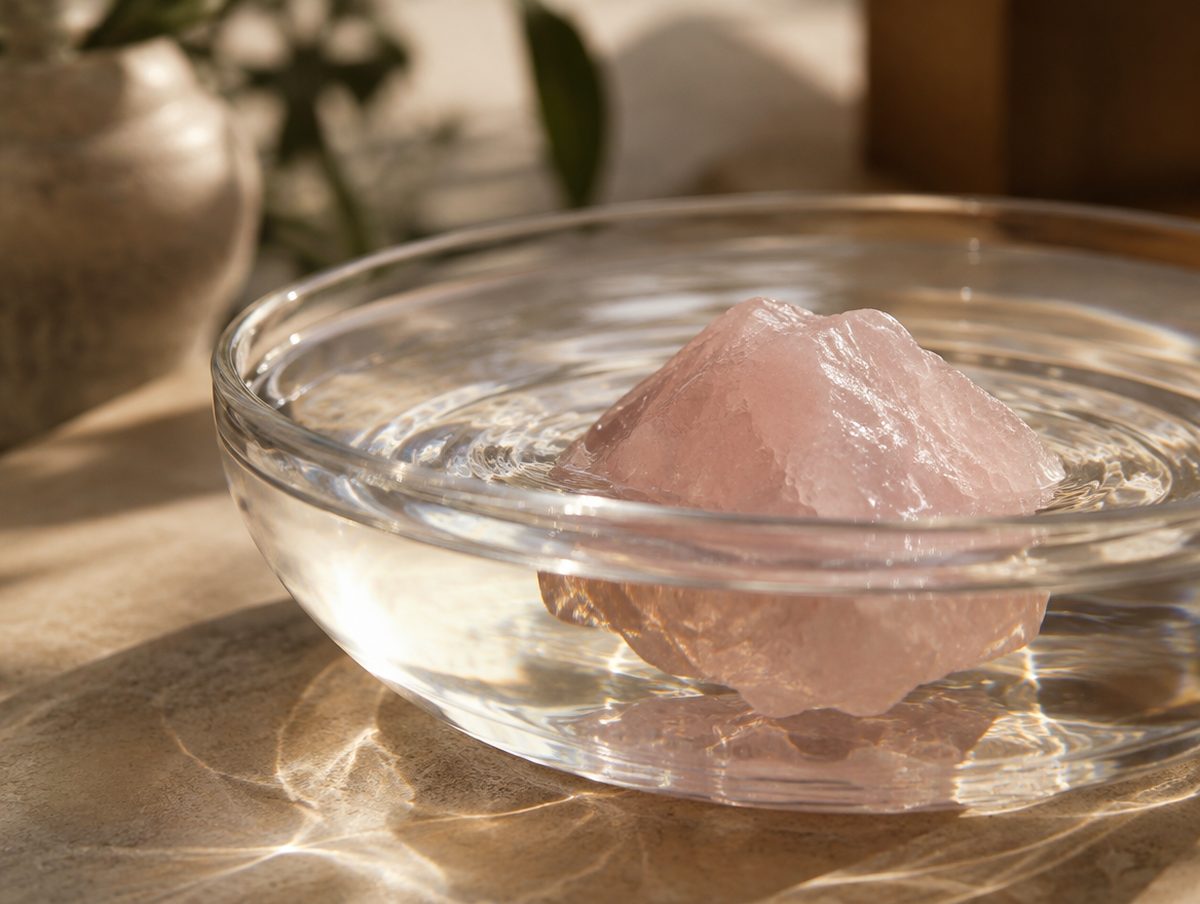
Rinsing crystals under running water is a popular cleansing ritual, and some people like the tradition of crystal "elixirs," water that has been near or in contact with a stone. Both practices raise the same practical question: what happens to this particular mineral when it gets wet?
The answer depends on the stone's chemistry and structure. Some are unaffected. Some dissolve, rust or crack. A few contain elements such as copper, lead, arsenic or mercury that you should never risk in drinking water. This guide keeps things conservative. When in doubt, keep a stone dry.
Tip: Crystal elixirs are a tradition and a belief, not a health treatment. If you have any health concern, please speak to a qualified professional.
Why some crystals and water do not mix
- Solubility: some minerals, like halite (rock salt) and gypsum, slowly dissolve.
- Oxidation: iron-bearing minerals such as pyrite, hematite and magnetite can rust or tarnish. Pyrite can also break down into acidic compounds over time.
- Porosity: porous stones like turquoise and some jaspers can absorb water, which may discolour them or lift dyes and stabilising resins.
- Structure: stones with layered or fibrous structures, or existing cracks, can split when water gets in, particularly with temperature changes.
- Toxic elements: some minerals contain substances that are harmful if they leach into water or are ingested.
Generally water-safe (for a rinse)
These stones are hard and chemically stable. A brief rinse in clean, lukewarm water, followed by thorough drying, is generally fine for polished or tumbled pieces:
- Clear quartz
- Amethyst
- Rose quartz
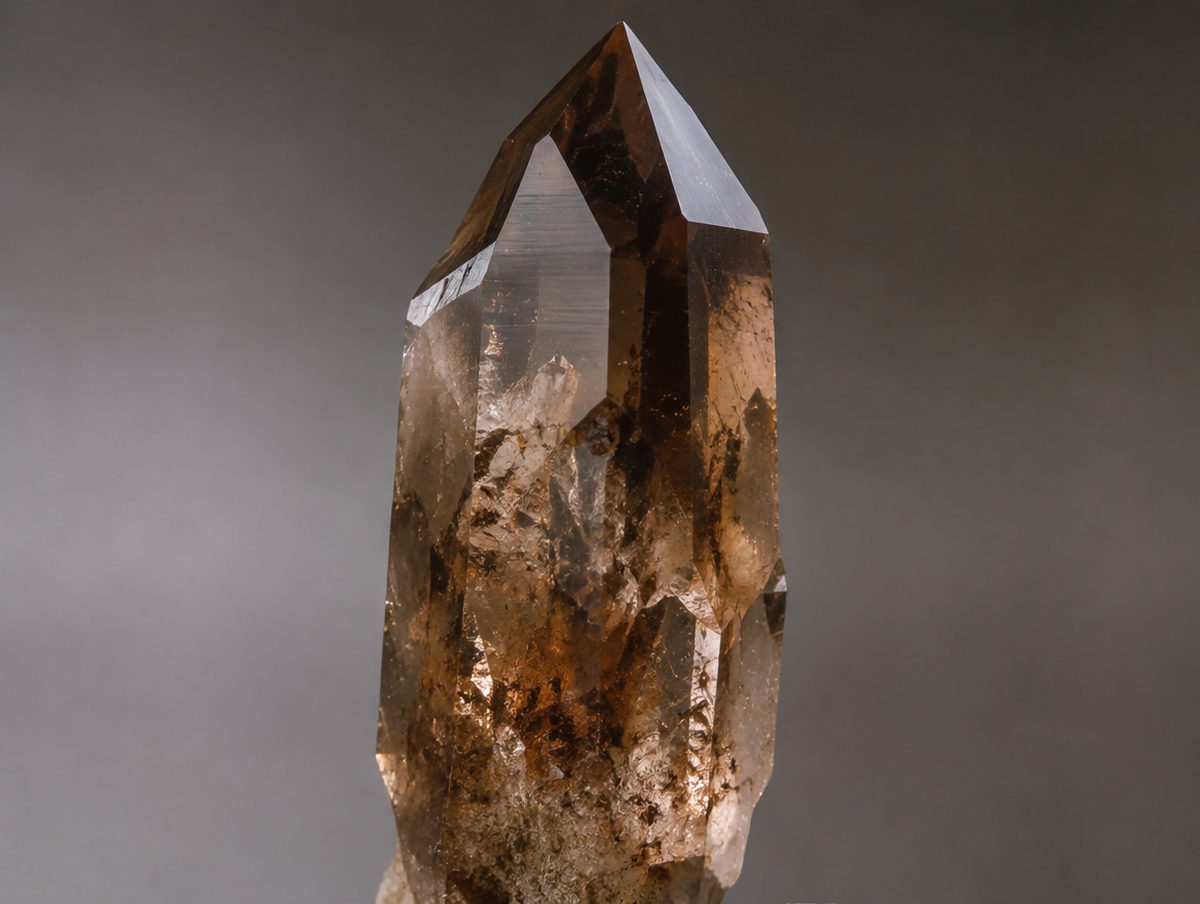
- Smoky quartz
- Citrine
- Agate, carnelian and other chalcedony (undyed)
A few caveats apply even here. Raw clusters and geodes may sit on a softer rock base or contain other minerals, so they are best cleaned with a soft brush rather than soaked. Dyed agate can bleed colour. And "generally safe" for a rinse is not the same as safe for a long soak, which is rarely necessary for any stone.
Rinse briefly, never soak
These stones are unlikely to be harmed by a quick rinse and immediate drying, but prolonged soaking is not recommended:
- Black tourmaline: hard, but raw pieces often have cracks and matrix.
- Labradorite and moonstone: feldspars with natural planes of weakness.
- Fluorite: soft (around 4) and prone to cleaving.
- Calcite: soft (3) and very slightly soluble; it can dull over time.
- Opal: contains water in its structure and can crack with sudden temperature changes.
Keep these out of water
Stones water will damage
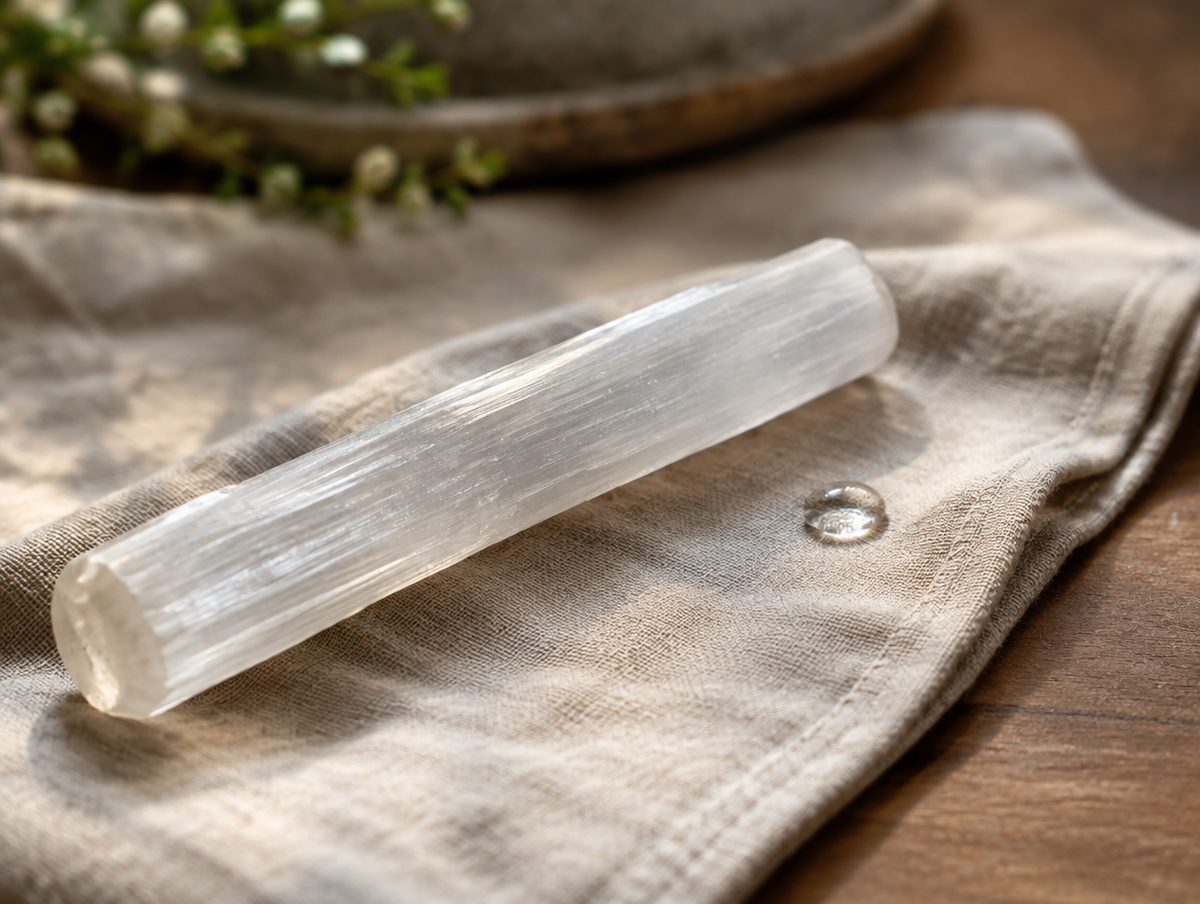
- Selenite and satin spar (gypsum): dissolve and lose their surface.
- Desert rose: gypsum or barite rosettes bound with sand; they crumble.
- Halite: dissolves.
- Angelite (anhydrite): can absorb water and alter.
- Pyrite, hematite, magnetite: rust or tarnish.
- Turquoise and lapis lazuli: porous or soft, and frequently dyed or stabilised. Lapis also contains calcite and pyrite.
- Lepidolite and other micas: flaky, layered structures.
Stones that should never go in drinking water
These minerals contain elements that can be harmful. Keep them out of any water you might drink, and wash your hands after handling raw specimens:
- Malachite, azurite and chrysocolla: copper minerals.
- Amazonite: contains traces of lead.
- Galena and vanadinite: lead minerals.
- Cinnabar: mercury sulphide.
- Realgar and orpiment: arsenic minerals.
- Stibnite: antimony sulphide.
- Chalcopyrite and other sulphide minerals: best avoided entirely.
This list is not exhaustive. If a stone is not clearly identified, or you are not sure what it contains, assume it is not suitable for drinking water.
A note on the "-ite" rule
You may hear that stones ending in "-ite" are not water-safe. It is a catchy shortcut but an unreliable one. Plenty of "-ite" stones are stable, and some stones without the suffix, such as lapis lazuli and turquoise, are not. Look up each stone individually rather than relying on its name.
The indirect method for crystal water
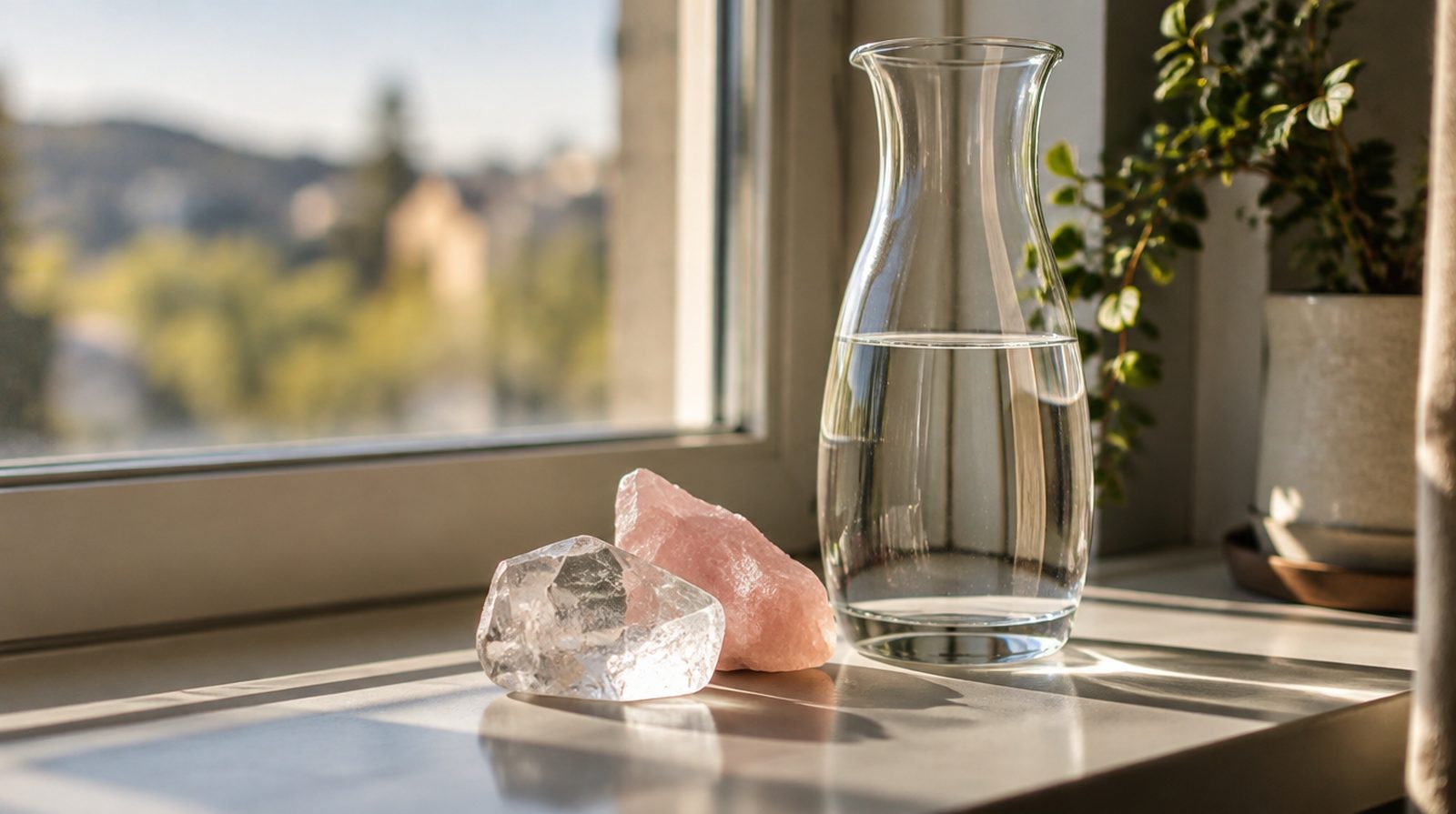
If you enjoy the tradition of crystal-infused water, the safer approach is the indirect method, where the stone never touches the water you drink.
- Choose a clean, clearly identified, tumbled quartz stone such as clear quartz, amethyst or rose quartz.
- Wash the stone gently and dry it.
- Place it in a small, sealed, food-safe glass container, such as a lidded jar or a purpose-made glass vial.
- Set that sealed container inside, or simply beside, your jug of drinking water.
- Keep everything clean, and replace the water as you normally would.
Even simpler: many people just place a stone next to their water glass as a visual reminder of an intention. It keeps the ritual while removing any risk.
You may also see water bottles sold with a crystal built into a separate chamber. If you are considering one, check that the stone is sealed away from the drinking water, that the seller names the mineral and its origin, and that the bottle materials are described as food-safe. If the listing is vague on any of these points, skip it.
We do not recommend placing stones directly in water you plan to drink. Even stable minerals can carry surface dust, polishing residue, dyes, resin fillers or bacteria, and misidentified stones are common.
Drying and aftercare
- Dry every stone thoroughly with a soft cloth right after rinsing.
- Let raw specimens air-dry fully before storing them, so moisture does not sit in cracks.
- Avoid hot water and sudden temperature changes.
- Never put crystals in a dishwasher or ultrasonic cleaner.
The simplest rule of all
If you cannot say exactly what a stone is, where it came from and whether it has been treated, keep it dry. Buying from sellers who name the stone and its origin makes all of this much easier. And for cleansing rituals, moonlight, sound and breath work beautifully without a drop of water.
Quick answers
Can I put clear quartz directly in my water bottle?
We recommend against it. Even stable stones can carry dust, polishing residue or bacteria, and misidentified stones are common. The indirect method, with the stone sealed in its own glass container, is the safer way to follow the tradition.
Is selenite water-safe?
No. Selenite and satin spar are forms of gypsum, which is soft and water-soluble. Water will dull, pit and eventually dissolve them. Cleanse selenite with moonlight, sound or intention instead.
Why is amazonite on the not-for-drinking list?
Amazonite's green colour is linked to trace amounts of lead in the crystal. It is fine to handle and wear, but it should not be used in water you plan to drink.