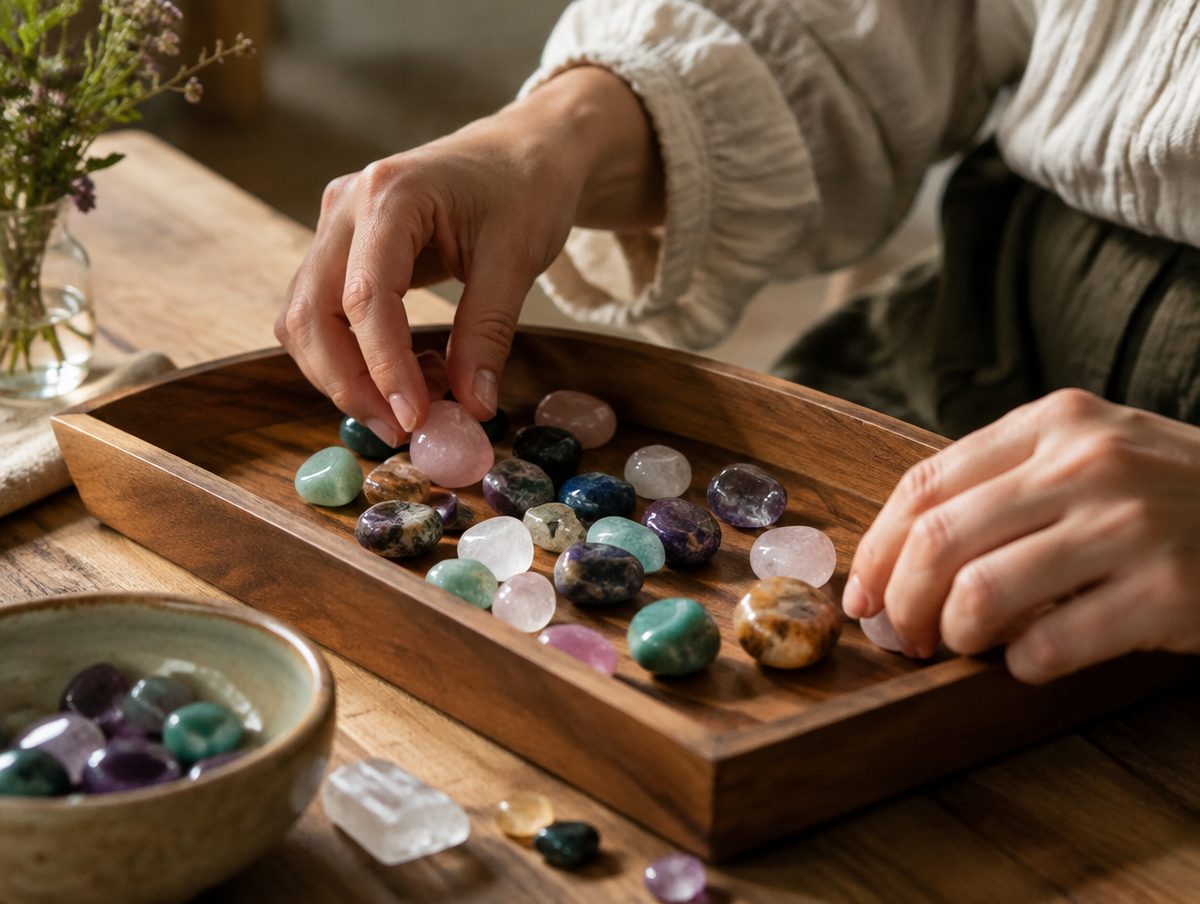
Walk into any crystal shop and you will see little cards next to each stone: "calming," "protective," "abundance." Those words come from crystal lore, a mix of old folk traditions, historical symbolism and modern spiritual practice. They are meanings people have given stones, not scientific properties.
We think the best way to enjoy crystals is to know both sides. Understanding what a stone actually is helps you care for it, spot fakes and buy well. Understanding its traditional meaning helps you use it as a focus for intention, reflection or ritual. Neither side replaces the other, and none of it replaces professional care when you need it.
The quartz family
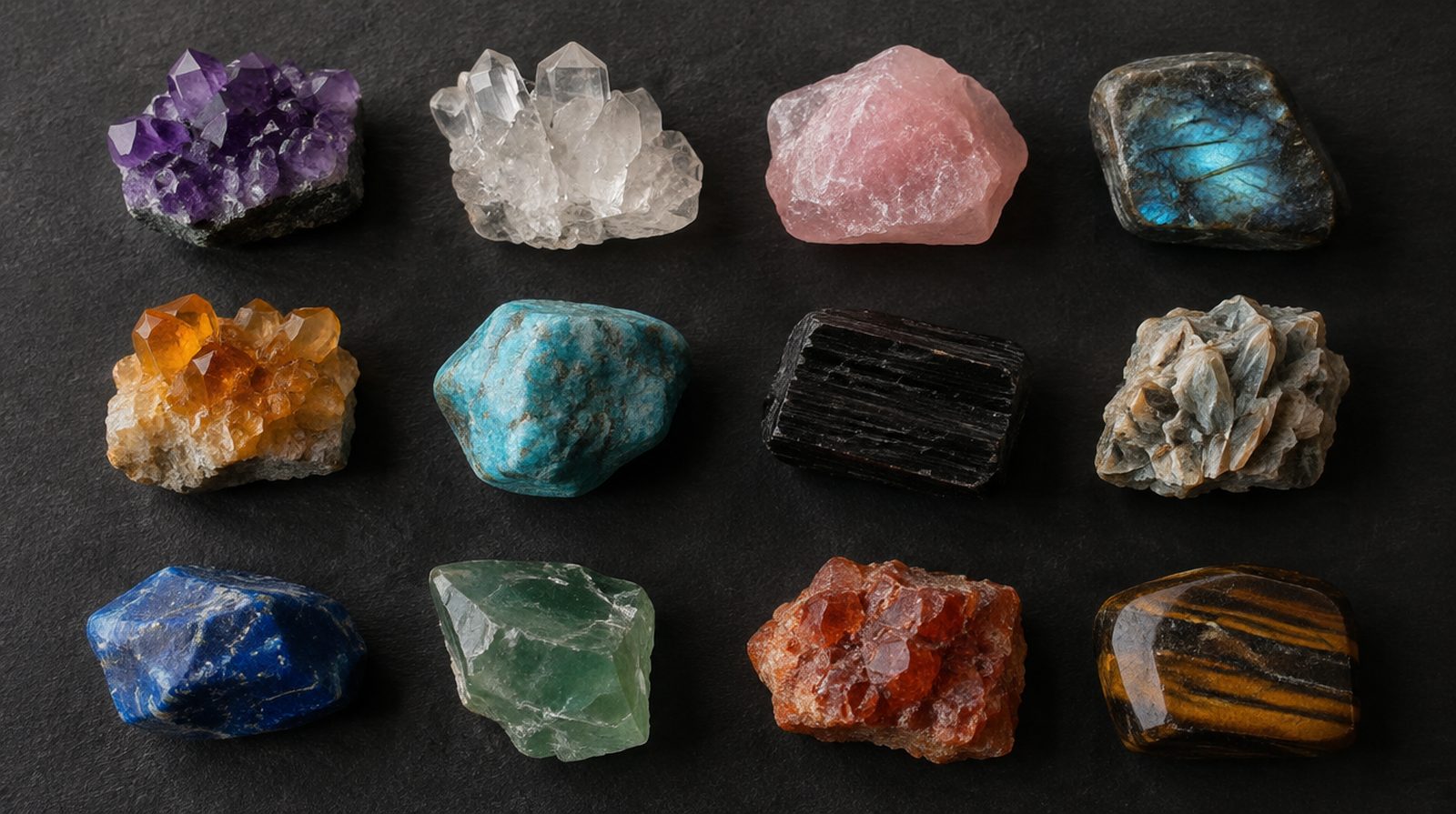
Five of the twelve stones below are quartz: silicon dioxide, one of the most common minerals on Earth. They share a hardness of 7 on the Mohs scale, which makes them tough, everyday stones. What changes is the colour, caused by trace elements, natural radiation or tiny inclusions.
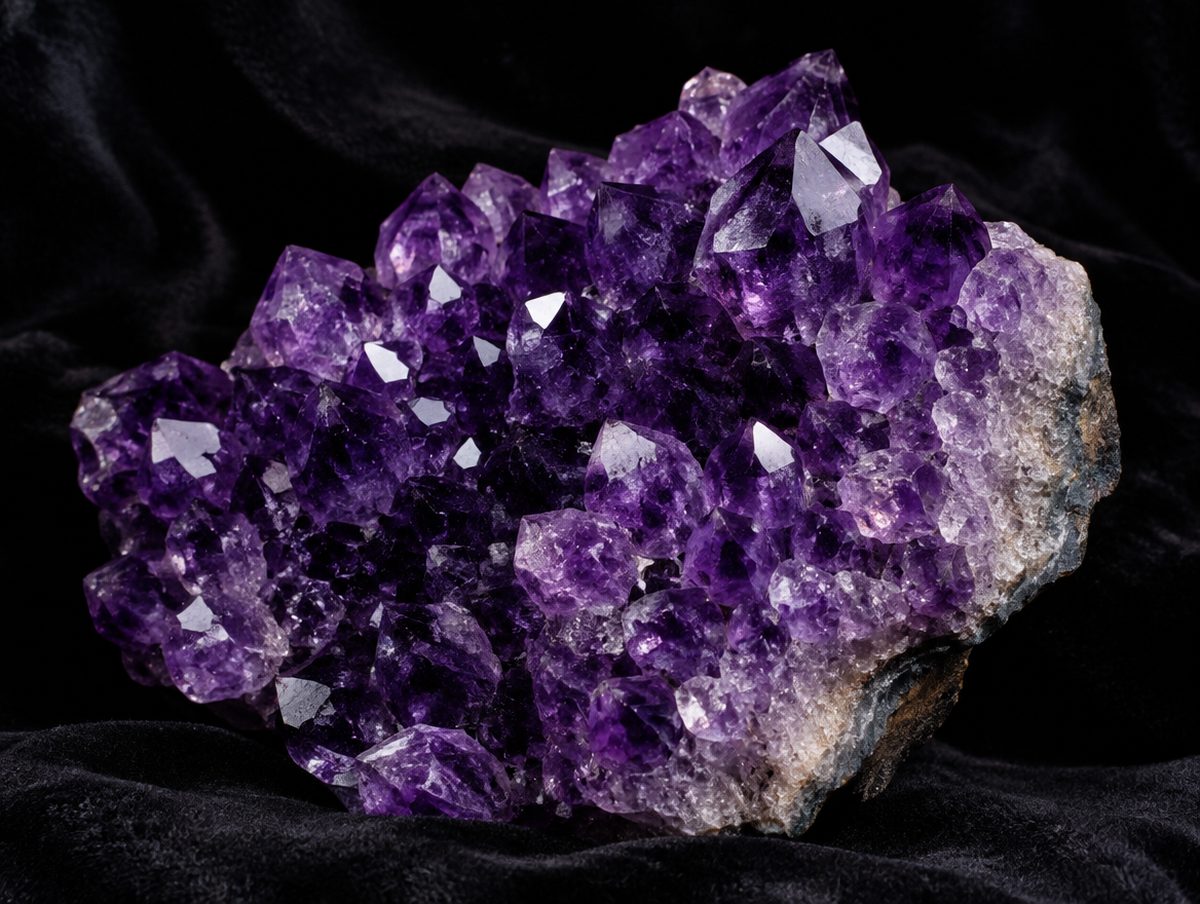
Amethyst
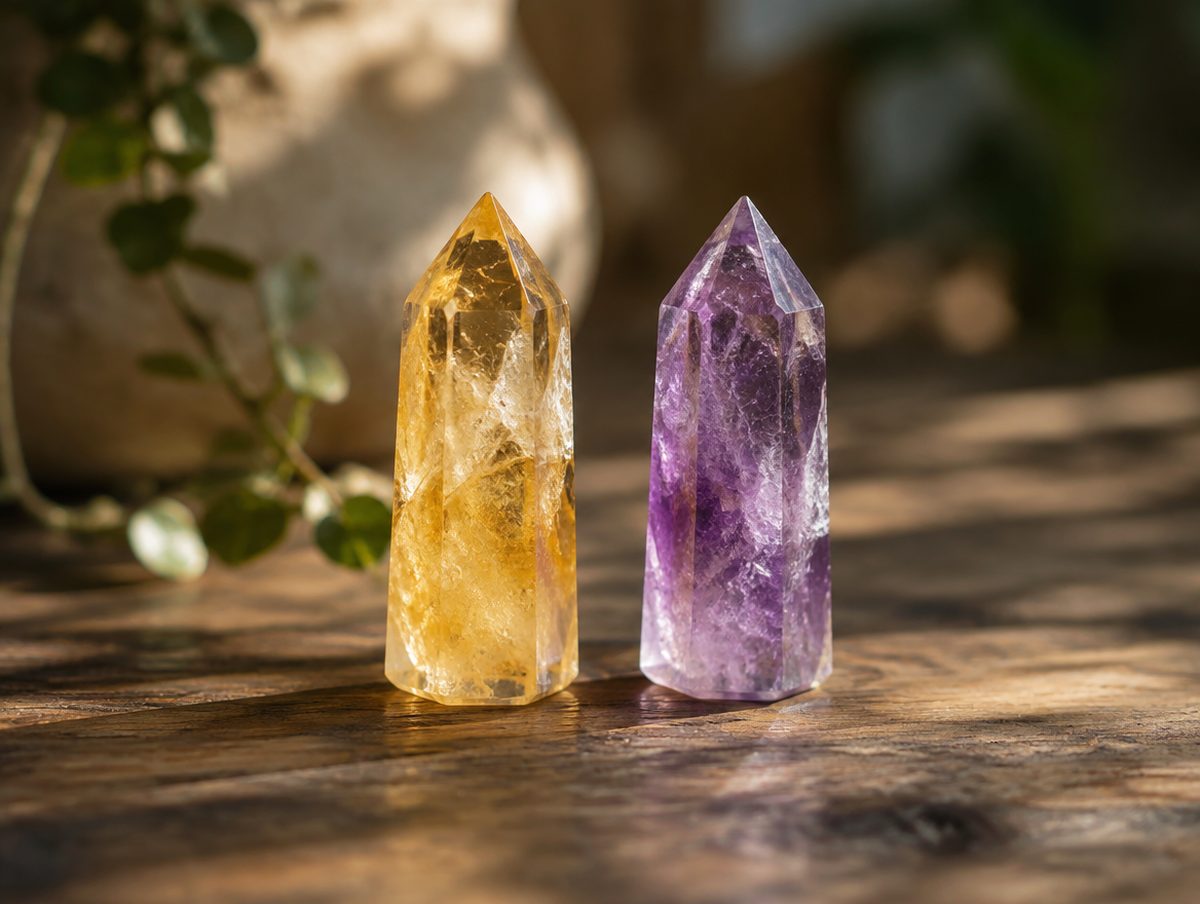
What it is: Purple quartz. The colour comes from traces of iron combined with natural irradiation in the ground. Long periods in bright sunlight can fade it.
In tradition: The name comes from the Greek amethystos, often translated as "not intoxicated," and the ancient Greeks linked it with sobriety. Today it is traditionally associated with calm, clear thinking and quiet reflection, and many people keep it near where they meditate or rest.
Rose quartz
What it is: Pale to medium pink quartz, usually found in massive chunks rather than neat crystal points. Its soft colour is generally attributed to microscopic mineral fibres inside the stone. Like amethyst, it can pale in strong sun.
In tradition: Known in crystal lore as the stone of love, in the broad sense: self-kindness, friendship, romance and compassion. It is one of the most popular gift stones for exactly that reason.
Clear quartz
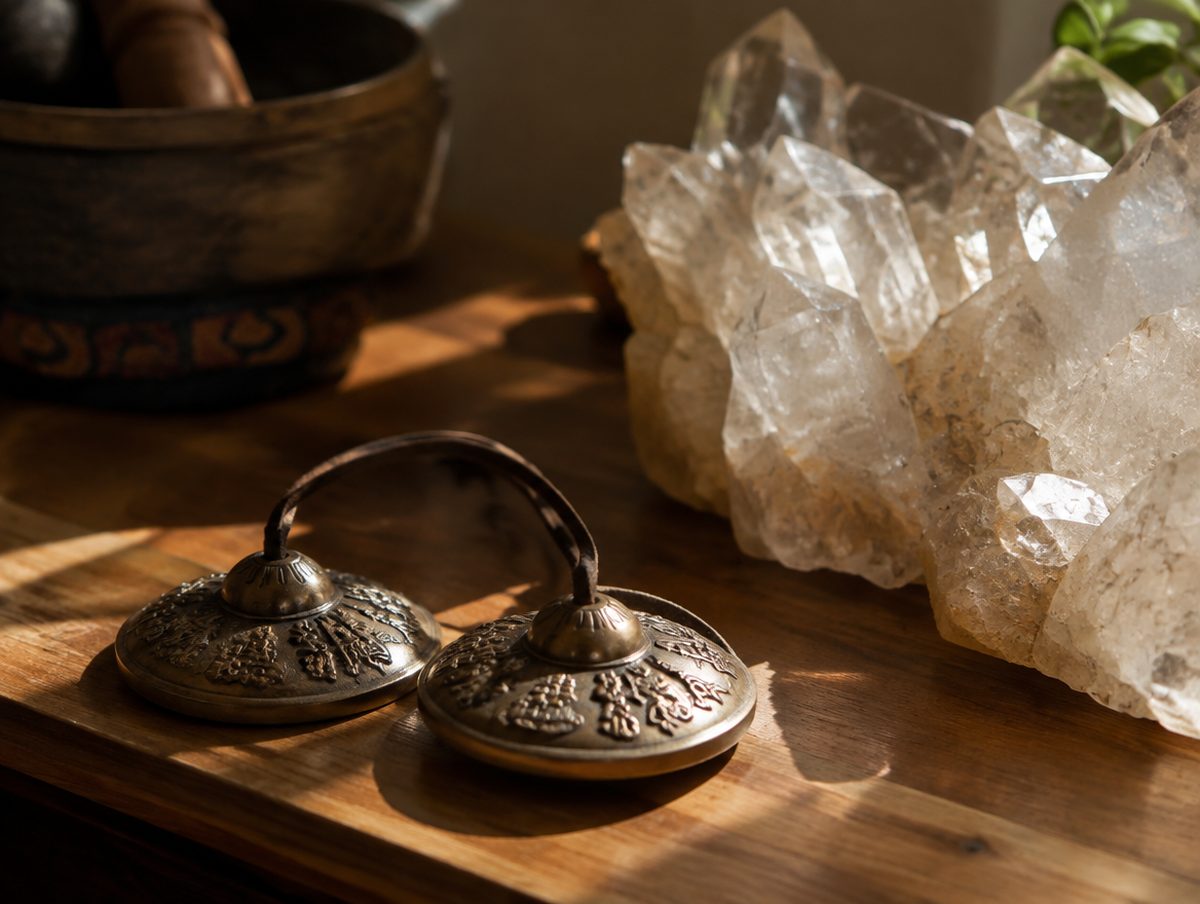
What it is: Colourless, transparent to cloudy quartz, often found as six-sided points.
In tradition: Often called an all-purpose stone. Practitioners believe it "amplifies" intention and the energy of other stones, which is why you will see it at the centre of crystal grids and altars.
Citrine
What it is: Yellow to golden-orange quartz. Natural citrine is fairly rare and usually a soft, pale yellow. Much of the bright orange "citrine" on the market, especially clusters with whitish bases, is amethyst that has been heat-treated. That is not a problem in itself, but an honest seller will say so.
In tradition: Associated with sunshine, optimism and abundance. Some people keep a piece near where they work or handle money as a symbolic reminder of their goals.
Smoky quartz
What it is: Quartz in shades of pale brown to near-black, coloured by natural radiation acting on trace aluminium. Some very dark material is artificially irradiated.
In tradition: Linked with grounding and letting go. It is a favourite for people who want a stone that feels steady and earthy rather than bright.
The protectors and clarifiers
Black tourmaline
What it is: Schorl, the most common member of the tourmaline group, a complex borosilicate mineral. Look for long crystals with fine parallel grooves (striations) running down their length. Hardness is around 7 to 7.5.
In tradition: Perhaps the best-known "protection" stone in modern crystal practice. People often place it by a front door or on a desk as a symbolic boundary.
Selenite
What it is: A form of gypsum (hydrated calcium sulphate). It is very soft, around 2 on the Mohs scale, so a fingernail can scratch it. Most "selenite" wands and lamps are actually satin spar, a silky, fibrous form of gypsum. Both dissolve and degrade in water, so keep them dry.
In tradition: Associated with clarity, light and "cleansing." Some people rest other stones on a selenite plate, believing it refreshes them.
The feldspars: stones with a glow
Feldspars are among the most abundant minerals in Earth's crust. Three stones on this list belong to this family, and two of them have a striking optical effect.
Amazonite
What it is: A green to blue-green variety of microcline feldspar, often with white streaks. Its colour is linked to trace amounts of lead and water in the crystal structure. Hardness is about 6 to 6.5.
In tradition: Connected with honest communication, courage and hope. It is often chosen by people who want a reminder to speak their truth kindly.
Labradorite
What it is: A plagioclase feldspar named after Labrador in Canada. Turned in the light, it flashes blue, green, gold or even orange. That shimmer is called labradorescence and comes from light interacting with very thin internal layers.
In tradition: Associated with intuition, imagination and transformation. The sudden flash of colour from a grey stone makes it a natural symbol of hidden potential.
Moonstone
What it is: A feldspar with a soft, floating, bluish-white glow called adularescence. Note that "rainbow moonstone" is, mineralogically, usually a white variety of labradorite. It is lovely, just technically a different stone.
In tradition: Tied to the moon, cycles, intuition and new beginnings. It has long been a popular stone for jewellery given at milestones.
Two stones of colour and fire
Lapis lazuli
What it is: Not a single mineral but a rock, made mostly of blue lazurite with white calcite and gold flecks of pyrite. It is relatively soft, about 5 to 5.5. The Badakhshan region of Afghanistan has been a famous source for thousands of years, and ground lapis was once the pigment ultramarine. Imitations are common, including dyed jasper and dyed howlite.
In tradition: Associated with wisdom, truth and self-expression, and prized by royalty and artists across many ancient cultures.
Carnelian
What it is: Orange to red-brown chalcedony, a microcrystalline form of quartz. Hardness is roughly 6.5 to 7. A lot of commercial carnelian is agate that has been heat-treated or dyed to deepen the colour.
In tradition: Linked with courage, creativity and motivation. It was carved into seals and amulets in many ancient cultures.
Tip: Stone meanings vary from book to book and shop to shop. If a stone's traditional meaning does not match how it feels to you, trust your own experience. There is no single "correct" list.
How to use crystal meanings well
- Treat meanings as prompts, not promises. A stone can be a lovely reminder of an intention. It cannot do the work of a doctor, therapist or financial adviser.
- Learn the physical facts first. Knowing that selenite dissolves or amethyst fades in the sun saves heartbreak later.
- Buy from sellers who name the stone and its origin. Clear labels such as "heat-treated citrine" or "dyed howlite" are a sign of an honest shop.
- Start small. One or two stones you genuinely like will mean more than a drawer full of impulse buys.
Crystals have been admired, traded and treasured for thousands of years. Knowing both their geology and their lore simply lets you enjoy them with open eyes.
Quick answers
Do crystal meanings have a scientific basis?
No. Crystal meanings come from folklore, historical symbolism and modern spiritual practice. The mineral facts, such as composition and hardness, are scientific; the meanings are beliefs that many people find personally meaningful.
Which of these 12 stones is best for a beginner?
Clear quartz, amethyst and rose quartz are popular first choices because they are durable, widely available and easy to care for. The best choice is simply the one you are drawn to.
Is heat-treated citrine fake?
It is real quartz, but its colour comes from heating amethyst rather than from natural conditions. It is not a problem as long as the seller discloses the treatment honestly.