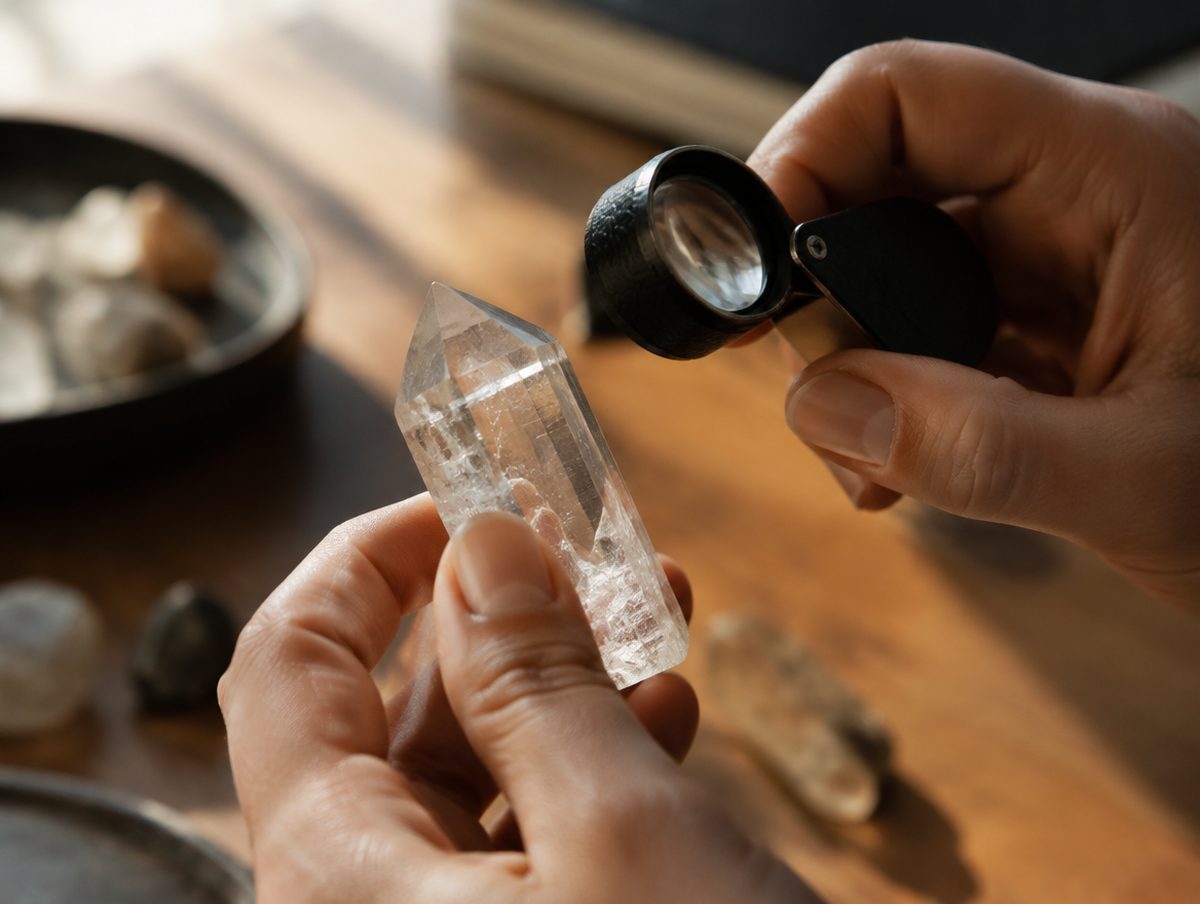
There is no wrong way to begin with crystals, but there are a few easy ways to end up disappointed: buying a dyed stone sold as natural, a glass marble sold as quartz, or a fragile mineral you did not know how to look after. This guide covers the enjoyable part (choosing) and the practical part (checking) so your first stone is one you will keep for years.
Step 1: Decide what you want it for
People collect crystals for many reasons, and knowing yours makes choosing easier.
- A focus for intention or meditation. Many people pick a stone whose traditional meaning matches something they want to keep in mind, such as rose quartz for self-kindness or smoky quartz for grounding.
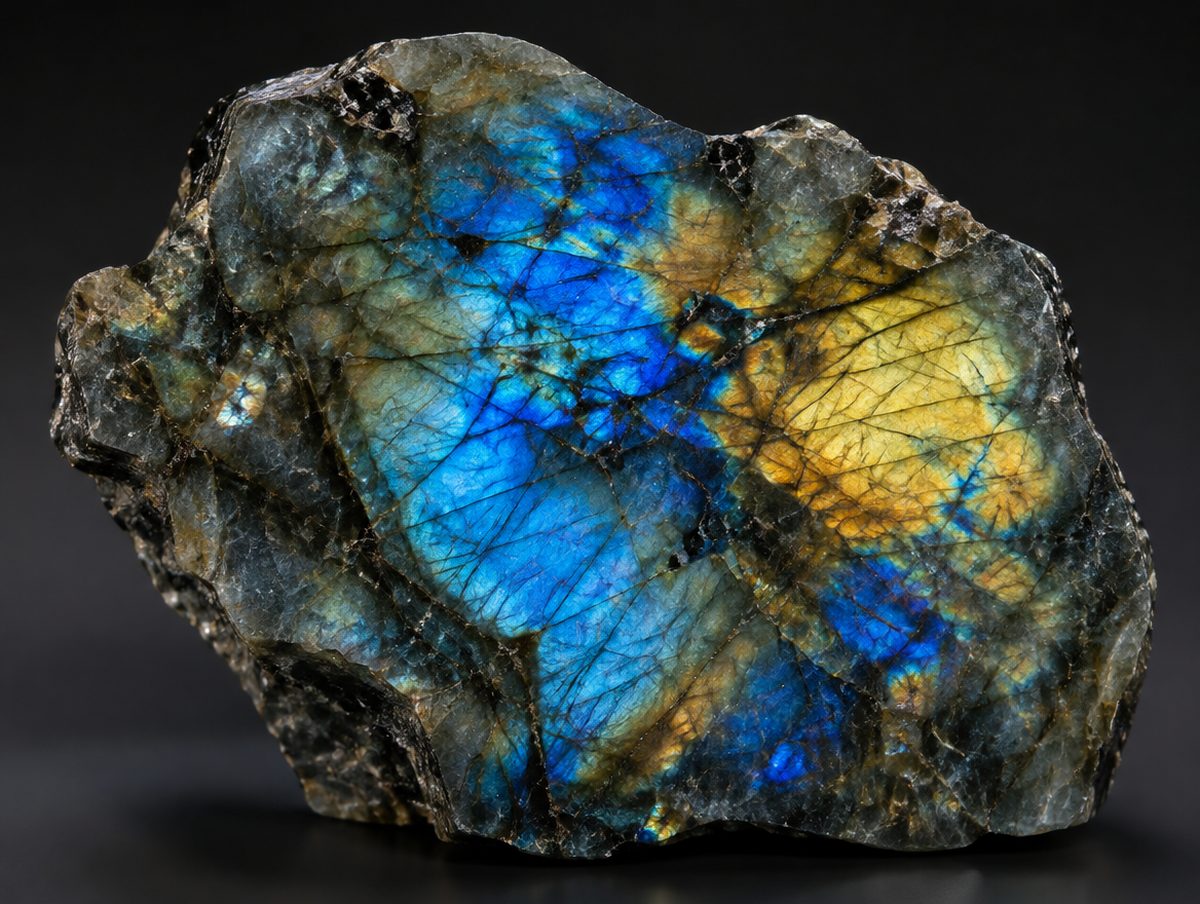
- Beauty and curiosity. Some simply love minerals as natural art. Labradorite's flash or an amethyst cluster's sparkle can be reason enough.
- A gift or keepsake. Birthstones and meaningful colours are popular here.
Whatever your reason, remember that crystal meanings are beliefs and traditions, not medical properties. A crystal can be a lovely part of a routine, but it is not a substitute for professional care.
Step 2: Let yourself be drawn in
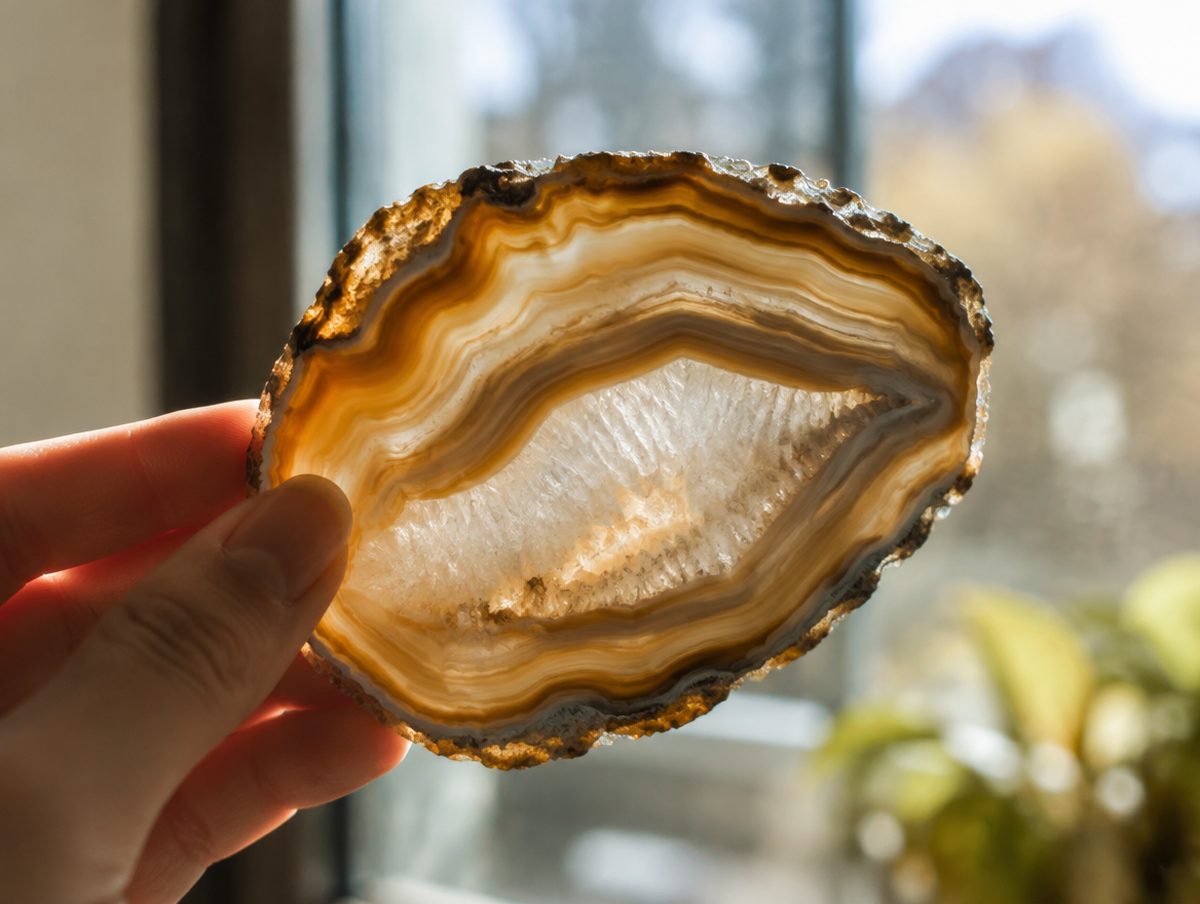
Many crystal lovers say the stone "chooses you." Whether you see that spiritually or simply as noticing what you like, it is sound advice. Look at colour, shape and texture. Hold a few if the shop allows. Notice which one you keep returning to. That stone is often a better first choice than whichever one a list tells you to buy.
Step 3: Pick a beginner-friendly stone
Your first crystal will be handled, carried and probably dropped at least once. Durable, easy-care stones make life simpler.
Good first choices
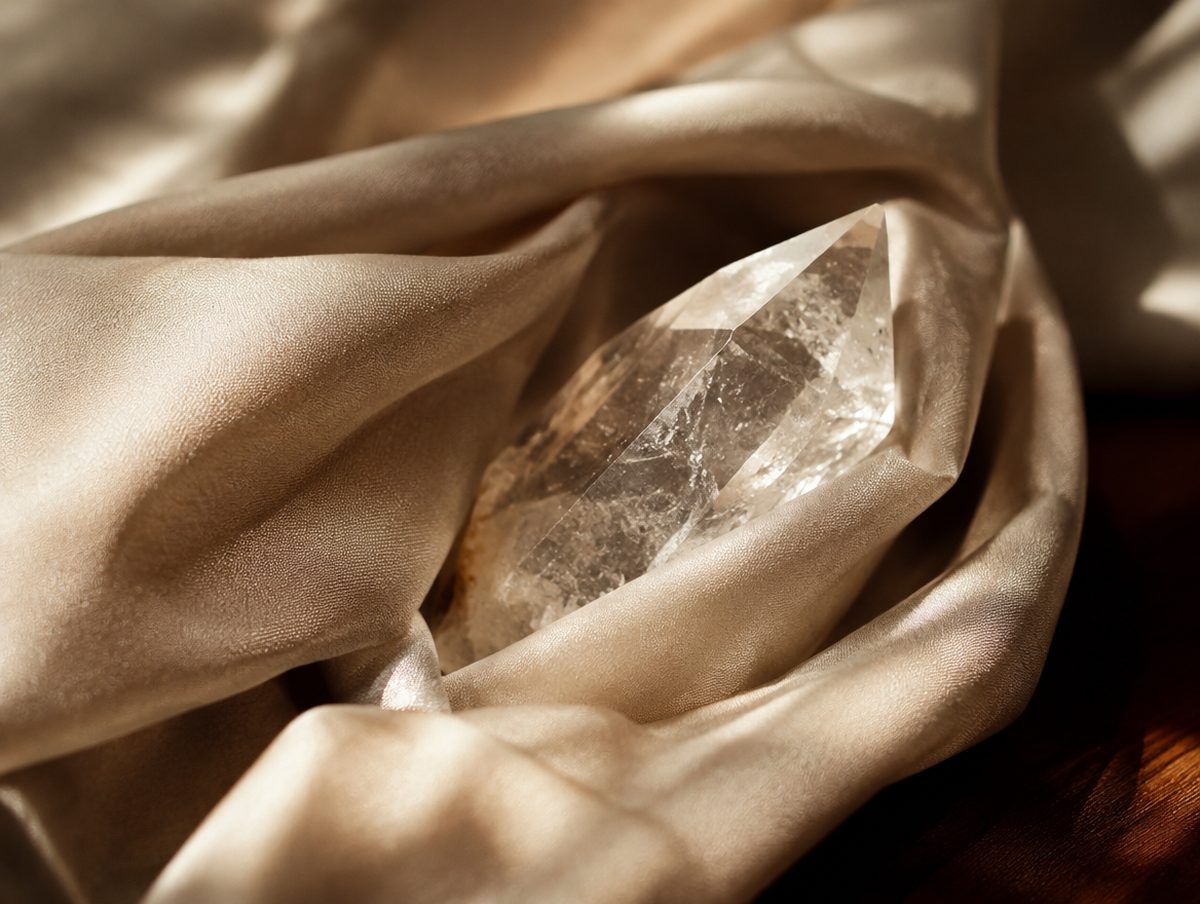
- Clear quartz, amethyst, rose quartz, smoky quartz: all quartz, hardness 7, widely available and forgiving.
- Carnelian and agate: tough chalcedony, lovely as tumbled pocket stones.
- Black tourmaline: sturdy, though raw pieces can have brittle edges.
Stones to hold off on
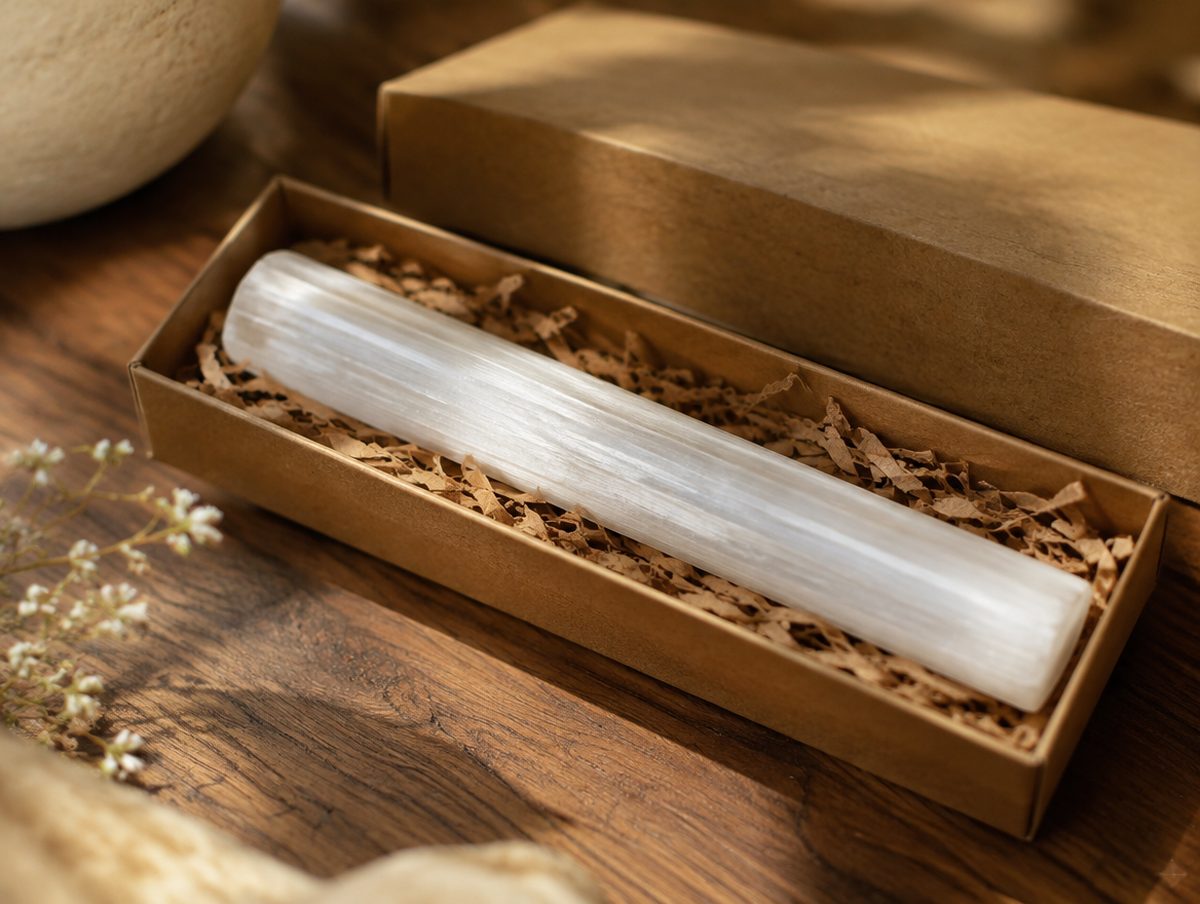
- Selenite: beautiful but very soft and damaged by water.
- Malachite: contains copper; it is fine to hold when polished, but its dust is harmful and it should never go in water or near your mouth.
- Raw specimens with loose crystals or powdery surfaces: these need gentle handling and careful storage.
Step 4: Tumbled, raw, point or cluster?
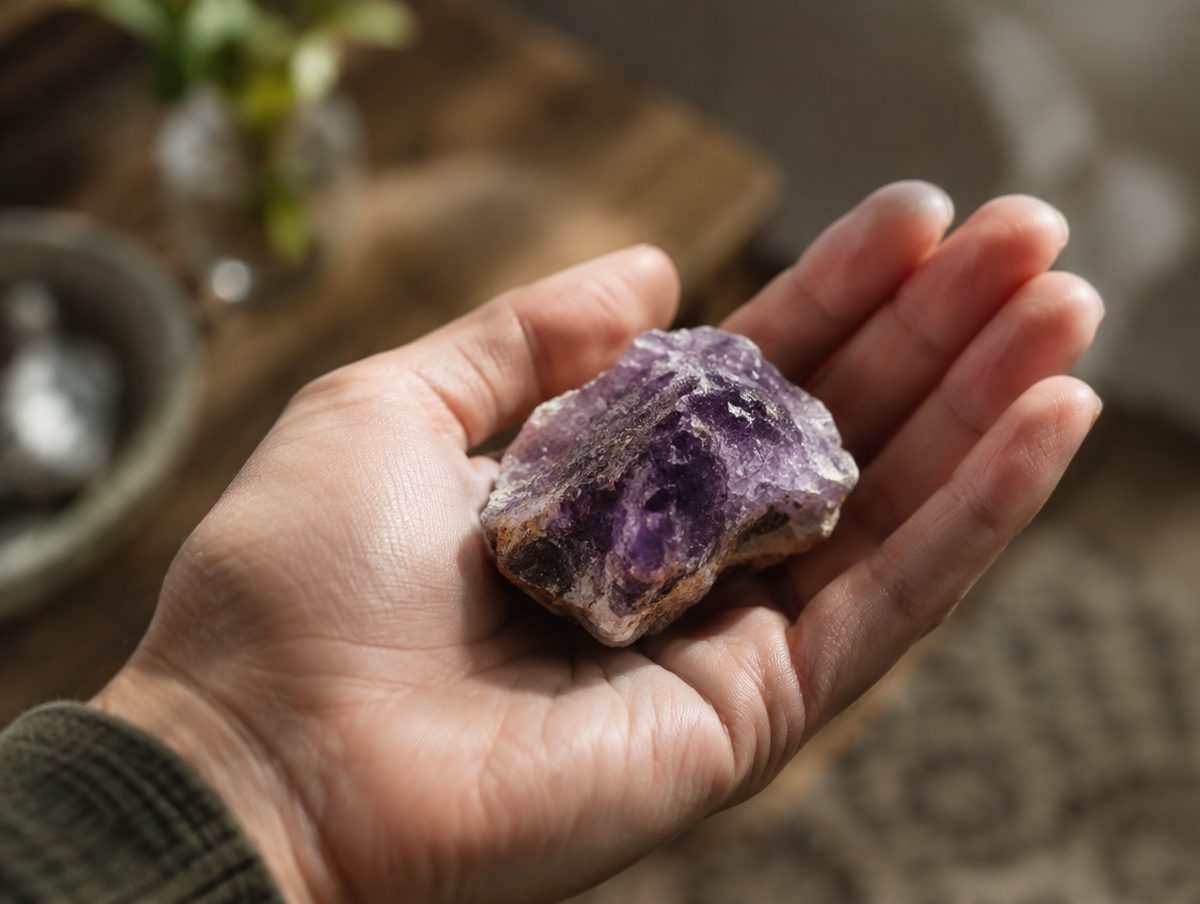
- Tumbled stones are small, smooth and pocket-friendly. They are usually the most affordable way to start.
- Raw (rough) stones look natural and earthy but can have sharp edges and shed fragments.
- Points and towers are often cut and polished into shape. Very perfect towers are usually shaped by hand or machine rather than grown that way.
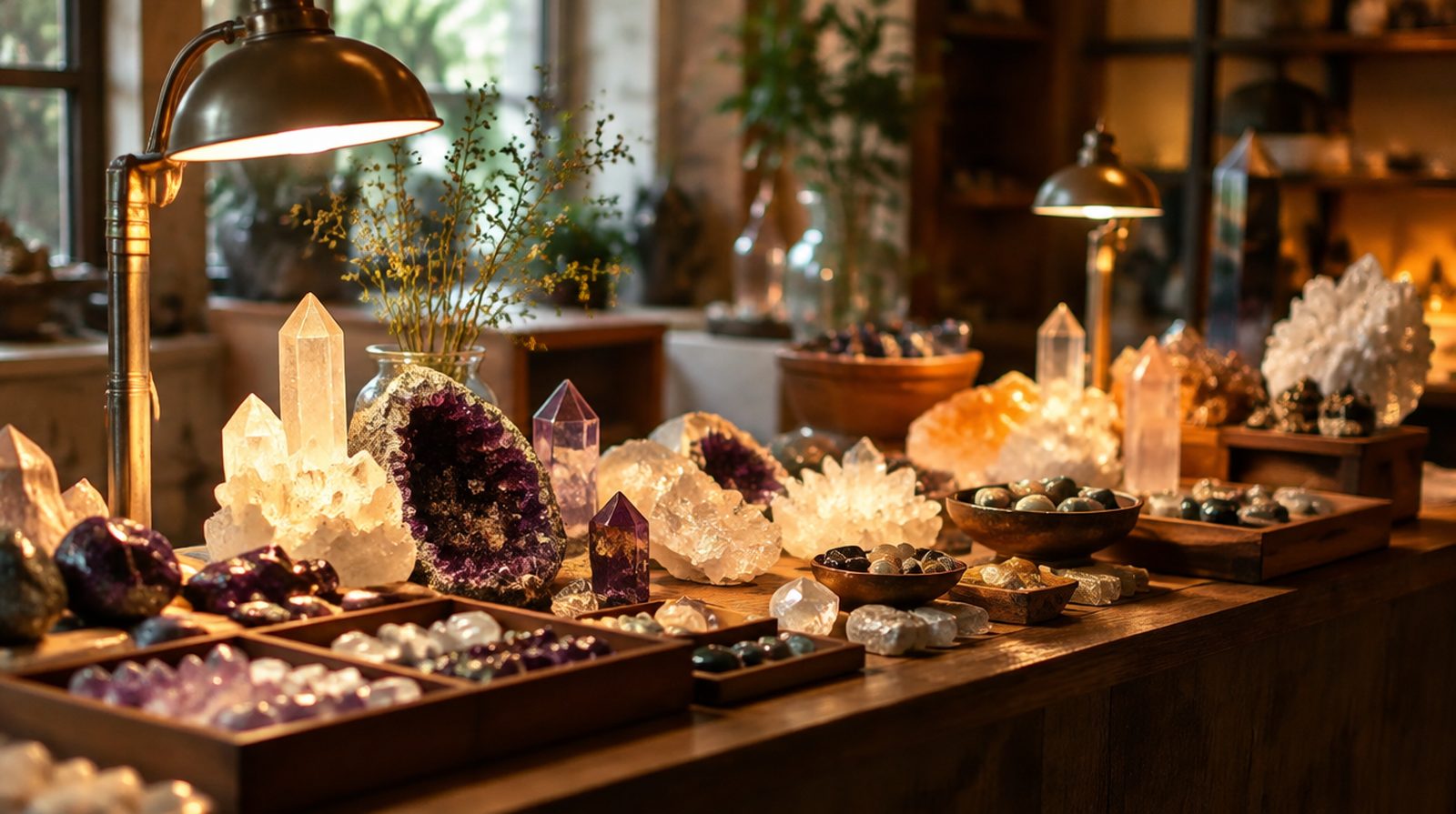
- Clusters and geodes make beautiful display pieces but are harder to clean and easier to chip.
Step 5: How to spot fakes
Not every imitation is sold dishonestly. Plenty of shops label glass and dyed stones clearly. The trouble is when they are passed off as natural. Here is what to watch for.
Glass
- Round bubbles. Tiny perfectly round air bubbles are a classic sign of glass. Natural quartz can have inclusions, but they are rarely perfect spheres.
- Swirl lines or mould seams. Flowing swirls or a faint line around the edge suggest the piece was melted and moulded.
- Too perfect, too bright. Flawless, evenly coloured, very cheap "quartz" deserves a second look.
- Known glass names. Opalite, goldstone and "cherry quartz" are man-made glass. They are fine to buy if you like them, as long as you know what they are.
Dyed stones
- Colour pooling in cracks. If the colour is darkest along fractures and pits, dye has probably soaked in.
- Unnatural brights. Neon pink, electric blue or lime-green agate is almost always dyed.
- Common swaps. Howlite, a white stone, is often dyed to look like turquoise or lapis lazuli. Pale jasper is sometimes dyed blue and sold as lapis.
Resin and plastic
- Feels light for its size and warms up quickly in your hand.
- May look slightly waxy or soft, and sometimes has a faint smell when warm.
Treated stones
Some stones are real but treated. Bright orange citrine is often heat-treated amethyst. Some very dark smoky quartz is artificially irradiated. These are genuine minerals, and treatment is widespread in the gem trade. What matters is honest labelling.
Tip: Avoid "testing" stones by scratching them in a shop. It damages the piece and is not reliable for beginners. Asking good questions tells you far more.
Step 6: Ask the seller
A trustworthy seller will be happy to answer these:
- What exactly is this stone? (Look for a specific mineral name, not just a trade name.)
- Where does it come from?
- Has it been dyed, heated, irradiated or stabilised?
- Is it natural or man-made?
Vague answers, big claims about what a stone will "cure," or pressure to buy a bundle are all good reasons to walk away. Buy from sellers who name the stone and its origin, and who describe it plainly.
Step 7: Bring it home and get to know it
Once you have your stone, learn how to care for it. Keep it somewhere you will see it, such as a desk, bedside table or small altar. Many people like to hold it for a moment each day while setting an intention or simply taking a few slow breaths. Whether you see that as spiritual practice or a pleasant pause, it is a gentle way to begin.
Your first crystal does not need to be rare or expensive. It just needs to be real, honestly sold and genuinely yours.
Quick answers
Is it okay to buy crystals online?
Yes, as long as the listing names the specific mineral, states its origin where possible and discloses any treatments. Clear photos from several angles and a fair return policy are good signs.
What is the easiest way to tell glass from quartz?
Look for perfectly round bubbles, swirl lines or mould seams, which suggest glass. Quartz usually has irregular inclusions and feels cool to the touch for longer. If in doubt, ask the seller directly.
Are dyed crystals bad?
Not necessarily. Dyed stones can be pretty and inexpensive. The issue is honesty: a dyed stone should be labelled as dyed, and dyed stones should be kept out of water because the colour can bleed.