A singing bowl is a standing bell. Instead of hanging from a rope, it sits on a surface, and you play it by tapping it or by rubbing a mallet around its rim until it hums. That humming, sustained tone is what draws most people in. Many find it a pleasant way to mark the start of a quiet moment, a meditation, or simply the end of a busy day.
If you are shopping for your first bowl, the choices can feel overwhelming. This guide walks through the main types, how size affects sound, and what to check before you buy.
A quick, honest note on history
You will often see metal bowls sold as "Tibetan singing bowls." The name has stuck, but the story is more complicated than the label suggests. Most metal bowls sold today are made in Nepal and India, and the exact historical origins and traditional uses of singing bowls are genuinely debated. Bowls like these have existed across parts of Asia for a long time, but how and when they became instruments for meditation is not settled.
None of that takes away from enjoying one. It simply means it is worth being a little sceptical of product descriptions that tell a very tidy, ancient-sounding story. A good seller will tell you plainly where a bowl was made and what it is made of.
Metal bowls vs quartz crystal bowls
There are two broad families of singing bowl, and they feel quite different to own and play.
Metal singing bowls
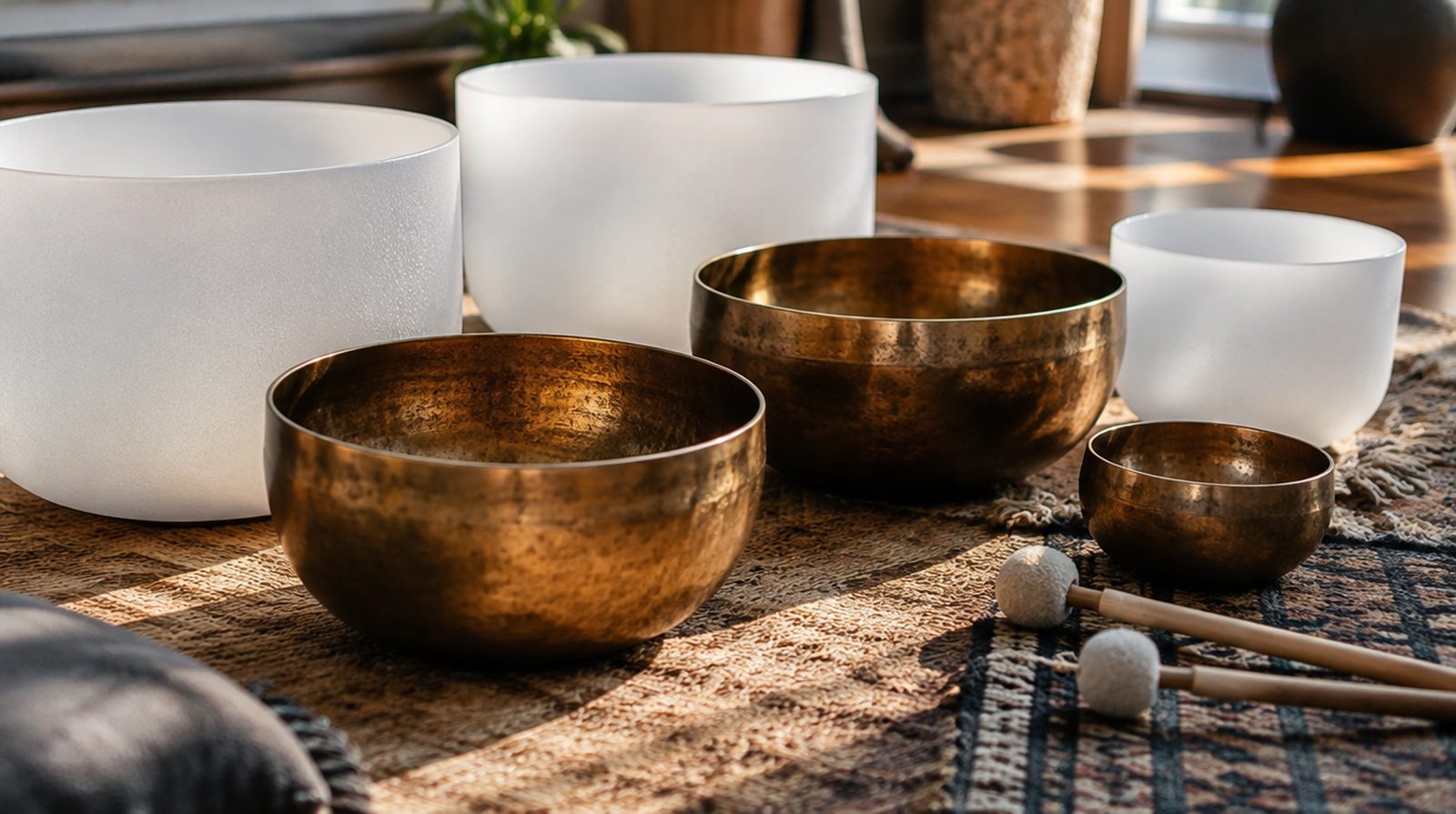
Metal bowls are usually made from a bronze-type alloy, often described as a blend of copper and tin, sometimes with other metals. They come in two main styles:
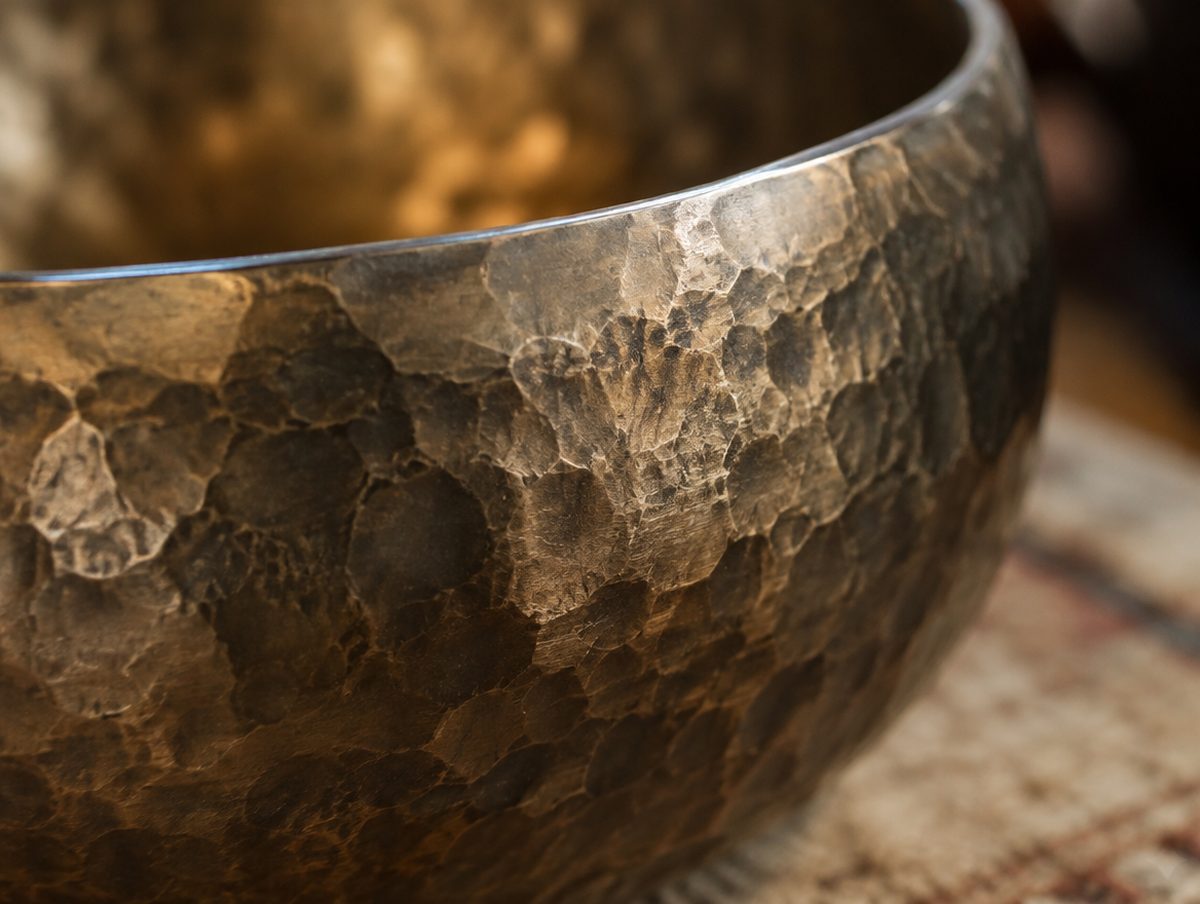
- Hand-hammered bowls are shaped by hand, so each has small irregularities in the surface. Many people love that they produce a layered, complex sound with several tones sounding at once.
- Machine-made or cast bowls are more uniform and usually less expensive. The tone tends to be simpler and cleaner. They can be a perfectly good starting point.
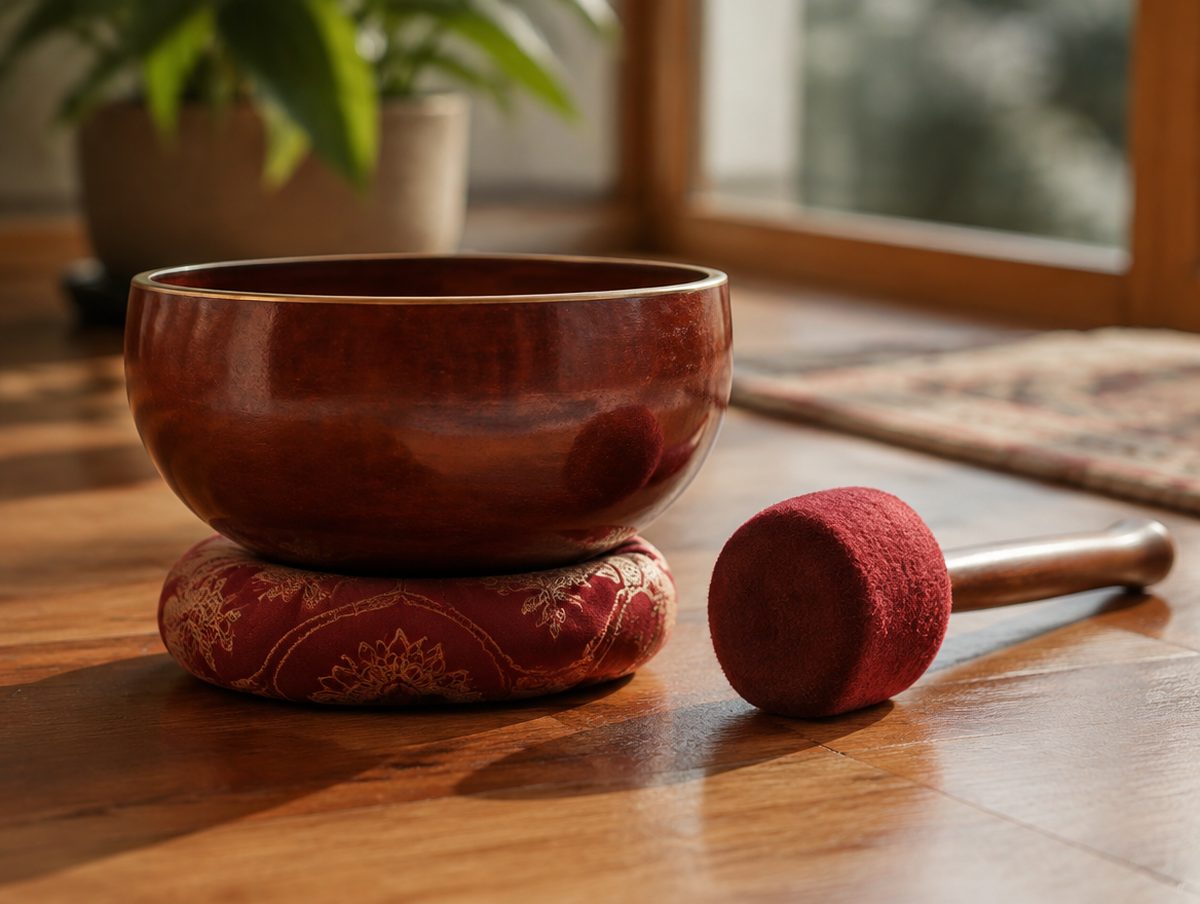
Metal bowls are durable, forgiving to handle, and easy to travel with. They sit comfortably in your hand, which makes them a natural fit for playing while seated.
Quartz crystal bowls
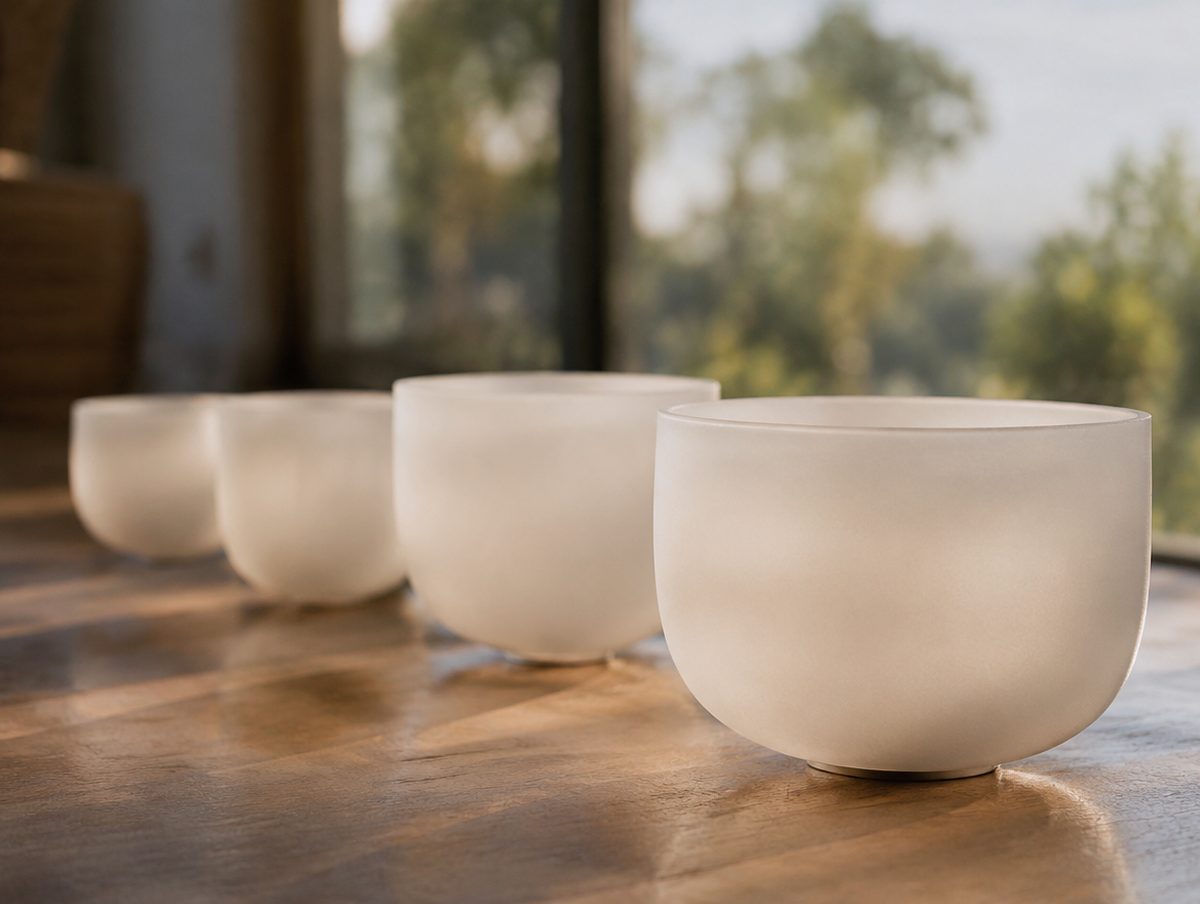
Crystal bowls are made from crushed quartz that is heated and formed into shape. They are often white and frosted, though clear and coloured versions exist. Their sound is typically a very pure, strong, single tone that carries a long way and can fill a room.
A few practical points to keep in mind:
- They are fragile. A knock against a hard surface can chip or crack them.
- They are usually louder than metal bowls of a similar size, which some people love and others find intense in a small space.
- They are normally played on a surface or a rubber ring rather than held in the hand.
Which should you start with?
For most beginners, a small or medium metal bowl is the easier first step. It is sturdy, portable, and gentler in volume. If you already know you love the bright, pure sound of crystal bowls, there is nothing wrong with starting there, as long as you have a safe place to keep and play it.
Tip: If you can, listen before you buy. Even a short recording from the seller of that exact bowl tells you far more than a description ever will.
How size affects sound
As a general rule, the bigger the bowl, the lower and longer its tone. Smaller bowls ring higher and fade faster.
- Small bowls (roughly palm-sized) are light, bright-sounding and easy to hold. Good for desks, travel and short sessions.
- Medium bowls (roughly the width of an outstretched hand or a little more) are a popular all-rounder. They are still comfortable to hold, with a fuller tone.
- Large bowls have a deep, long-lasting sound, but they are heavier and usually rest on a cushion rather than in your hand.
If you are unsure, a medium bowl is a sensible middle ground. You can always add a second bowl later if you want a contrasting tone.
What to look for when buying
Whether you are shopping in person or online, a few simple checks help you avoid disappointment.
- Clear materials and origin. Choose sellers who say what the bowl is made from and where it was made. Vague language and dramatic claims are a reason to look elsewhere.
- Honest descriptions of sound. A useful listing describes the tone and ideally includes a recording of the actual bowl, not a generic sample.
- Finish and condition. Look for cracks, deep dents or rough spots on the rim. On crystal bowls, check carefully for chips.
- Weight and wall thickness. Thicker walls often sustain longer; thinner walls can respond more quickly. Neither is "better," they simply feel different.
- Ease of singing. Some bowls sing readily with light pressure; others need more practice. If you can try it, see how easily it hums for you.
- Returns policy. Especially when buying online, a fair returns policy gives you room to decide whether the sound suits you.
Be cautious of listings that promise a bowl will fix, heal or transform anything. A singing bowl is a musical instrument, and a trustworthy seller will describe it as one.
Mallets, strikers and cushions
The accessories matter more than you might expect. The same bowl can sound quite different depending on what you play it with.
Mallets and strikers
- Bare wooden mallets give a brighter, crisper sound when rimming and are often the easiest for getting a bowl to sing.
- Suede- or felt-wrapped mallets soften the tone and reduce the sharp "clink" when striking.
- Padded strikers are for tapping the bowl rather than rimming it, and produce a warm, gong-like note.
Crystal bowls are usually played with a rubber or suede-covered wand designed for them. Using a hard wooden mallet on crystal can be too harsh and risks damage.
Cushions and rings
A cushion lifts the bowl off the surface so it can vibrate freely. Without one, a bowl sitting flat on a table may sound muted or rattle. Metal bowls often come with a small round cushion; crystal bowls usually sit on a rubber O-ring. If your bowl did not come with one, a folded soft cloth works in a pinch.
Caring for your bowl
- Wipe metal bowls with a soft, dry cloth after handling to keep fingerprints and moisture off.
- Avoid harsh cleaners, which can damage the surface or any finish.
- Store crystal bowls where they will not be knocked, and move them with both hands.
- Keep bowls away from the edge of shelves and out of reach of curious pets and small children.
A gentle word on expectations
Many people find playing a singing bowl calming and grounding, and in some traditions sound is used as a focus for meditation or reflection. How it feels is personal, and there is no right or wrong response. A bowl is a lovely companion to a quiet practice, but it is not a substitute for professional medical or mental health care. If you are going through something difficult, please reach out to a qualified professional.
Start simple, choose a bowl whose sound you genuinely enjoy, and give yourself time to learn it. The relationship with an instrument grows the more you play.
Quick answers
Are Tibetan singing bowls actually from Tibet?
Most metal singing bowls sold today are made in Nepal and India, and their exact historical origins are debated. "Tibetan" is best understood as a style name rather than a guarantee of where a bowl was made. Look for sellers who state the real place of manufacture.
Is a metal or crystal bowl better for a beginner?
Neither is better overall, but a small or medium metal bowl is usually easier to start with because it is durable, portable and softer in volume. Crystal bowls are louder and more fragile, so they suit people who have a safe spot to play and store them.
Do I need a cushion for my singing bowl?
It helps a lot. A cushion or ring lifts the bowl so it can vibrate freely, which gives a clearer, longer tone and stops it rattling on a hard surface. A folded soft cloth can work until you get one.